


An Updated Review on Pharmaceutical Properties of Gamma-Aminobutyric Acid
- PMID: 31344785
- PMCID: PMC6696076
- DOI: 10.3390/molecules24152678
An Updated Review on Pharmaceutical Properties of Gamma-Aminobutyric Acid
Abstract
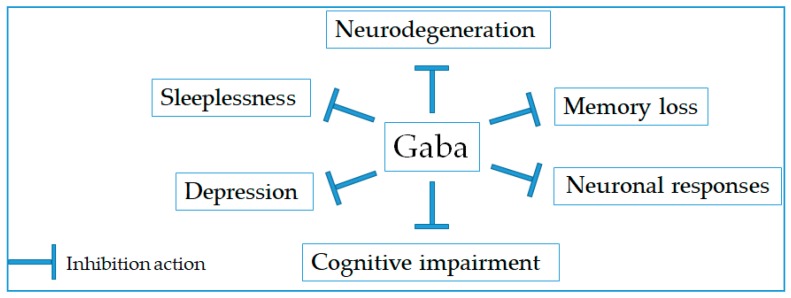
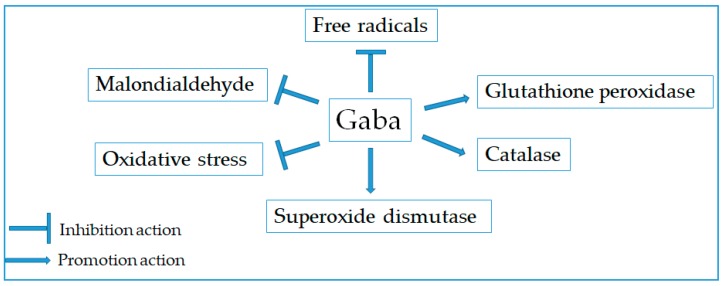
Gamma-aminobutyric acid (Gaba) is a non-proteinogenic amino acid that is widely present in microorganisms, plants, and vertebrates. So far, Gaba is well known as a main inhibitory neurotransmitter in the central nervous system. Its physiological roles are related to the modulation of synaptic transmission, the promotion of neuronal development and relaxation, and the prevention of sleeplessness and depression. Besides, various pharmaceutical properties of Gaba on non-neuronal peripheral tissues and organs were also reported due to anti-hypertension, anti-diabetes, anti-cancer, antioxidant, anti-inflammation, anti-microbial, anti-allergy, hepato-protection, reno-protection, and intestinal protection. Therefore, Gaba may be considered as potential alternative therapeutics for prevention and treatment of various diseases. Accordingly, this updated review was mainly focused to describe the pharmaceutical properties of Gaba as well as emphasize its important role regarding human health.
Keywords: Gaba; Gaba-rich product; anti-hypertension; bioactivity; health benefit.
Conflict of interest statement
There are no conflicts to declare.
Figures
References
-
- Olsen R.W., Betz H. GABA and glycine. In: Siegel G.J., Albers R.W., Brady S.T., Price D.L., editors. Basic Neurochemistry. 7th ed. Elsevier Academic Press; Boston, MA, USA: 2006.
-
- Martin D.L., Olsen R.W., editors. GABA in the Nervous System: The View at 50 Years. Lippincott Williams & Wilkins; Philadelphia, PA, USA: 2000.
Publication types
MeSH terms
Substances
Grants and funding
LinkOut - more resources
Full Text Sources
Other Literature Sources
