


Comparison of Data Fusion Methods as Consensus Scores for Ensemble Docking
- PMID: 31344902
- PMCID: PMC6695709
- DOI: 10.3390/molecules24152690
Comparison of Data Fusion Methods as Consensus Scores for Ensemble Docking
Abstract
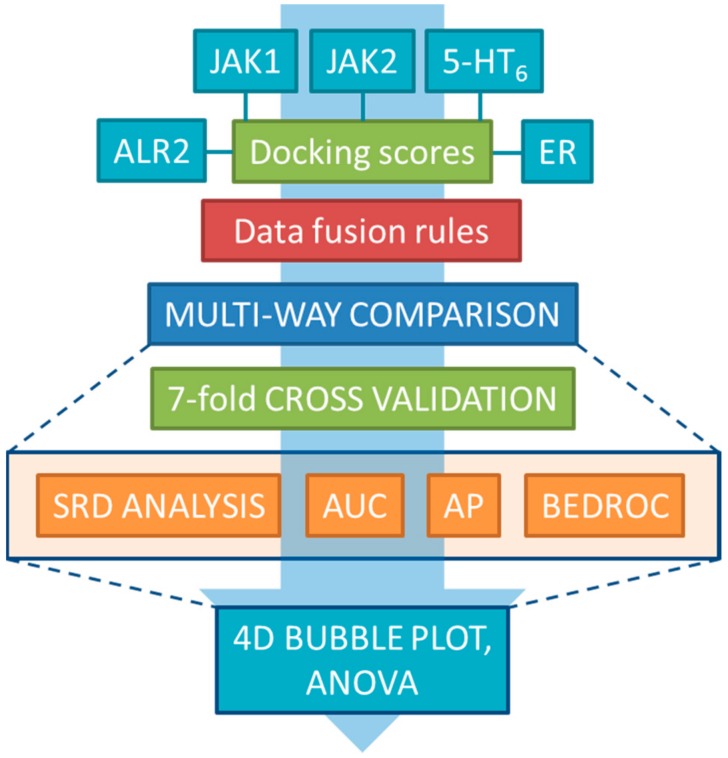
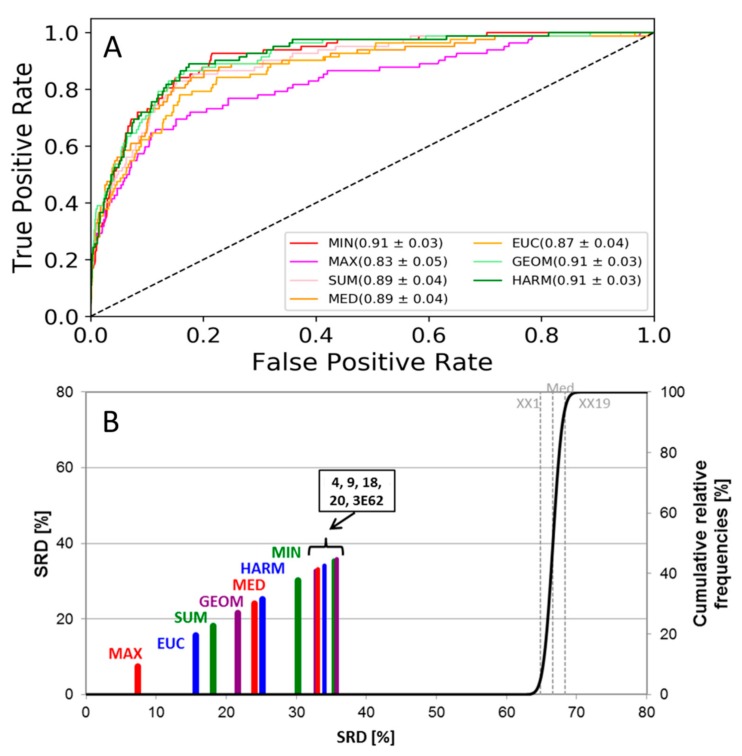
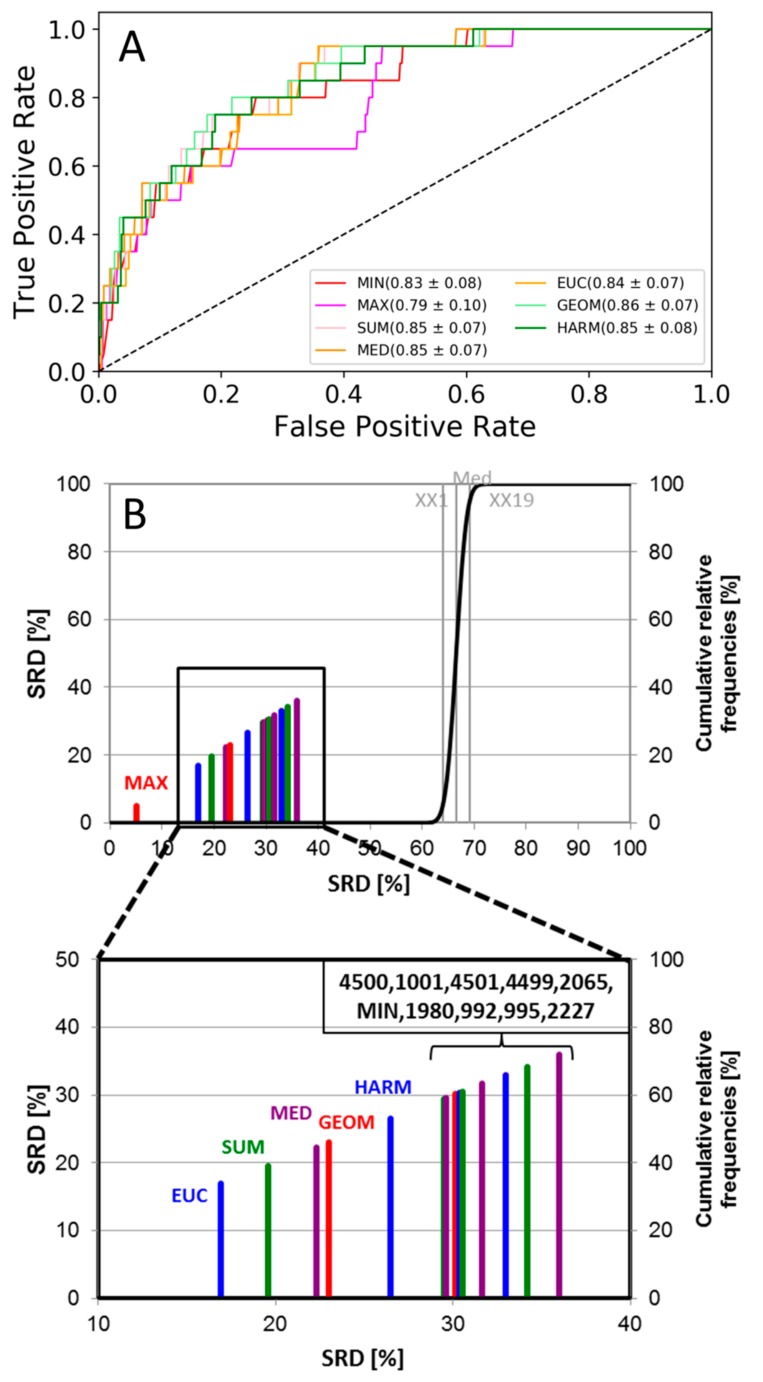
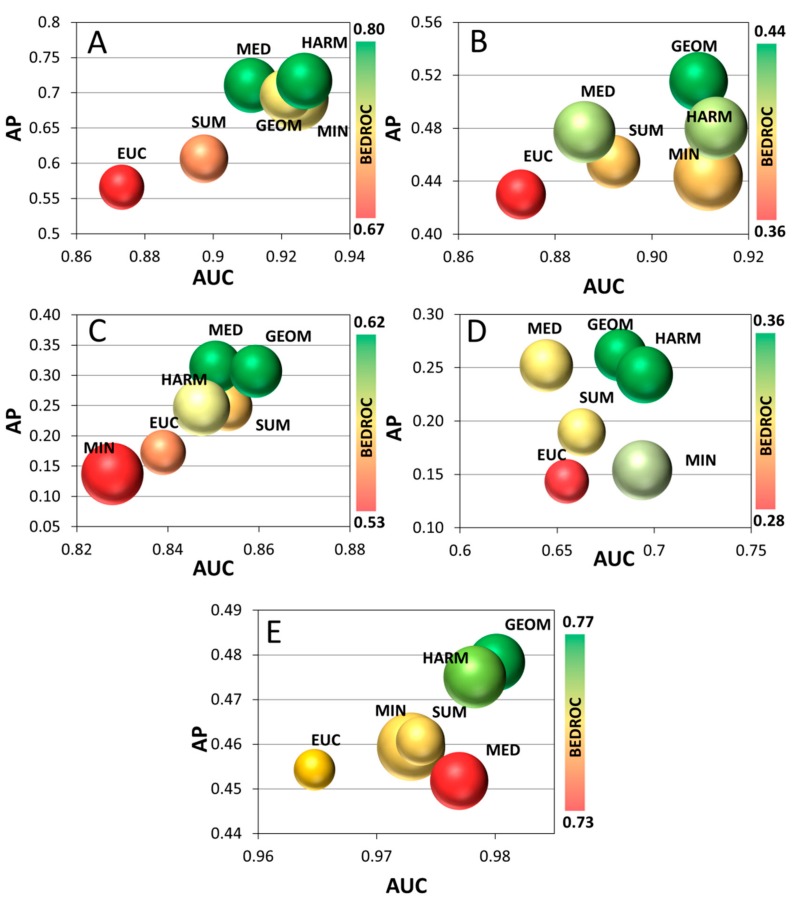
Ensemble docking is a widely applied concept in structure-based virtual screening-to at least partly account for protein flexibility-usually granting a significant performance gain at a modest cost of speed. From the individual, single-structure docking scores, a consensus score needs to be produced by data fusion: this is usually done by taking the best docking score from the available pool (in most cases- and in this study as well-this is the minimum score). Nonetheless, there are a number of other fusion rules that can be applied. We report here the results of a detailed statistical comparison of seven fusion rules for ensemble docking, on five case studies of current drug targets, based on four performance metrics. Sevenfold cross-validation and variance analysis (ANOVA) allowed us to highlight the best fusion rules. The results are presented in bubble plots, to unite the four performance metrics into a single, comprehensive image. Notably, we suggest the use of the geometric and harmonic means as better alternatives to the generally applied minimum fusion rule.
Keywords: AUC; BEDROC; ROC curve; SRD; data fusion; ensemble docking.
Conflict of interest statement
The authors declare no conflict of interest.
Figures
References
-
- Sotriffer C. Virtual Screening: Principles, Challenges, and Practical Guidelines. Wiley-VCH Verlag GmbH & Co. KGaA; Weinheim, Germany: 2011.
-
- Cross J.B. Methods for Virtual Screening of GPCR Targets: Approaches and Challenges. In: Heifetz A., editor. Computational Methods for GPCR Drug Discovery. Humana Press; New York, NY, USA: 2018. pp. 233–264. - PubMed
MeSH terms
Substances
Grants and funding
LinkOut - more resources
Full Text Sources
