


The comorbidity burden of type 2 diabetes mellitus: patterns, clusters and predictions from a large English primary care cohort
- PMID: 31345214
- PMCID: PMC6659216
- DOI: 10.1186/s12916-019-1373-y
The comorbidity burden of type 2 diabetes mellitus: patterns, clusters and predictions from a large English primary care cohort
Erratum in
-
Correction to: The comorbidity burden of type 2 diabetes mellitus: patterns, clusters and predictions from a large English primary care cohort.BMC Med. 2020 Jan 25;18(1):22. doi: 10.1186/s12916-020-1492-5. BMC Med. 2020. PMID: 31980024 Free PMC article.
Abstract
Background: The presence of additional chronic conditions has a significant impact on the treatment and management of type 2 diabetes (T2DM). Little is known about the patterns of comorbidities in this population. The aims of this study are to quantify comorbidity patterns in people with T2DM, to estimate the prevalence of six chronic conditions in 2027 and to identify clusters of similar conditions.
Methods: We used the Clinical Practice Research Datalink (CPRD) linked with the Index of Multiple Deprivation (IMD) data to identify patients diagnosed with T2DM between 2007 and 2017. 102,394 people met the study inclusion criteria. We calculated the crude and age-standardised prevalence of 18 chronic conditions present at and after the T2DM diagnosis. We analysed longitudinally the 6 most common conditions and forecasted their prevalence in 2027 using linear regression. We used agglomerative hierarchical clustering to identify comorbidity clusters. These analyses were repeated on subgroups stratified by gender and deprivation.
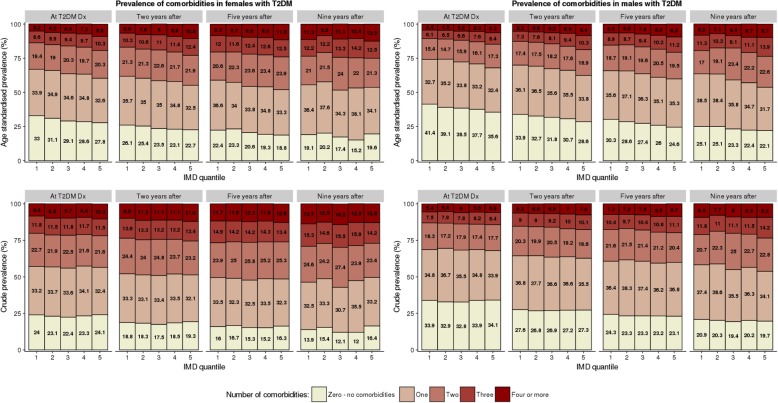
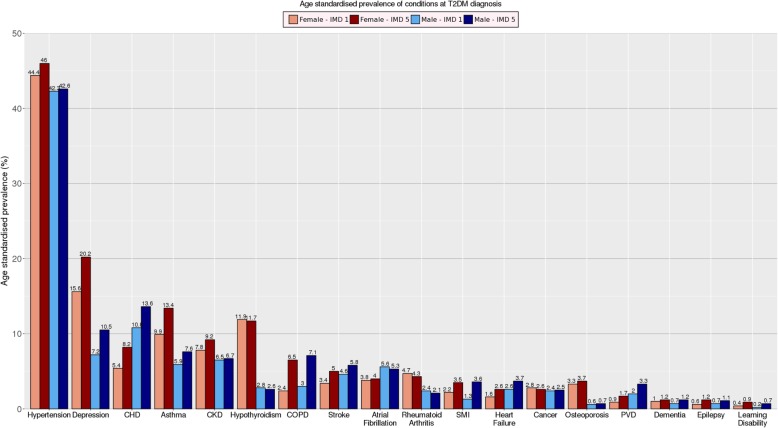
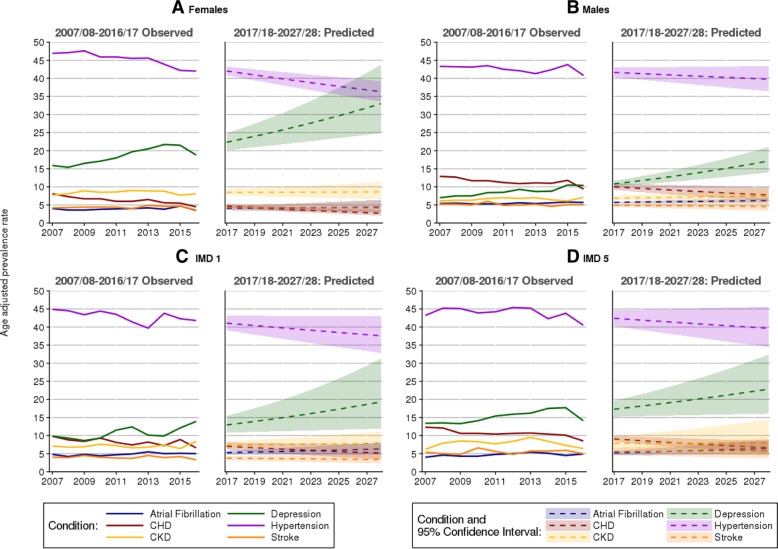
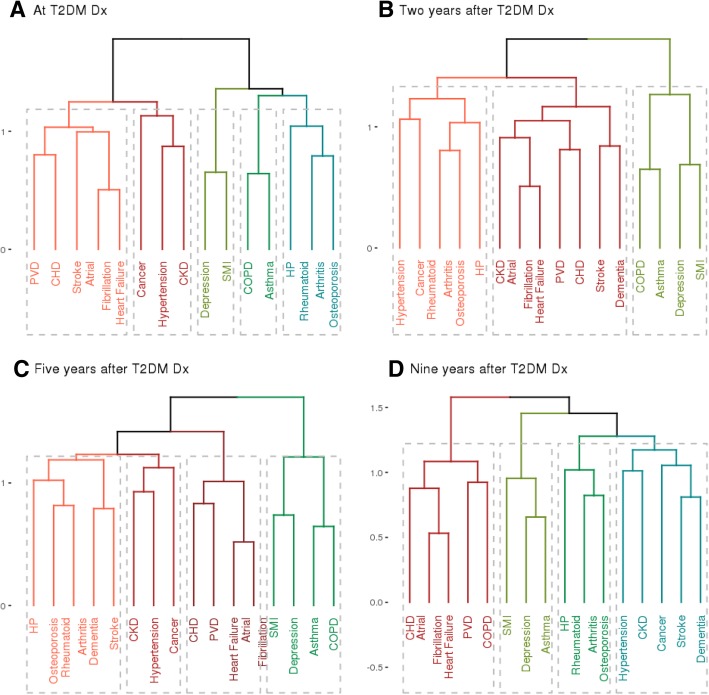
Results: More people living in the most deprived areas had ≥ 1 comorbidities present at the time of diagnosis (72% of females; 64% of males) compared to the most affluent areas (67% of females; 59% of males). Depression prevalence increased in all strata and was more common in the most deprived areas. Depression was predicted to affect 33% of females and 15% of males diagnosed with T2DM in 2027. Moderate clustering tendencies were observed, with concordant conditions grouped together and some variations between groups of different demographics.
Conclusions: Comorbidities are common in this population, and high between-patient variability in comorbidity patterns emphasises the need for patient-centred healthcare. Mental health is a growing concern, and there is a need for interventions that target both physical and mental health in this population.
Keywords: CPRD; Comorbidity; Prevalence; Primary care; Type 2 diabetes mellitus.
Conflict of interest statement
DMA has received grant funding from Abbvie and the Leo Foundation. MKR has received educational grant support from MSD and Novo Nordisk, has modest stock ownership in GSK and has consulted for Roche. Remaining authors have no competing interests to declare.
Figures
References
-
- Global Health Estimates . Disease burden by cause, age, sex, by country and by region, 2000–2016. Geneva: World Health Organization; 2016.
Publication types
MeSH terms
Grants and funding
LinkOut - more resources
Full Text Sources
Medical
Miscellaneous
