


Neuropsychiatric phenotypes and a distinct constellation of ASD features in 3q29 deletion syndrome: results from the 3q29 registry
- PMID: 31346402
- PMCID: PMC6636128
- DOI: 10.1186/s13229-019-0281-5
Neuropsychiatric phenotypes and a distinct constellation of ASD features in 3q29 deletion syndrome: results from the 3q29 registry
Abstract
Background: The 1.6 Mb 3q29 deletion is associated with neurodevelopmental and psychiatric phenotypes, including increased risk for autism spectrum disorder (ASD) and a 20 to 40-fold increased risk for schizophrenia. However, the phenotypic spectrum of the deletion, particularly with respect to ASD, remains poorly described.
Methods: We ascertained individuals with 3q29 deletion syndrome (3q29Del, "cases," n = 93, 58.1% male) and typically developing controls (n = 64, 51.6% male) through the 3q29 registry (https://3q29deletion.patientcrossroads.org). Self-report of neuropsychiatric illness was evaluated for 93 cases. Subsets of participants were evaluated with the Social Responsiveness Scale (SRS, n = 48 cases, 56 controls), Social Communication Questionnaire (n = 33 cases, 46 controls), Autism Spectrum Screening Questionnaire (n = 24 cases, 35 controls), and Achenbach Behavior Checklists (n = 48 cases, 57 controls).
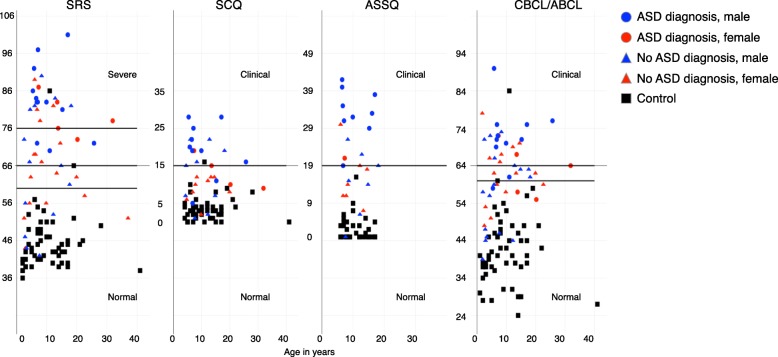
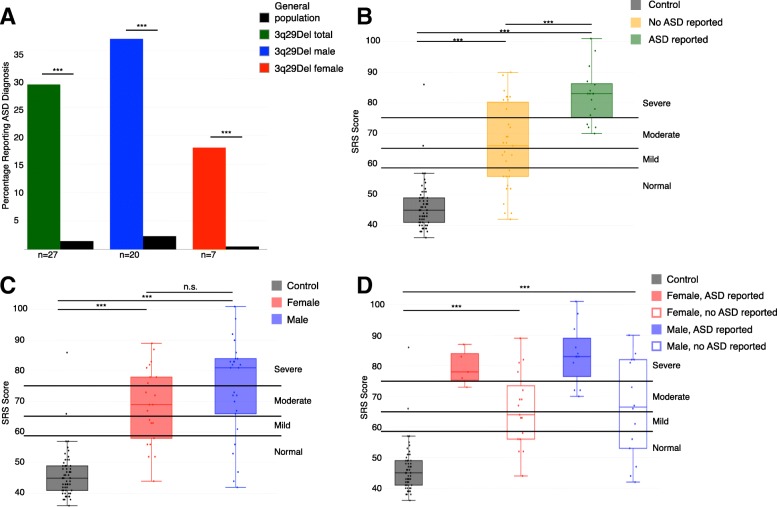
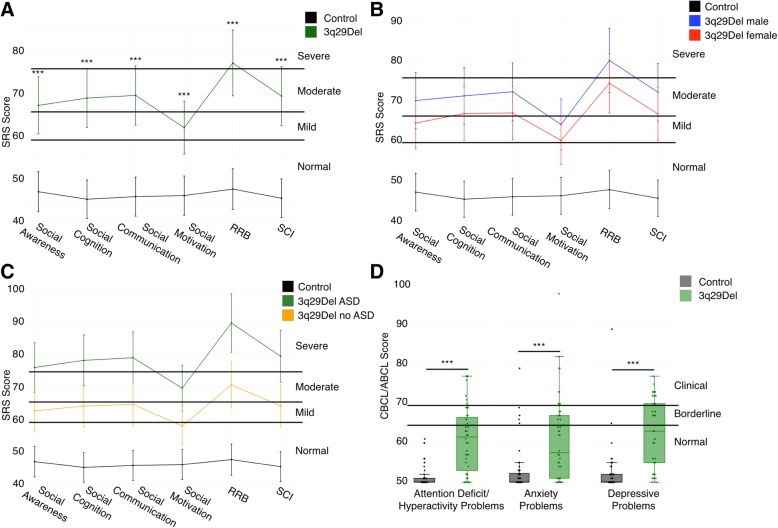
Results: 3q29Del cases report a higher prevalence of autism diagnoses versus the general population (29.0% vs. 1.47%, p < 2.2E- 16). Notably, 3q29 deletion confers a greater influence on risk for ASD in females (OR = 41.8, p = 4.78E- 05) than in males (OR = 24.6, p = 6.06E- 09); this is aligned with the reduced male:female bias from 4:1 in the general population to 2:1 in our study sample. Although 71% of cases do not report a diagnosis of ASD, there is evidence of significant social disability (3q29Del SRS T-score = 71.8, control SRS T-score = 45.9, p = 2.16E- 13). Cases also report increased frequency of generalized anxiety disorder compared to controls (28.0% vs. 6.2%, p = 0.001), which is mirrored by elevated mean scores on the Achenbach diagnostic and statistical manual-oriented sub-scales (p < 0.001). Finally, cases show a distinct constellation of ASD features on the SRS as compared to idiopathic ASD, with substantially elevated Restricted Interests and Repetitive Behaviors, but only mild impairment in Social Motivation.
Conclusions: Our sample of 3q29Del is significantly enriched for ASD diagnosis, especially among females, and features of autism may be present even when an ASD diagnosis is not reported. Further, the constellation of ASD features in this population is distinct from idiopathic ASD, with substantially less impaired social motivation. Our study implies that ASD evaluation should be the standard of care for individuals with 3q29Del. From a research perspective, the distinct ASD subtype present in 3q29Del is an ideal entry point for expanding understanding of ASD.
Keywords: 3q29 deletion; Autism; Copy number variants; Developmental delay; Genomic disorder; Psychiatric genetics; SRS.
Conflict of interest statement
Competing interestsCAS reports receiving royalties from Pearson Clinical for the Vineland-3. The other authors declare that they have no competing interests.
Figures
References
-
- Kendall KM, Rees E, Escott-Price V, Einon M, Thomas R, Hewitt J, O’Donovan MC, Owen MJ, Walters JTR, Kirov G. Cognitive performance among carriers of pathogenic copy number variants: analysis of 152,000 UK biobank subjects. Biol Psychiatry. 2017;82:103–110. doi: 10.1016/j.biopsych.2016.08.014. - DOI - PubMed
-
- Ballif BC, Theisen A, Coppinger J, Gowans GC, Hersh JH, Madan-Khetarpal S, Schmidt KR, Tervo R, Escobar LF, Friedrich CA, et al. Expanding the clinical phenotype of the 3q29 microdeletion syndrome and characterization of the reciprocal microduplication. Mol Cytogenet. 2008;1:8. doi: 10.1186/1755-8166-1-8. - DOI - PMC - PubMed
Publication types
MeSH terms
Supplementary concepts
Grants and funding
LinkOut - more resources
Full Text Sources
Medical
Miscellaneous
