


CD73-dependent adenosine dampens interleukin-1β-induced CXCL8 production in gingival fibroblasts: Association with heme oxygenase-1 and adenosine monophosphate-activated protein kinase
- PMID: 31347162
- PMCID: PMC6980930
- DOI: 10.1002/JPER.19-0137
CD73-dependent adenosine dampens interleukin-1β-induced CXCL8 production in gingival fibroblasts: Association with heme oxygenase-1 and adenosine monophosphate-activated protein kinase
Abstract
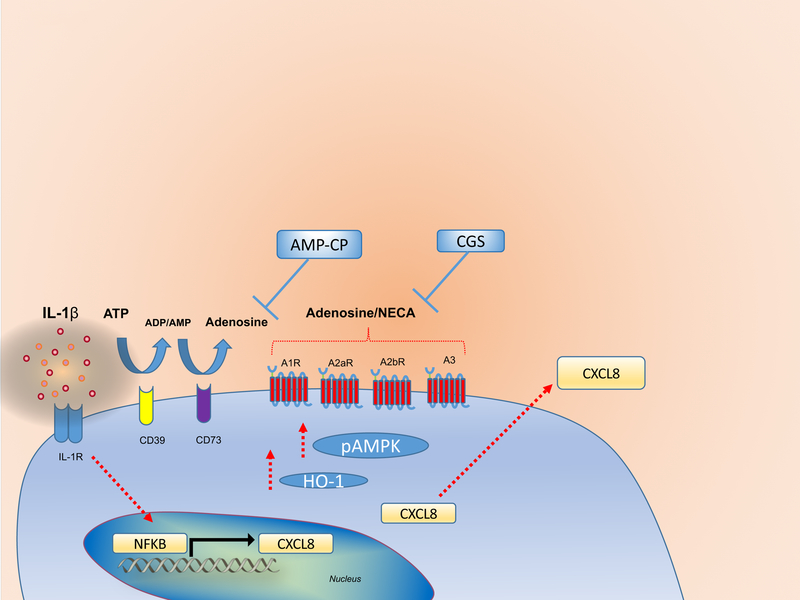
Background: During inflammation, stressed or infected cells can release adenosine triphosphate (ATP) to the extracellular medium, which can be hydrolyzed to adenosine by ectonucleotidases such as ectonucleoside triphosphate diphosphohydrolase 1 (CD39) and 5'-nucleotidase (CD73). The role of CD73 in the modulation of cytokine release by human gingival fibroblasts (HGFs) remains underexplored. Here, we investigated whether CD73-mediated hydrolysis of extracellular ATP (eATP) could affect interleukin (IL)-1β-induced CXCL8 secretion.
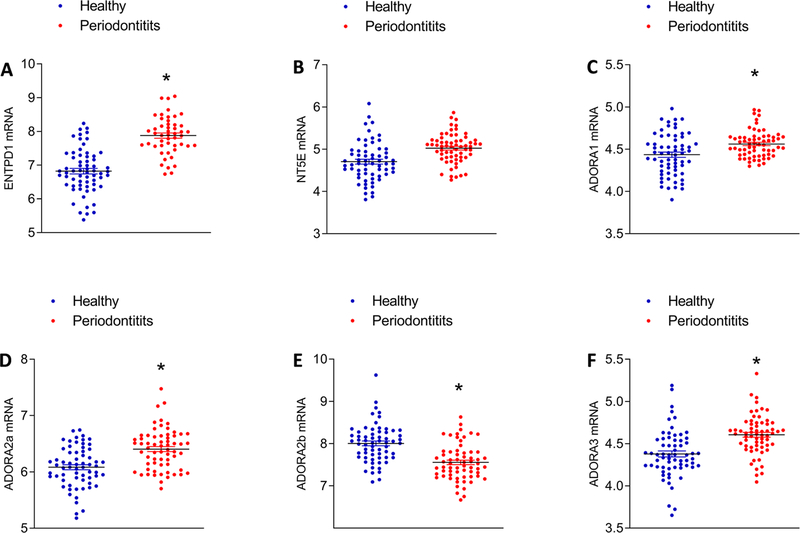
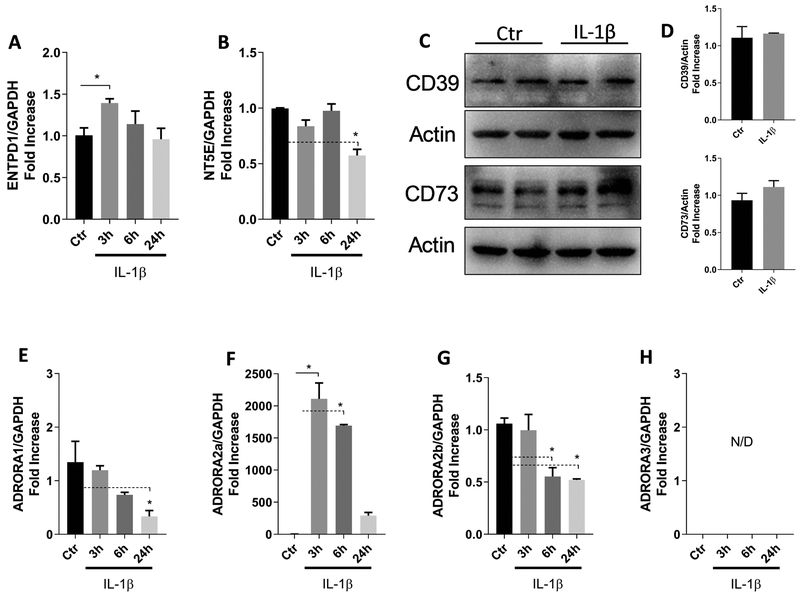
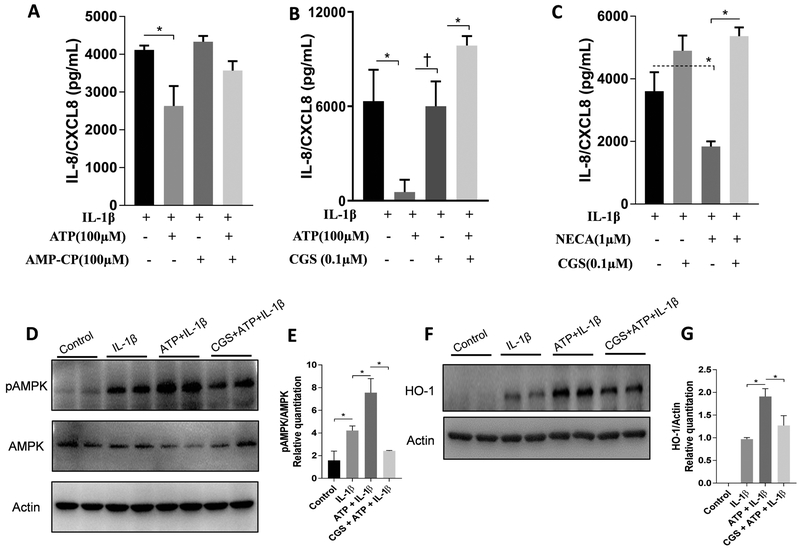
Methods: The levels of mRNA expression of adenosine receptors, CD39 and CD73 of periodontitis samples were retrieved from a public database. Moreover, HGF mRNA levels were measured by quantitative reverse transcription-polymerase chain reaction (RT-qPCR) after 3, 6, or 24 hours of IL-1β stimulation. IL-1β-induced CXCL8 protein levels were measured after pretreatment with 100-µM eATP in the presence or absence of CD73 inhibitor. The effect of eATP degradation to adenosine on CXCL8 levels was investigated using agonist and antagonist of adenosine receptors.
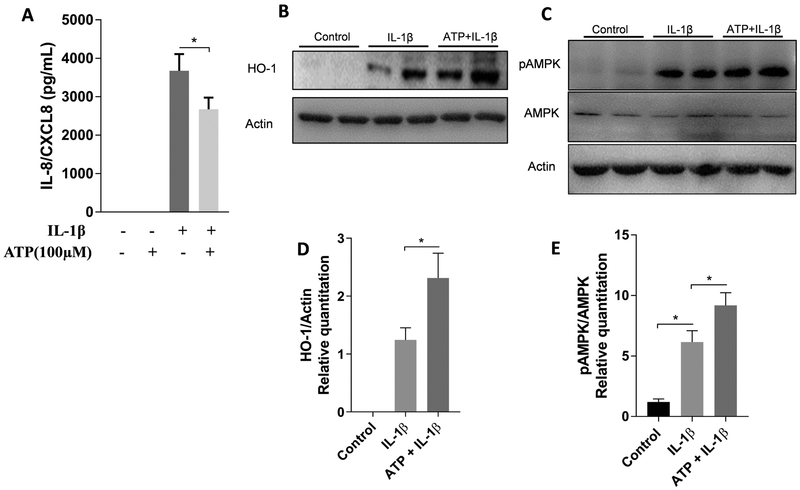
Results: Levels of CD39, CD73, and adenosine receptor mRNA were differentially modulated by IL-1β. ATP pretreatment impaired IL-1β-induced CXCL8 secretion and required activation of heme oxygenase-1 (HO-1) and phosphorylated adenosine monophosphate-activated protein kinase (pAMPK). The inhibition of CD73 or the inhibition of adenosine receptors abrogated the ATP effect on CXCL8 secretion.
Conclusions: CD73-generated adenosine dampens IL-1β-induced CXCL8 in HGFs and involves HO-1 and pAMPK signaling. These results imply that CD73 is a negative regulator of the inflammatory microenvironment, suggesting that this ectoenzyme could be involved in the generation of deficient CXCL8 gradient in chronic inflammation.
Keywords: 5′-nucleotidase; adenosine; adenosine triphosphate; fibroblasts; gingiva; interleukin-1 beta.
© 2019 American Academy of Periodontology.
Figures
References
-
- Faas MM, Saez T, de Vos P. Extracellular ATP and adenosine: The Yin and Yang in immune responses? Mol Aspects Med 2017;55:9–19. - PubMed
-
- Morandini AC, Savio LE, Coutinho-Silva R. The role of P2X7 receptor in infectious inflammatory diseases and the influence of ectonucleotidases. Biomed J 2014;37:169–177. - PubMed
-
- Sitkovsky MV, Lukashev D, Apasov S, et al. Physiological control of immune response and inflammatory tissue damage by hypoxia-inducible factors and adenosine A2A receptors. Annu Rev Immunol 2004;22:657–682. - PubMed
Publication types
MeSH terms
Substances
Grants and funding
LinkOut - more resources
Full Text Sources
Research Materials
