Long Noncoding RNA MALAT1 Regulates Hepatocellular Carcinoma Growth Under Hypoxia via Sponging MicroRNA-200a
- PMID: 31347327
- PMCID: PMC6660435
- DOI: 10.3349/ymj.2019.60.8.727
Long Noncoding RNA MALAT1 Regulates Hepatocellular Carcinoma Growth Under Hypoxia via Sponging MicroRNA-200a
Abstract
Purpose: Hepatocellular carcinoma (HCC) is a common cancer worldwide. Metastasis-associated lung adenocarcinoma transcript 1 (MALAT1), a long noncoding RNA (lncRNA), has been reported to be aberrantly expressed in hypoxic cancer cells. MALAT1 plays a significant role in many malignancies, including HCC. The aim of this study was to explore the role of MALAT1 in hypoxic HCC cells and its underlying regulatory mechanism.
Materials and methods: Quantitative reverse transcription PCR (qRT-PCR) assay was performed to detect the mRNA levels of MALAT1 and microRNA-200a (miR-200a) in HCC cells. Cell invasion and migration ability were evaluated by Transwell assay. Starbase v2.0 and luciferase reporter assay were employed to identify the association between MALAT1 and miR-200a. Cell proliferation and apoptosis were measured by MTT assay and flow cytometry, respectively.
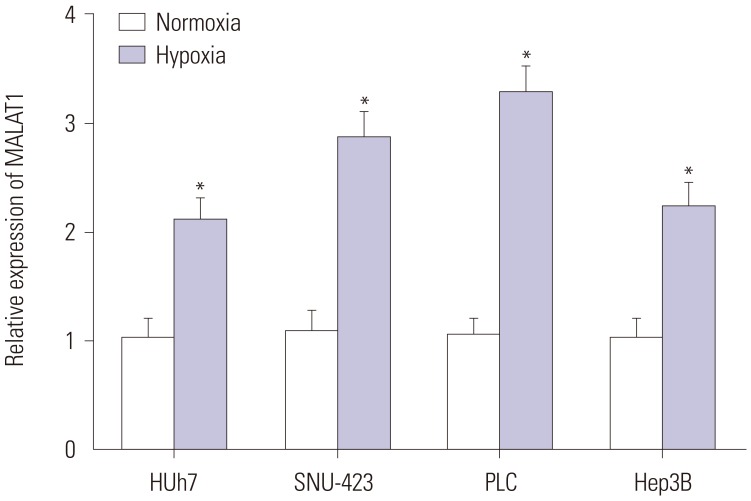
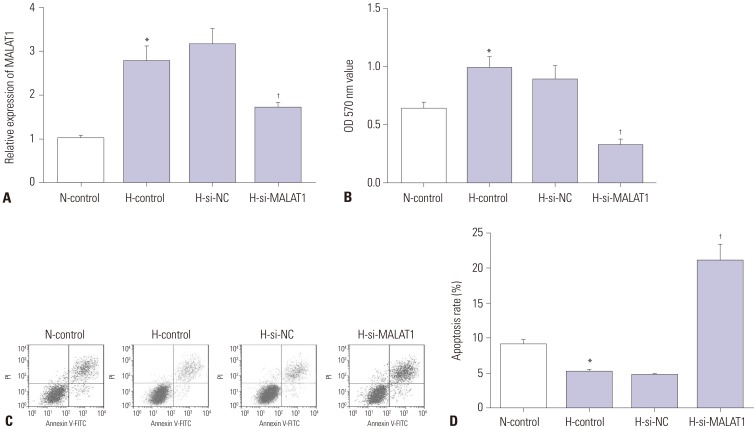
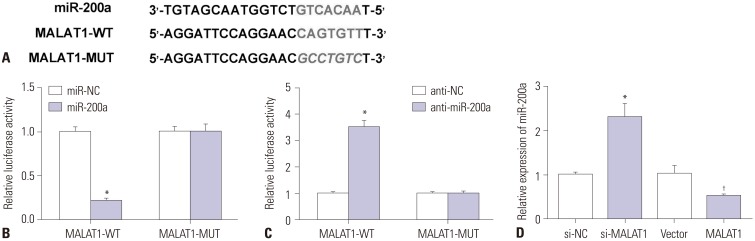
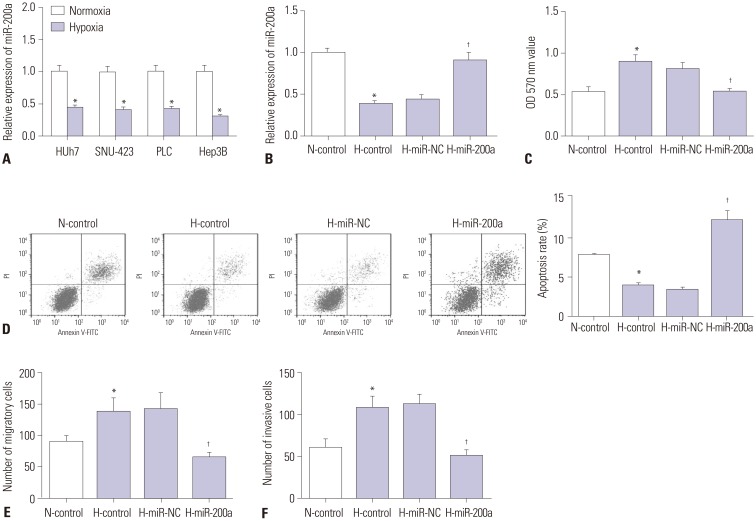
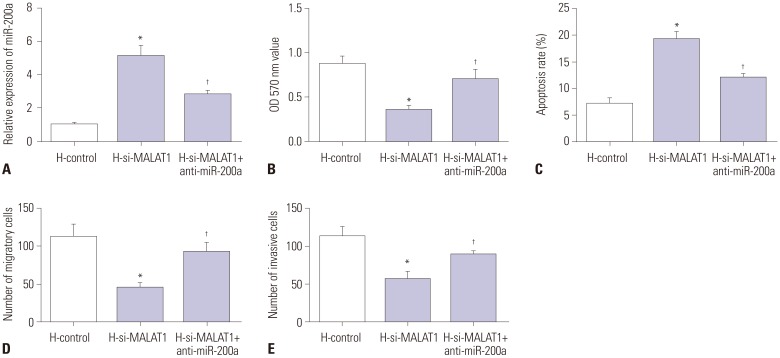
Results: MALAT1 levels were significantly upregulated in HCC cells under hypoxia. Hypoxia promoted proliferation, migration, and invasion, and blocked apoptosis in Hep3B cells, which were weakened by knockdown of MALAT1. Starbase v2.0 showed that MALAT1 and miR-200a have a complementarity region, and luciferase reporter assay verified that MALAT1 interacted with miR-200a in Hep3B cells. Moreover, MALAT1 negatively regulated the expression of miR-200a. miR-200a levels were dramatically downregulated in HCC cells under hypoxia. Upregulation of miR-200a inhibited proliferation, migration, and invasion, and induced apoptosis in Hep3B cells under hypoxia. Interestingly, downregulation of miR-200a partially reversed the tumor-suppressive effect of knockdown of MALAT1 on Hep3B cells in hypoxic condition.
Conclusion: LncRNA MALAT1 was involved in proliferation, migration, invasion, and apoptosis by interacting with miR-200a in hypoxic Hep3B cells, revealing a new mechanism of MALAT1 involved in hypoxic HCC progression.
Keywords: HCC; MALAT1; hypoxic; miR-200a; proliferation.
© Copyright: Yonsei University College of Medicine 2019.
Conflict of interest statement
The authors have no potential conflicts of interest to disclose.
Figures

References
-
- Ferenci P, Fried M, Labrecque D, Bruix J, Sherman M, Omata M, et al. Hepatocellular carcinoma (HCC): a global perspective. J Clin Gastroenterol. 2010;44:239–245. - PubMed
-
- Venook AP, Papandreou C, Furuse J, de Guevara LL. The incidence and epidemiology of hepatocellular carcinoma: a global and regional perspective. Oncologist. 2010;15(Suppl 4):5–13. - PubMed
-
- Stuart KE, Anand AJ, Jenkins RL. Hepatocellular carcinoma in the United States. Prognostic features, treatment outcome, and survival. Cancer. 1996;77:2217–2222. - PubMed
-
- Höckel M, Vaupel P. Tumor hypoxia: definitions and current clinical, biologic, and molecular aspects. J Natl Cancer Inst. 2001;93:266–276. - PubMed
-
- Tatum JL, Kelloff GJ, Gillies RJ, Arbeit JM, Brown JM, Chao KS, et al. Hypoxia: importance in tumor biology, noninvasive measurement by imaging, and value of its measurement in the management of cancer therapy. Int J Radiat Biol. 2006;82:699–757. - PubMed
MeSH terms
Substances
LinkOut - more resources
Full Text Sources
Medical