


Misclassification in defining and diagnosing microcephaly
- PMID: 31347726
- PMCID: PMC6662617
- DOI: 10.1111/ppe.12561
Misclassification in defining and diagnosing microcephaly
Abstract
Background: Several health agencies define microcephaly for surveillance purposes using a single criterion, a percentile or Z-score cut-off for newborn head circumference. This definition, however, conflicts with the reported prevalence of microcephaly even in populations with endemic Zika virus.
Objective: We explored possible reasons for this conflict, hypothesising that the definition of microcephaly used in some studies may be incompletely described, lacking the additional clinical criteria that clinicians use to make a formal diagnosis. We also explored the potential for misclassification that can result from differences in these definitions, especially when applying a percentile cut-off definition in the presence of the much lower observed prevalence estimates that we believe to be valid.
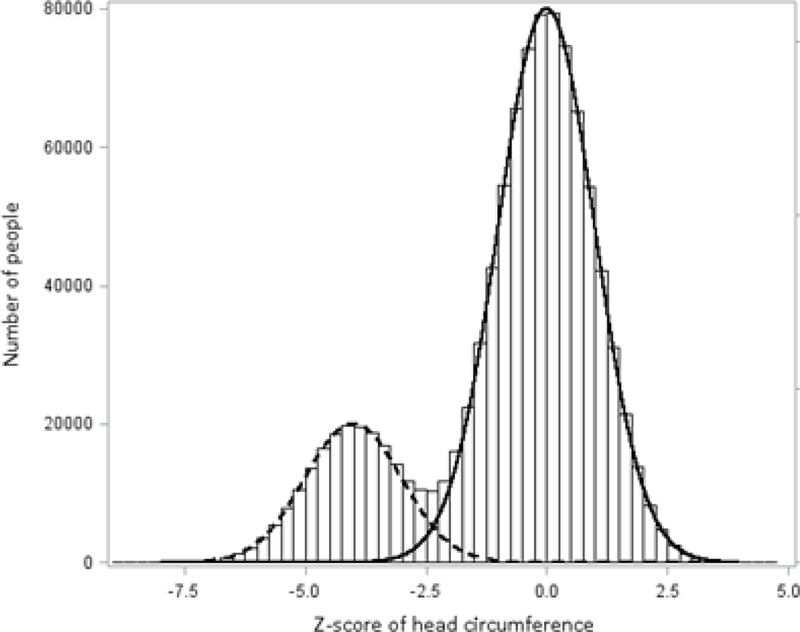
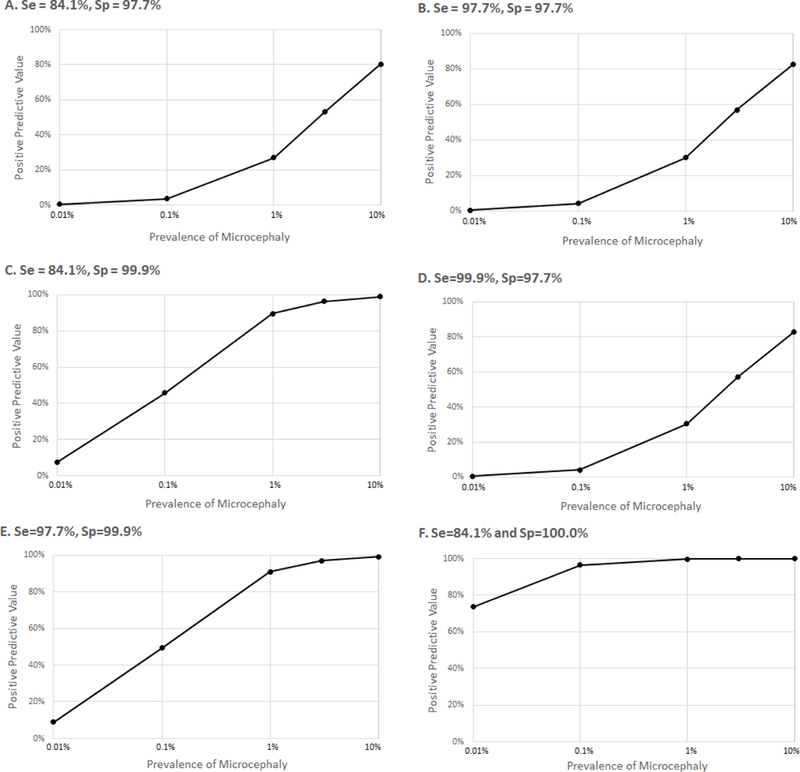
Methods: We conducted simulations under a theoretical bimodal distribution of head circumference. For different definitions of microcephaly, we calculated the sensitivity and specificity using varying cut-offs of head circumference. We then calculated and plotted the positive predictive value for each of these definitions by prevalence of microcephaly.
Results: Simple simulations suggest that if the true prevalence of microcephaly is approximately what is reported in peer-reviewed literature, then relying on cut-off-based definitions may lead to very poor positive predictive value under realistic conditions.
Conclusions: While a simple head circumference criterion may be used in practice as a screening or surveillance tool, the definition lacks clarification as to what constitutes true pathological microcephaly and may lead to confusion about the true prevalence of microcephaly in Zika-endemic areas, as well as bias in aetiologic studies.
Keywords: Zika virus; epidemiology; microcephaly; misclassification.
© 2019 John Wiley & Sons Ltd.
Conflict of interest statement
Conflict of interest None declared.
Figures
References
-
- Ribeiro IG, Andrade MR, Silva JM, Silva ZM, Costa MAO, Vieira M, et al. Microcephaly in Piaui, Brazil: descriptive study during the Zika virus epidemic, 2015–2016. Epidemiol Serv Saude. 2018; 27:e20163692. - PubMed
-
- Nunes ML, Carlini CR, Marinowic D, Neto FK, Fiori HH, Scotta MC, et al. Microcephaly and Zika virus: a clinical and epidemiological analysis of the current outbreak in Brazil. J Pediatr (Rio J). 2016; 92:230–240. - PubMed
-
- Centers for Disease Control and Prevention. Facts about Microcephaly. 2016. [February 9, 2018]; Available from: https://www.cdc.gov/ncbddd/birthdefects/microcephaly.html.
Publication types
MeSH terms
Supplementary concepts
Grants and funding
LinkOut - more resources
Full Text Sources
Medical
