


ImPROving TB outcomes by modifying LIFE-style behaviours through a brief motivational intervention followed by short text messages (ProLife): study protocol for a randomised controlled trial
- PMID: 31349850
- PMCID: PMC6660690
- DOI: 10.1186/s13063-019-3551-9
ImPROving TB outcomes by modifying LIFE-style behaviours through a brief motivational intervention followed by short text messages (ProLife): study protocol for a randomised controlled trial
Abstract
Background: South Africa is among the seven highest tuberculosis (TB) burden countries. Harmful lifestyle behaviours, such as smoking and alcohol, and poor adherence to medication can affect clinical outcomes. Modification of these behaviours is likely to improve TB treatment outcomes and has proven possible using motivational interviewing (MI) techniques or use of short message service (SMS) text messaging. There have been no studies assessing the effect of combined MI and SMS interventions on multiple lifestyle factors and TB treatment outcomes.
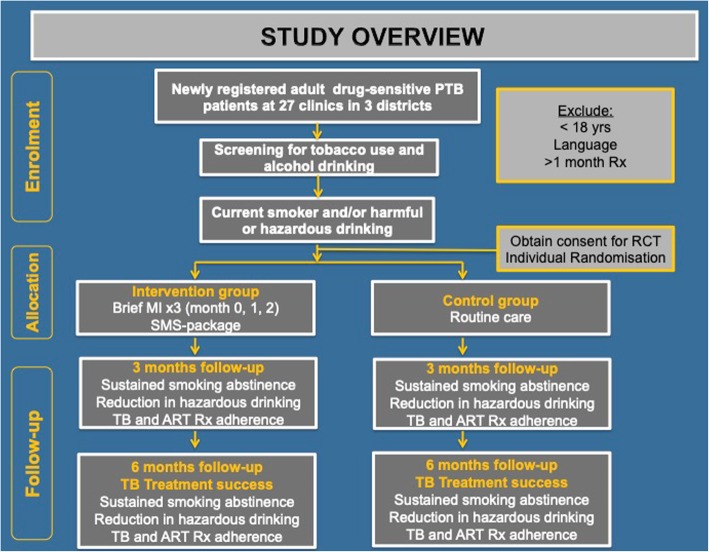
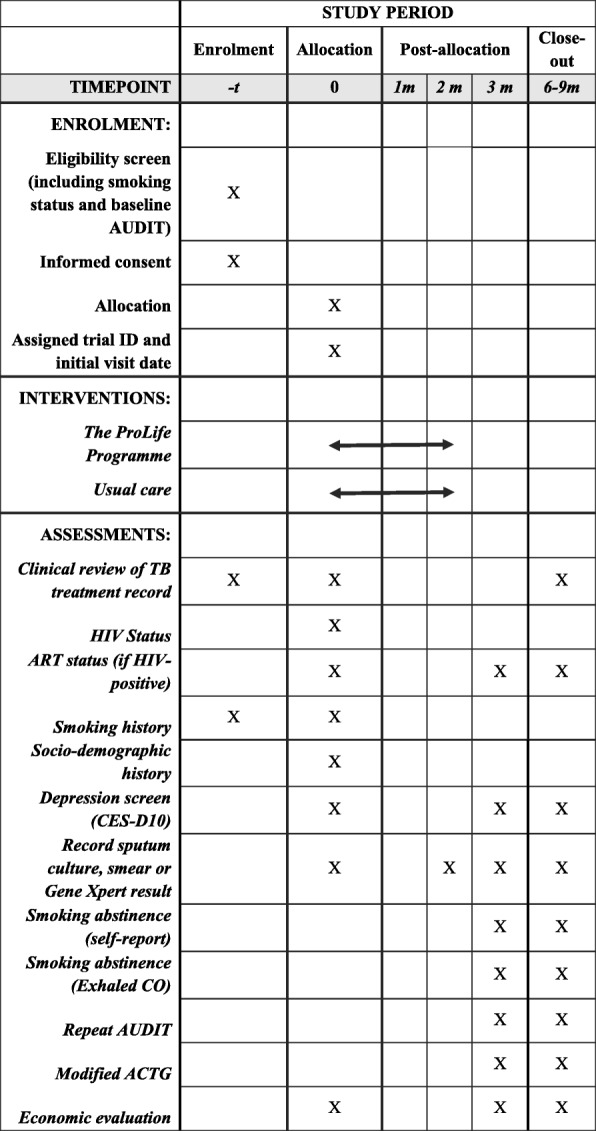
Methods: This is a prospective, multicentre, two-arm individual randomised controlled trial looking at the effectiveness and cost-effectiveness of a complex behavioural intervention (the ProLife programme) on improving TB and lifestyle-related outcomes in three provinces of South Africa. The ProLife programme consists of an MI counselling strategy, delivered by lay health workers, augmented with subsequent SMS. We aim to recruit 696 adult participants (aged 18 years and over) with drug-sensitive pulmonary TB who are current smokers and/or report harmful or hazardous alcohol use. Patients will be consecutively enrolled at 27 clinics in three different health districts in South Africa. Participants randomised individually to the intervention arm will receive three MI counselling sessions one month apart. Each MI session will be followed by twice-weekly SMS messages targeting treatment adherence, alcohol use and tobacco smoking, as appropriate. We will assess the effect on TB treatment success, using standard World Health Organization (WHO) treatment outcome definitions (primary outcome), as well as on a range of secondary outcomes including smoking cessation, reduction in alcohol use, and TB medication and anti-retroviral therapy adherence. Secondary outcomes will be measured at the three-month and six-month follow-ups.
Discussion: This trial aligns with the WHO agenda of integrating TB care with the care for chronic diseases of lifestyle, such as provision of smoking cessation treatments, and with the use of digital technologies. If the ProLife programme is found to be effective and cost-effective, the programme could have significant implications for TB treatment globally and could be successfully implemented in a wide range of TB treatment settings.
Trial registration: ISRCTN Registry, ISRCTN62728852. Registered on 13 April 2018.
Keywords: Adherence; Alcohol; Anti-retroviral therapy; Motivational interviewing; Smoking; Tuberculosis.
Conflict of interest statement
The authors declare that they have no competing interests.
Figures
References
-
- World Health Organization. Global tuberculosis report 2017. Geneva: World Health Organization. https://www.who.int/tb/publications/global_report/en/. Accessed 2 Dec 2017
-
- Department of Health, Republic of South Africa. National Tuberculosis Management Guidelines. 2014. http://www.tbonline.info/media/uploads/documents/ntcp_adult_tb-guideline.... Accessed 8 Jan 2018
-
- Peltzer K, Naidoo P, Louw J, Matseke G, Zuma K, McHunu G, et al. Screening and brief interventions for hazardous and harmful alcohol use among patients with active tuberculosis attending primary public care clinics in South Africa: results from a cluster randomized controlled trial. BMC Public Health. 2013;13:699. http://doi.org/10.1186/1471-2458-13-699. - PMC - PubMed
-
- Peltzer K. Conjoint alcohol and tobacco use among tuberculosis patients in public primary healthcare in South Africa. S Afr J Psych. 2014;20(1):21–26. doi: 10.4102/sajpsychiatry.v20i1.482. - DOI
Publication types
MeSH terms
Substances
Grants and funding
LinkOut - more resources
Full Text Sources
Medical
Miscellaneous
