


Strengthening national health research systems in the WHO African Region - progress towards universal health coverage
- PMID: 31349851
- PMCID: PMC6660673
- DOI: 10.1186/s12992-019-0492-8
Strengthening national health research systems in the WHO African Region - progress towards universal health coverage
Abstract
Background: Health challenges and health systems set-ups differ, warranting contextualised healthcare interventions to move towards universal health coverage. As such, there is emphasis on generation of contextualized evidence to solve local challenges. However, weak research capacity and inadequate resources remain an impendiment to quality research in the African region. WHO African Region (WHO AFR) facilitated the adoption of a regional strategy for strengthening national health research systems (NHRS) in 2015. We assessed the progress in strengthening NHRS among the 47 member states of the WHO AFR.
Methods: We employed a cross sectional survey design using a semi structured questionnaire. All the 47member states of WHO AFR were surveyed. We assessed performance against indicators of the regional research strategy, explored facilitating factors and barriers to strengthening NHRS. Using the research barometer, which is a metric developed for the WHO AFR we assessed the strength of NHRS of member states. Data were analysed in Excel Software to calculate barometer scores for NHRS function and sub-function. Thematic content was employed in analysing the qualitative data. Data for 2014 were compared to 2018 to assess progress.
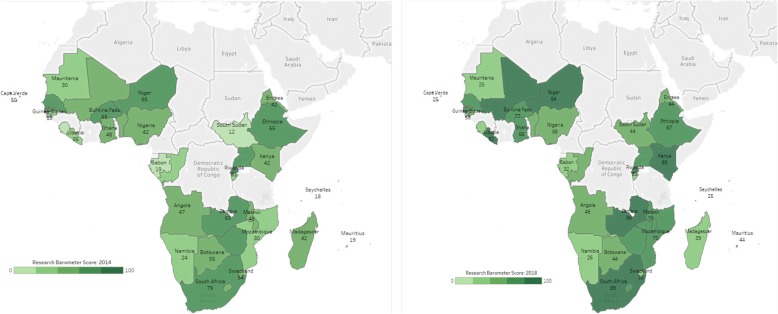
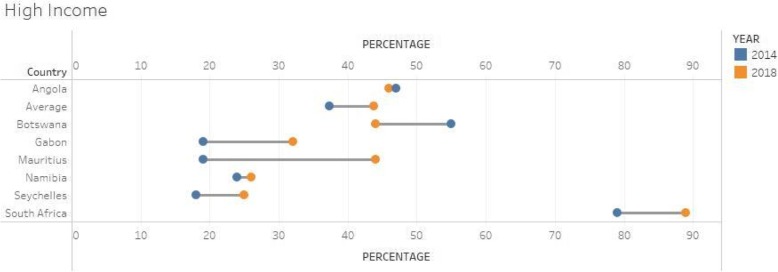
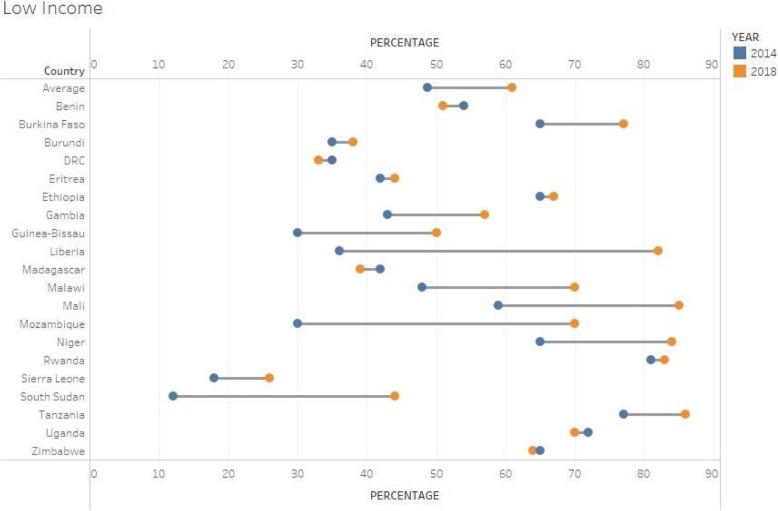
Results: WHO AFR member states have made significant progress in strengthening their NHRS. Some of the indicators have either attained or exceeded the 2025 targets. The average regional barometer score improved from 43% in 2014 to 61% in 2018. Significant improvements were registered in the governance of research for health (R4H); developing and sustaining research resources and producing and using research. Financing R4H improved only modestly. Among the constraints are the lengthy ethical clearance processes, weak research coordination mechanisms, weak enforcement of research laws and regulation, inadequate research infrastructure, limited resource mobilisation skills and donor dependence.
Conclusion: There has been significant improvement in the NHRS of member states of the WHO AFRO since the last assessment in 2014. Improvement across the different objectives of the regional research strategy is however varied which compromises overall performance. The survey highlighted the areas with slow improvement that require a concerted effort. Furthermore, the study provides an opportunity for countries to share best practice in areas of excellence.
Keywords: Barometer; Financing for research; National health research systems; Research coordination; Research for health governance.
Conflict of interest statement
The authors declare that they have no competing interests.
Figures


References
-
- World Health Organisation. The World Health Report 2013: Research for Universal Health Coverage. Geneva: WHO; 2013.
-
- Agyepong IA, Sewankambo N, Binagwaho A, Coll-Seck AM, Corrah T, Ezeh A, Fekadu A, Kilonzo N, Lamptey P, Masiye F, et al. The path to longer and healthier lives for all Africans by 2030: the lancet commission on the future of health in sub-Saharan Africa. Lancet. 2018;390(10114):2803–2859. doi: 10.1016/S0140-6736(17)31509-X. - DOI - PubMed
-
- Collaborators GS. Measuring progress from 1990 to 2017 and projecting attainment to 2030 of the health-related sustainable development goals for 195 countries and territories: a systematic analysis for the global burden of disease study 2017. Lancet. 2018;392(10159):2091–2138. doi: 10.1016/S0140-6736(18)32281-5. - DOI - PMC - PubMed
-
- COHRED. Research and innovation as key drivers for health, equity and development. Cape Town; 2012.
Publication types
MeSH terms
Grants and funding
LinkOut - more resources
Full Text Sources
Research Materials
