. 2019 Sep 1;203(5):1122-1130.
doi: 10.4049/jimmunol.1900546. Epub 2019 Jul 26.

Genetic Variation in Surfactant Protein-A2 Delays Resolution of Eosinophilia in Asthma

Affiliations

Genetic Variation in Surfactant Protein-A2 Delays Resolution of Eosinophilia in Asthma

Alane Blythe C Dy et al. J Immunol. .

Abstract

Surfactant protein-A (SP-A) is an important mediator of pulmonary immunity. A specific genetic variation in SP-A2, corresponding to a glutamine (Q) to lysine (K) amino acid substitution at position 223 of the lectin domain, was shown to alter the ability of SP-A to inhibit eosinophil degranulation. Because a large subgroup of asthmatics have associated eosinophilia, often accompanied by inflammation associated with delayed clearance, our goal was to define how SP-A mediates eosinophil resolution in allergic airways and whether genetic variation affects this activity. Wild-type, SP-A knockout (SP-A KO) and humanized (SP-A2 223Q/Q, SP-A2 223K/K) C57BL/6 mice were challenged in an allergic OVA model, and parameters of inflammation were examined. Peripheral blood eosinophils were isolated to assess the effect of SP-A genetic variation on apoptosis and chemotaxis. Five days postchallenge, SP-A KO and humanized SP-A2 223K/K mice had persistent eosinophilia in bronchoalveolar lavage fluid compared with wild-type and SP-A2 223Q/Q mice, suggesting an impairment in eosinophil resolution. In vitro, human SP-A containing either the 223Q or the 223K allele was chemoattractant for eosinophils whereas only 223Q resulted in decreased eosinophil viability. Our results suggest that SP-A aids in the resolution of allergic airway inflammation by promoting eosinophil clearance from lung tissue through chemotaxis, independent of SP-A2 Q223K, and by inducing apoptosis of eosinophils, which is altered by the polymorphism.


Figures

Figure 1.
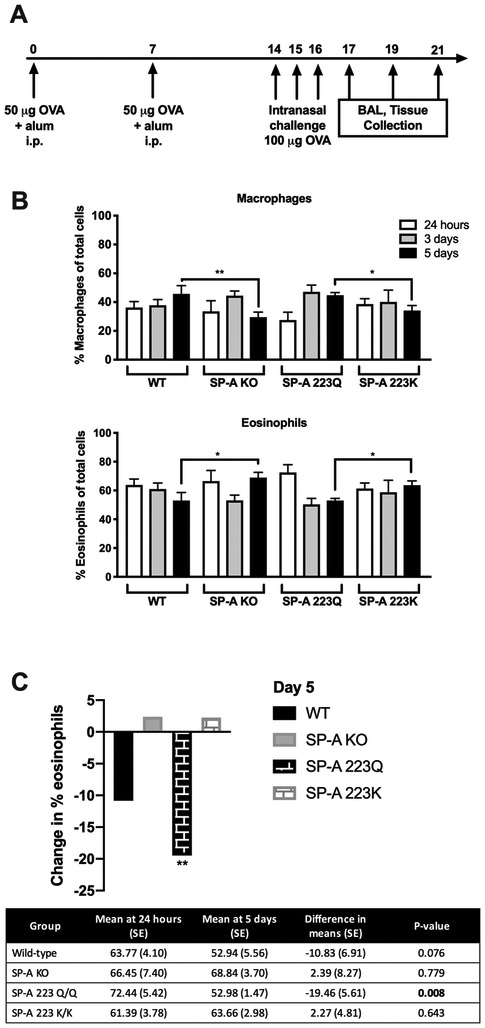
Figure 1.. Assessment of BALF eosinophilia over time.
A) OVA model of allergic airways. B) Cell distribution in BALF at 24 hours, 3 days and 5 days post-terminal challenge. C) Net change in eosinophil frequencies over time. Table shows difference in means at 24 hours and 5 days, unpaired Student’s t-test. One-way ANOVA with Bonferonni’s correction for multiple comparisons, *p<0.05, **p<0.01 Data (mean ± SEM) are from at least two independent experiments with n = 3-5 mice/group.
Figure 2.
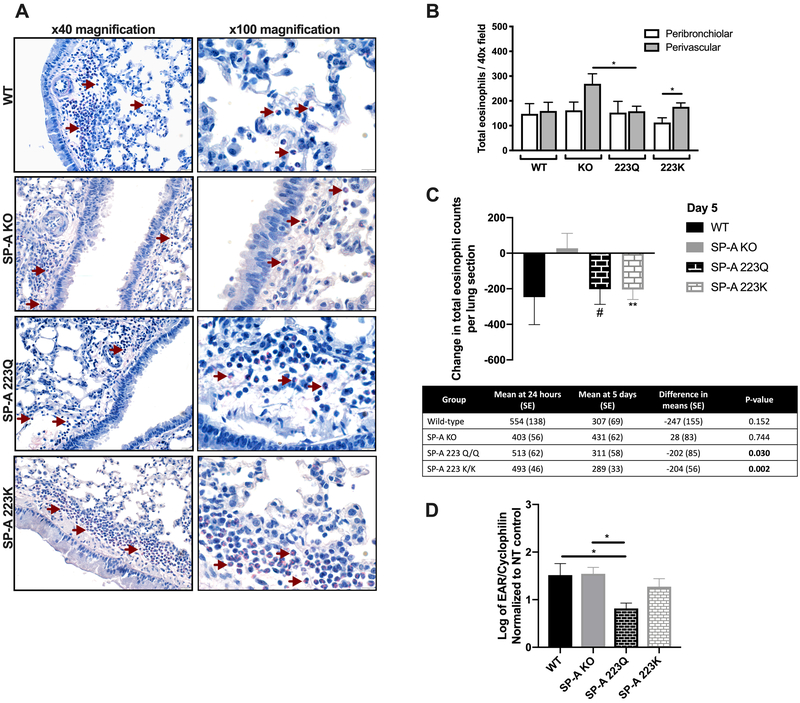
Figure 2.. Assessment of tissue eosinophilia over time.
A) Representative bright field images of eosinophils (red arrows indicate representative eosinophils with bright pink-stained cytoplasm) in lung tissue by Sirius red staining (left panel: 40x magnification, right panel: 100x magnification) and B) quantification of eosinophil counts at day 5. C) Net change in eosinophil frequencies over time. Table shows difference in means at 24 hours and 5 days, unpaired Student’s t-test, #p<0.05, **p<0.01 D) EAR mRNA in lung tissue at 5 days post-terminal challenge. One-way ANOVA with Bonferonni’s correction for multiple comparisons, *p<0.05. Data (mean ± SEM) are from at least two independent experiments with n = 3-5 mice/group.
Figure 3.
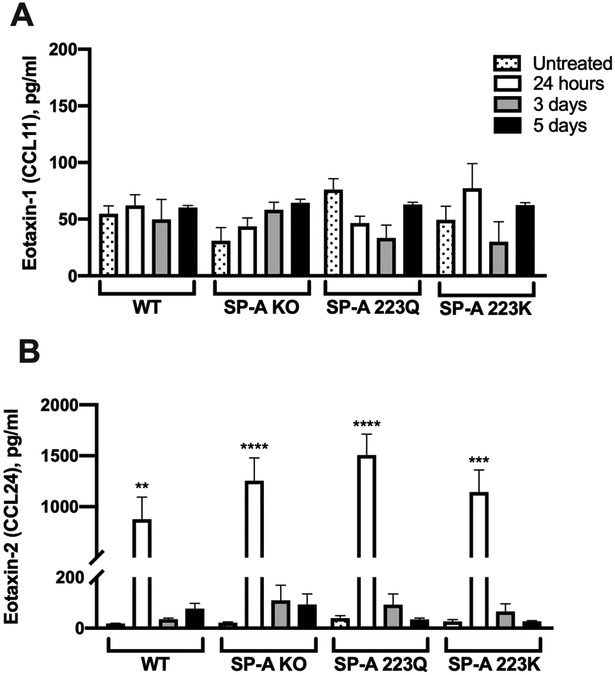
Figure 3.. Examination of eotaxins in BALF after OVA challenge.
Analysis of protein concentrations by ELISA of A) eotaxin-1 or CCL11, and B) eotaxin-2 or CCL24. One-way ANOVA with Bonferroni’s correction for multiple comparisons. Data (mean ± SEM) are from at least two independent experiments with n = 3-5 mice/group.
Figure 4.
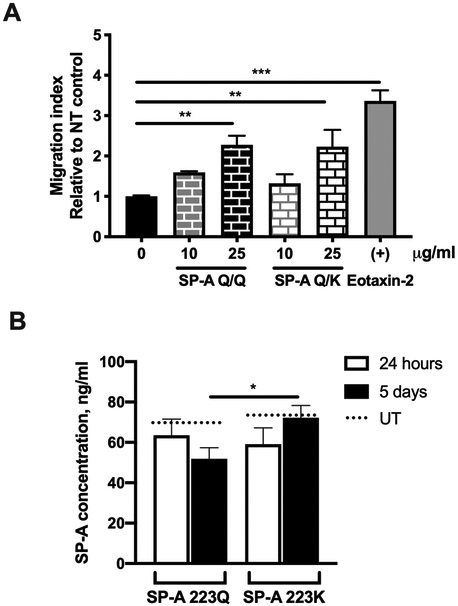
Figure 4.. Evaluation of the ability of SP-A to induce eosinophil migration in vitro.
A) Migration of mouse eosinophils was measured by a plate-based assay. Migration index calculated as number of live eosinophils in the bottom chamber over control. B) SP-A concentrations in BALF of OVA challenged mice, UT = untreated. One-way ANOVA with Bonferonni’s correction for multiple comparisons. *p<0.05, **p<0.01, ***p<0.001. Data (mean ± SEM) are from at least two independent experiments with n = 2-3 replicates/treatment or 3-5 mice/group.
Figure 5.
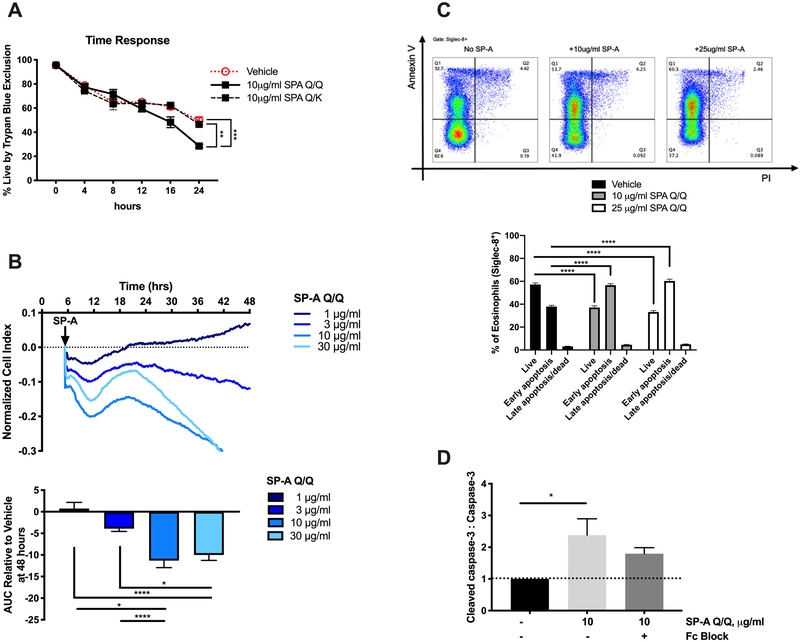
Figure 5.. Evaluation of the ability of SP-A to induce eosinophil apoptosis in mouse and human eosinophils in vitro.
A) Time course of viability assessed by Trypan Blue and B) RTCA tracing and dose response of in vitro stimulation of mouse eosinophils by SP-A, AUC = area under the curve. C) Representative flow diagrams of human eosinophil apoptosis and cell death by Annexin V and PI and quantification after 16 hours incubation with SP-A; live = Annexin V, PI, early apoptosis = Annexin V+, PI, late apoptosis/dead = Annexin V+, PI+ D) Densitometry of caspase-3 by Western blot of mouse eosinophils standardized to non-treated control. ANOVA with correction for multiple comparisons, *p<0.05, **p<0.01, ***p<0.001, ****p<0.0001. Data (mean ± SEM) are from at least two independent experiments with n = 2-3 replicates/treatment.
Figure 6.
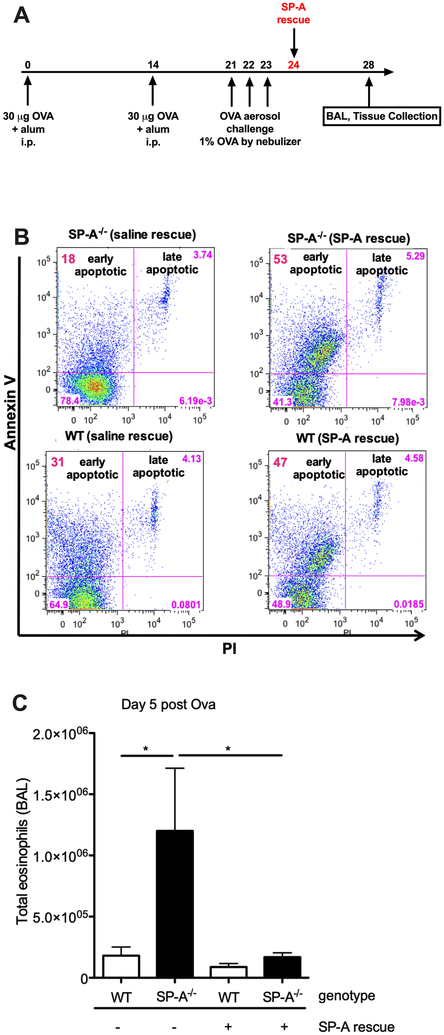
Figure 6.. Evaluation of the effect of exogenous SP-A administration on eosinophils in SP-A deficient mice after OVA challenge.
A) Schematic of OVA challenge and SP-A rescue. B) Representative flow diagrams of eosinophil apoptosis and cell death by Annexin V and PI. C) Total live eosinophil counts in BALF 5 days post-terminal challenge. *p<0.05. Data (mean ± SEM) are representative of two independent experiments with n = 5 mice/group.

References

    1. Wright JR 2005. Immunoregulatory functions of surfactant proteins. Nat Rev Immunol 5: 58–68. - PubMed
    1. Wang Y, Voelker DR, Lugogo NL, Wang G, Floros J, Ingram JL, Chu HW, Church TD, Kandasamy P, Fertel D, Wright JR, and Kraft M. 2011. Surfactant protein A is defective in abrogating inflammation in asthma. Am J Physiol Lung Cell Mol Physiol 301: L598–606. - PMC - PubMed
    1. Kannan TR, Provenzano D, Wright JR, and Baseman JB. 2005. Identification and characterization of human surfactant protein A binding protein of Mycoplasma pneumoniae. Infect Immun 73: 2828–2834. - PMC - PubMed
    1. Piboonpocanun S, Chiba H, Mitsuzawa H, Martin W, Murphy RC, Harbeck RJ, and Voelker DR. 2005. Surfactant protein A binds Mycoplasma pneumoniae with high affinity and attenuates its growth by recognition of disaturated phosphatidylglycerols. J Biol Chem 280: 9–17. - PubMed
    1. Pastva AM, Mukherjee S, Giamberardino C, Hsia B, Lo B, Sempowski GD, and Wright JR. 2011. Lung effector memory and activated CD4+ T cells display enhanced proliferation in surfactant protein A-deficient mice during allergen-mediated inflammation. J Immunol 186: 2842–2849. - PMC - PubMed

Publication types

MeSH terms

Substances