Review
. 2020 Jan;1865(1):158499.
doi: 10.1016/j.bbalip.2019.07.008. Epub 2019 Jul 25.

Spatial compartmentalization of lipid droplet biogenesis

Affiliations
Review

Spatial compartmentalization of lipid droplet biogenesis

Mike Henne et al. Biochim Biophys Acta Mol Cell Biol Lipids. 2020 Jan.

Abstract

Lipid droplets (LDs) are ubiquitous organelles that store metabolic energy in the form of neutral lipids (typically triacylglycerols and steryl esters). Beyond being inert energy storage compartments, LDs are dynamic organelles that participate in numerous essential metabolic functions. Cells generate LDs de novo from distinct sub-regions at the endoplasmic reticulum (ER), but what determines sites of LD formation remains a key unanswered question. Here, we review the factors that determine LD formation at the ER, and discuss how they work together to spatially and temporally coordinate LD biogenesis. These factors include lipid synthesis enzymes, assembly proteins, and membrane structural requirements. LDs also make contact with other organelles, and these inter-organelle contacts contribute to defining sites of LD production. Finally, we highlight emerging non-canonical roles for LDs in maintaining cellular homeostasis during stress.

Keywords: Endoplasmic reticulum; Fatty acid; Lipid droplet; Lipotoxicity; Metabolon.


Figures

Figure 1.
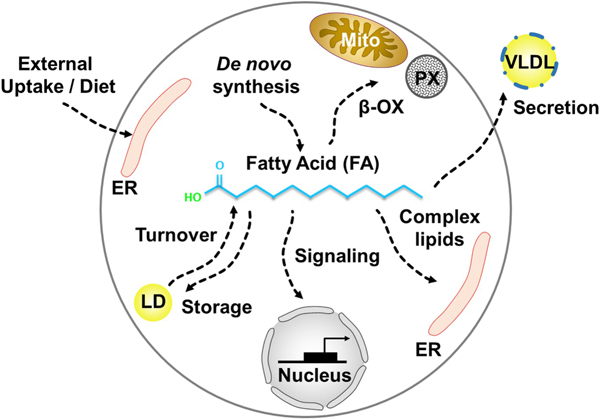
Figure 1.. Metabolic fates of fatty acids.
FAs synthesized de novo or taken up from the external cellular environment have multiple metabolic fates. These include incorporation into membrane phospholipids and complex lipids, degradation and energy generation by oxidation, storage in lipid droplets, esterification to proteins, signaling and regulation of transcription factors, or secretion.
Figure 2.
Figure 2.. Potential mechanisms for organelle tethers / scaffolds in regulating metabolic organization.
In the absence of compartmentalization cells face many challenges. Enzyme availability affects flux through metabolic pathways. Toxic intermediates accumulate in membranes and cause toxicity. Intermediates enter into competing reactions diluting the final product yield (A). Scaffolds or tethers recruit metabolic enzyme complexes which enhances pathway efficiency (B). Scaffolds can also bind and sequester intermediates which enhances their stability and prevents their entry into competing reactions. Increasing local concentration of intermediates also enhances metabolic efficiency (C).

References

    1. Adeyo O, Horn PJ, Lee S, Binns DD, Chandrahas A, Chapman KD, and Goodman JM (2011). The yeast lipin orthologue Pah1p is important for biogenesis of lipid droplets. J. Cell Biol. 192, 1043–1055. - PMC - PubMed
    1. Alvarez HM, and Steinbüchel A (2002). Triacylglycerols in prokaryotic microorganisms. Appl. Microbiol. Biotechnol. 60, 367–376. - PubMed
    1. Athenstaedt K, and Daum G (1997). Biosynthesis of phosphatidic acid in lipid particles and endoplasmic reticulum of Saccharomyces cerevisiae. J. Bacteriol. 179, 7611–7616. - PMC - PubMed
    1. Avalos JL, Fink GR, and Stephanopoulos G (2013). Compartmentalization of metabolic pathways in yeast mitochondria improves production of branched chain alcohols. Nat. Biotechnol. 31, 335–341. - PMC - PubMed
    1. Barbosa AD, and Siniossoglou S (2016). Spatial distribution of lipid droplets during starvation: Implications for lipophagy. Commun. Integr. Biol. 9:4, DOI: 10.1080/19420889.2016.1183854 - DOI - PMC - PubMed

Publication types