Review
. 2019 Jun 11:14:4333-4351.
doi: 10.2147/IJN.S209431. eCollection 2019.

Advancements and frontiers in nano-based 3D and 4D scaffolds for bone and cartilage tissue engineering

Affiliations
Review

Advancements and frontiers in nano-based 3D and 4D scaffolds for bone and cartilage tissue engineering

Muhammad Qasim et al. Int J Nanomedicine. .

Abstract

Given the enormous increase in the risks of bone and cartilage defects with the rise in the aging population, the current treatments available are insufficient for handling this burden, and the supply of donor organs for transplantation is limited. Therefore, tissue engineering is a promising approach for treating such defects. Advances in materials research and high-tech optimized fabrication of scaffolds have increased the efficiency of tissue engineering. Electrospun nanofibrous scaffolds and hydrogel scaffolds mimic the native extracellular matrix of bone, providing a support for bone and cartilage tissue engineering by increasing cell viability, adhesion, propagation, and homing, and osteogenic isolation and differentiation, vascularization, host integration, and load bearing. The use of these scaffolds with advanced three- and four-dimensional printing technologies has enabled customized bone grafting. In this review, we discuss the different approaches used for cartilage and bone tissue engineering.

Keywords: biomaterials; bioprinting; extracellular matrix; tissue engineering.


Conflict of interest statement

Prof Dr Dong Sik Chae reports grants from National Research Foundation of Korea and the Ministry of Health & Welfare, Republic of Korea, during the conduct of study. The authors report no other conflicts of interest in this work.

Figures
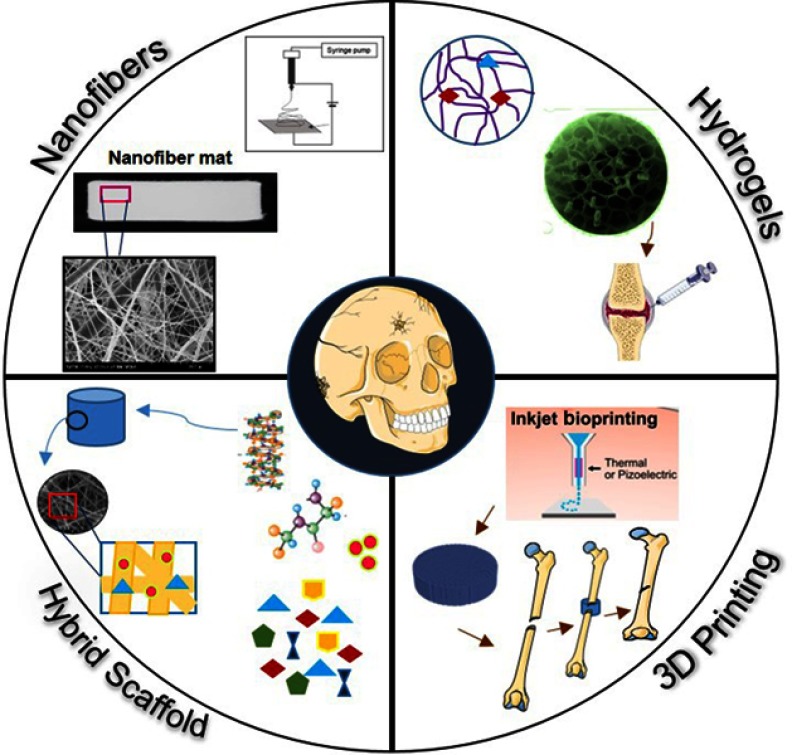
Figure 1
Figure 1
Different advanced strategies for scaffold fabrication used in bone and cartilage tissue engineering: nanofibers, hydrogels, and 3D printing.
Figure 2
Figure 2
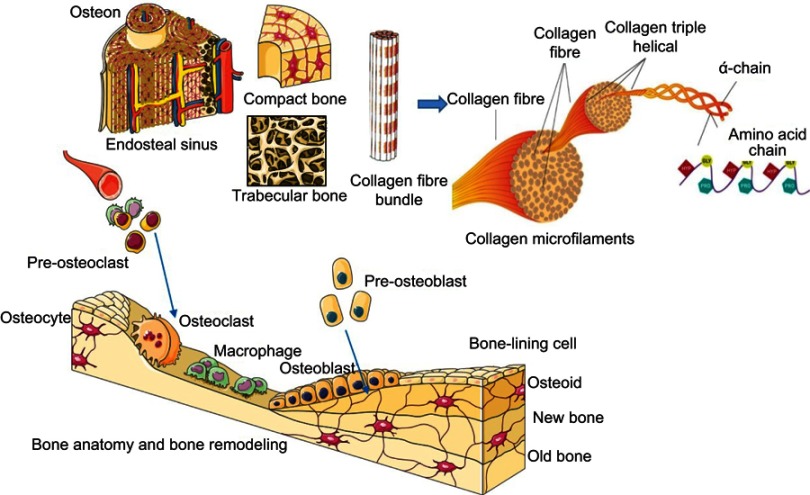
(A) Anatomical hierarchy of bone and its types (compact bone, trabecular bone); (B) bone remodeling mechanism in which three types of bone cells (osteocyte, osteoclast, and osteoblast) participate.
Figure 3
Figure 3
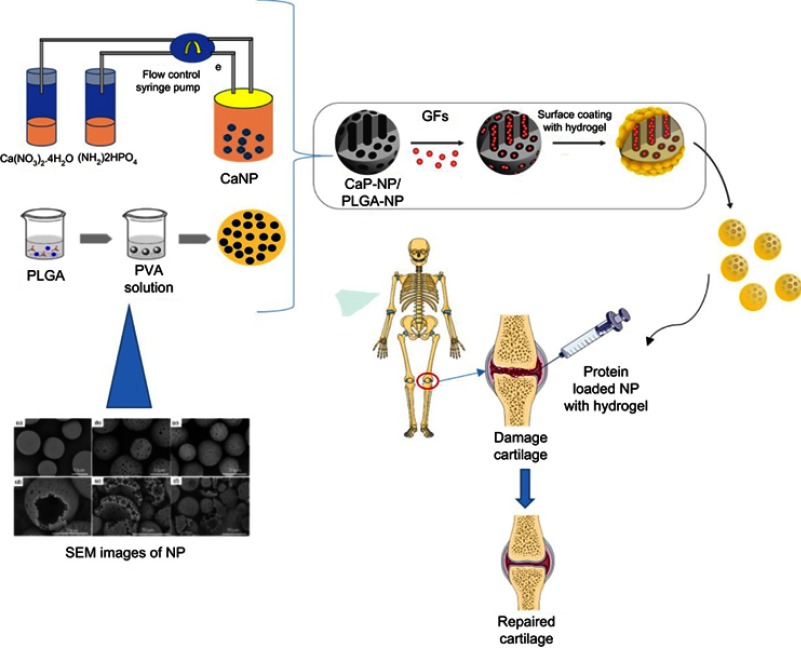
Fabrication of hybrid scaffold for cartilage tissue engineering by using the Calcium nanoparticle or PLGA nanoparticles loaded with GFs and mixed with hydrogel to support cartilage regeneration. Abbreviations: GF, growth factor; NP, nanoparticles; PLGA, poly(L-lactic-co-glycolic acid); PVA, poly(vinyl alcohol); SEM, scanning electron microscope.
Figure 4
Figure 4
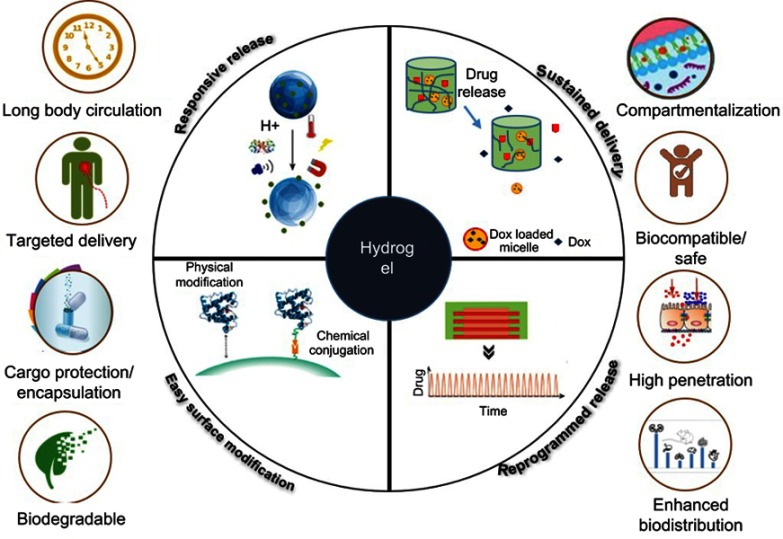
Properties of hydrogel scaffolds used in cartilage and bone tissue engineering through delivery of growth factors and cells and different delivery mechanisms based on stimulus, target site, and material.
Figure 5
Figure 5
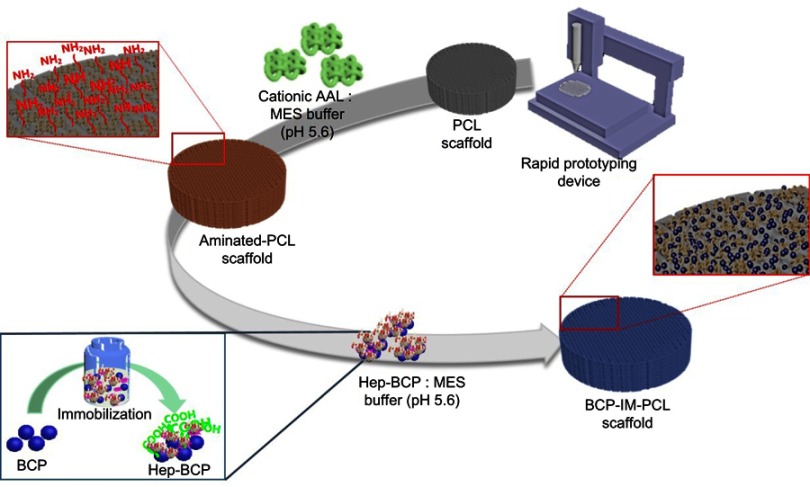
The 3D printing of a scaffold and its surface functionalization with active biological molecules to increase scaffold bioactivity: BCP conjugated with protein immobilized on a PCL 3D printed scaffold. Abbreviations: AAL, L-Alanine; BCP, biphasic calcium phosphate; Hep, heparin; IM, immobilized; MES, 2-(N-morpholino)ethanesulfonic acid; PCL, poly (∂>+-caprolactone).
Figure 6
Figure 6
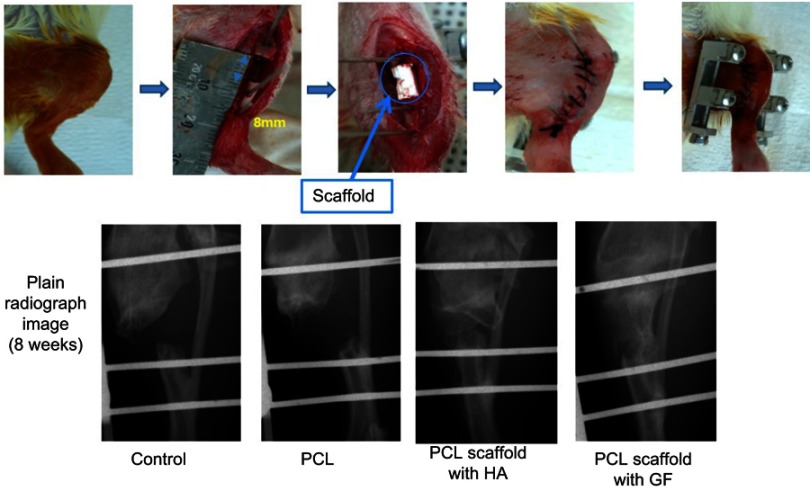
In vivo evaluation of a 3D-printed PCL scaffold for bone regeneration in a rat model through radiography with X-ray after 8 weeks. Abbreviations: GF, growth factor; HA, hydroxyapatite; PCL, poly(ε-caprolactone).

References

    1. Facts and Statistics | International Osteoporosis Foundation. Available from: https://www.iofbonehealth.org/facts-statistics. Accessed March 9, 2019.
    1. Haagsma JA, Graetz N, Bolliger I, et al. The global burden of injury: incidence, mortality, disability-adjusted life years and time trends from the Global Burden of Disease study 2013. Inj Prev. 2016;22:3–18. doi:10.1136/injuryprev-2015-041944 - DOI - PMC - PubMed
    1. Carrington JL. Aging bone and cartilage: cross-cutting issues. Biochem Biophys Res Commun. 2005;328:700–708. doi:10.1016/j.bbrc.2004.12.193 - DOI - PubMed
    1. Baroli B. From natural bone grafts to tissue engineering therapeutics: brainstorming on pharmaceutical formulative requirements and challenges. J Pharm Sci. 2009;98:1317–1375. doi:10.1002/jps.21528 - DOI - PubMed
    1. Wijewardena A, Vandervord E, Lajevardi SS, Vandervord J, Jackson CJ. Combination of activated Protein C and topical negative pressure rapidly regenerates granulation tissue over exposed bone to heal recalcitrant orthopedic wounds. Int J Low Extrem Wounds. 2011;10:146–151. doi:10.1177/1534734611417342 - DOI - PubMed