Proposing standardised geographical indicators of physical access to emergency obstetric and newborn care in low-income and middle-income countries
- PMID: 31354979
- PMCID: PMC6623986
- DOI: 10.1136/bmjgh-2018-000778
Proposing standardised geographical indicators of physical access to emergency obstetric and newborn care in low-income and middle-income countries
Abstract
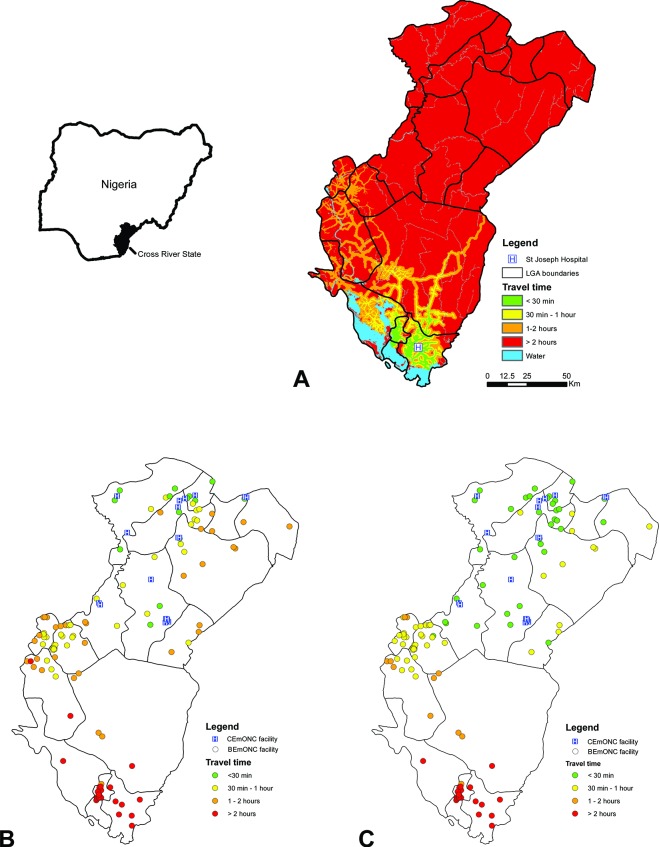
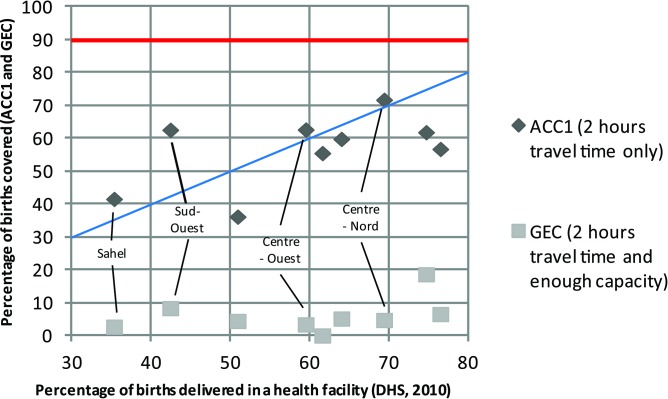
Emergency obstetric and newborn care (EmONC) can be life-saving in managing well-known complications during childbirth. However, suboptimal availability, accessibility, quality and utilisation of EmONC services hampered meeting Millennium Development Goal target 5A. Evaluation and modelling tools of health system performance and future potential can help countries to optimise their strategies towards reaching Sustainable Development Goal (SDG) 3: ensure healthy lives and promote well-being for all at all ages. The standard set of indicators for monitoring EmONC has been found useful for assessing quality and utilisation but does not account for travel time required to physically access health services. The increased use of geographical information systems, availability of free geographical modelling tools such as AccessMod and the quality of geographical data provide opportunities to complement the existing EmONC indicators by adding geographically explicit measurements. This paper proposes three additional EmONC indicators to the standard set for monitoring EmONC; two consider physical accessibility and a third addresses referral time from basic to comprehensive EmONC services. We provide examples to illustrate how the AccessMod tool can be used to measure these indicators, analyse service utilisation and propose options for the scaling-up of EmONC services. The additional indicators and analysis methods can supplement traditional EmONC assessments by informing approaches to improve timely access to achieve Universal Health Coverage and reach SDG 3.
Keywords: emergency obstetric and newborn care; physical accessibility; sustainable development goals; universal health coverage.
Conflict of interest statement
Competing interests: None declared.
Figures
References
-
- World Health Organization, United Nations Population Fund, United Nations Children's Fund, Averting Maternal Death and Disability. Monitoring emergency obstetric care: A handbook. Geneva: World Health Organization, 2009.
-
- Countdown to 2015 , 2014. Fulfilling the health agenda for women and children: The 2014 report. Available from: http://countdown2030.org/2014-report - PMC - PubMed
Publication types
Grants and funding
LinkOut - more resources
Full Text Sources