Mortality by cryptococcosis in Brazil from 2000 to 2012: A descriptive epidemiological study
- PMID: 31356603
- PMCID: PMC6687200
- DOI: 10.1371/journal.pntd.0007569
Mortality by cryptococcosis in Brazil from 2000 to 2012: A descriptive epidemiological study
Abstract
Background: Cryptococcosis is a neglected and predominantly opportunistic mycosis that, in Brazil, poses an important public health problem, due to its late diagnosis and high lethality.
Methods: The present study analysed cryptococcosis mortality in Brazil from January 2000 to December 2012, based on secondary data (Mortality Information System/SIM-DATASUS and IBGE).
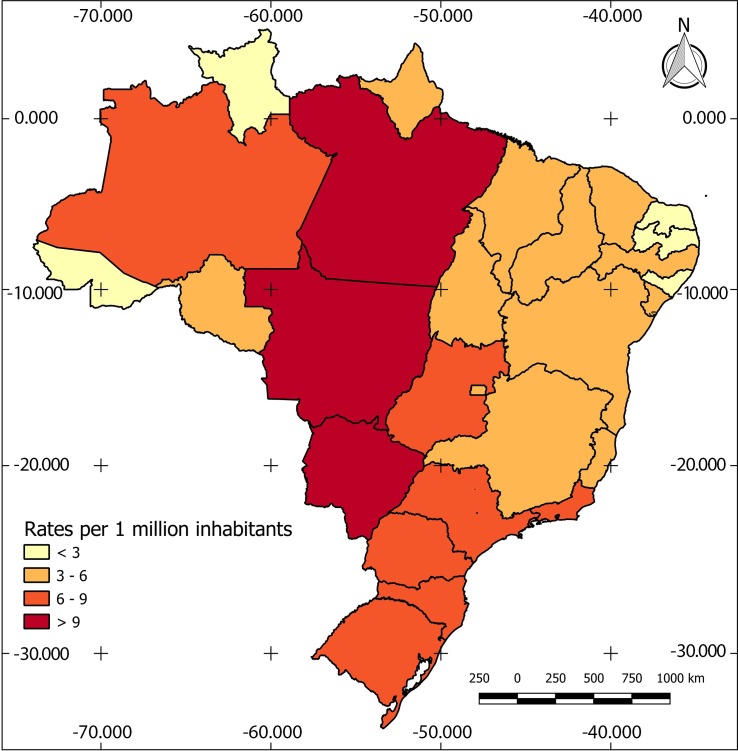
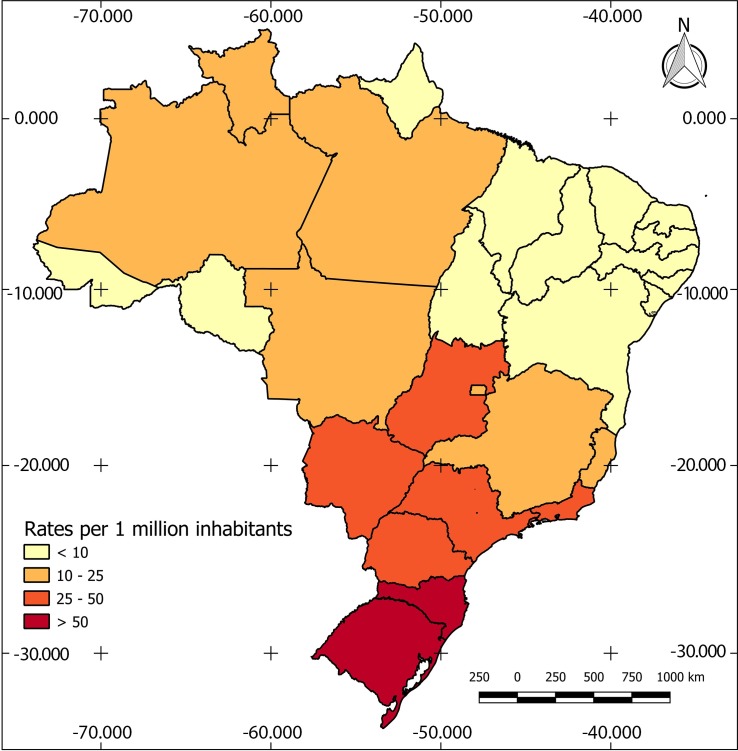
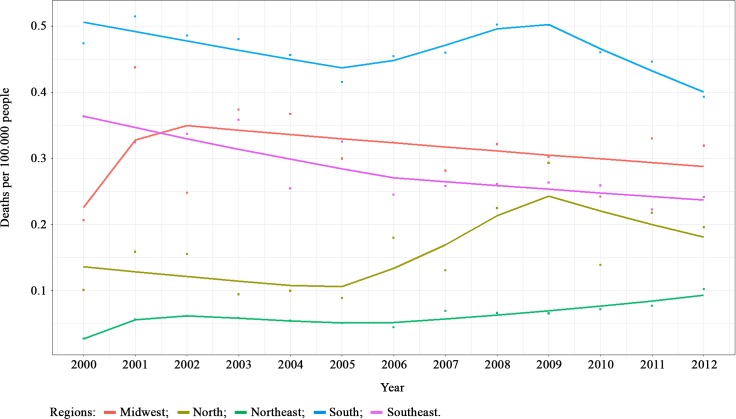
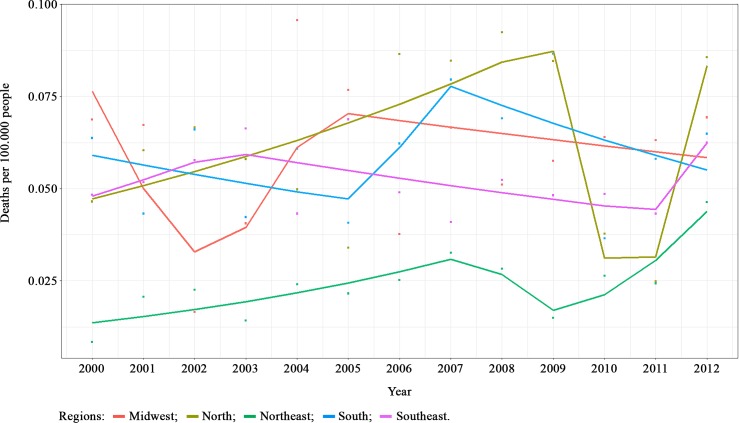
Results: Out of 5,755 recorded deaths in which cryptococcosis was mentioned as one of the morbid states that contributed to death, two distinct groups emerged: 1,121 (19.5%) registered cryptococcosis as the basic cause of death, and 4,634 (80.5%) registered cryptococcosis associated with risk factors, mainly AIDS (75%), followed by other host risks (5.5%). The mortality rate by cryptococcosis as the basic cause was 6.19/million inhabitants, whereas the mortality rate by cryptococcosis as an associated cause was 25.19/million inhabitants. Meningitis was the predominant clinical form (80%), males were the more affected (69%), and 39.5 years old was the mean age. The highest mortality rate due to cryptococcosis as basic cause occurred in the state of Mato Grosso (10.96/million inhabitants). Mortality rates due to cryptococcosis as associated cause were highest in the states of Santa Catarina (70.41/million inhabitants) and Rio Grande do Sul (64.40/million inhabitants), both in the South Region. Southeast, Northeast and South showed significant time trends in mortality rates.
Conclusions: This study is relevant because it shows the magnitude of cryptococcosis mortality linked to AIDS and removes the invisibility of a particular non-AIDS-related disease, accounting for almost 20% of all cryptococcosis deaths. It can also contribute to control and surveillance programs, beyond highlighting the urgent prioritization of early diagnosis and proper treatment to reduce the unacceptable mortality rate of this neglected mycosis in Brazil.
Conflict of interest statement
The authors have declared that no competing interests exist.
Figures
References
-
- Park BJ, Wannemuehler KA, Marston BJ, Govender N, Pappas PG, Chiller TM. Estimation of the current global burden of cryptococcal meningitis among persons living with HIV/AIDS. AIDS Lond Engl. 2009. February 20;23(4):525–30. - PubMed
Publication types
MeSH terms
LinkOut - more resources
Full Text Sources