


Changes in Roughness and Mechanical Properties of Invisalign® Appliances after One- and Two-Weeks Use
- PMID: 31357697
- PMCID: PMC6696190
- DOI: 10.3390/ma12152406
Changes in Roughness and Mechanical Properties of Invisalign® Appliances after One- and Two-Weeks Use
Abstract
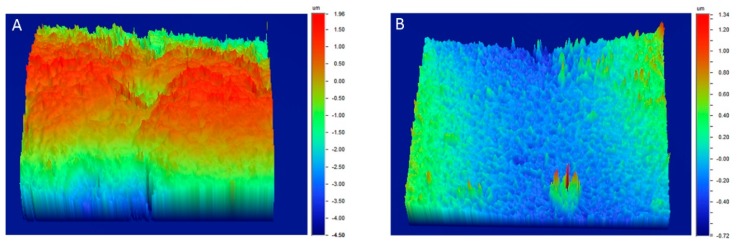
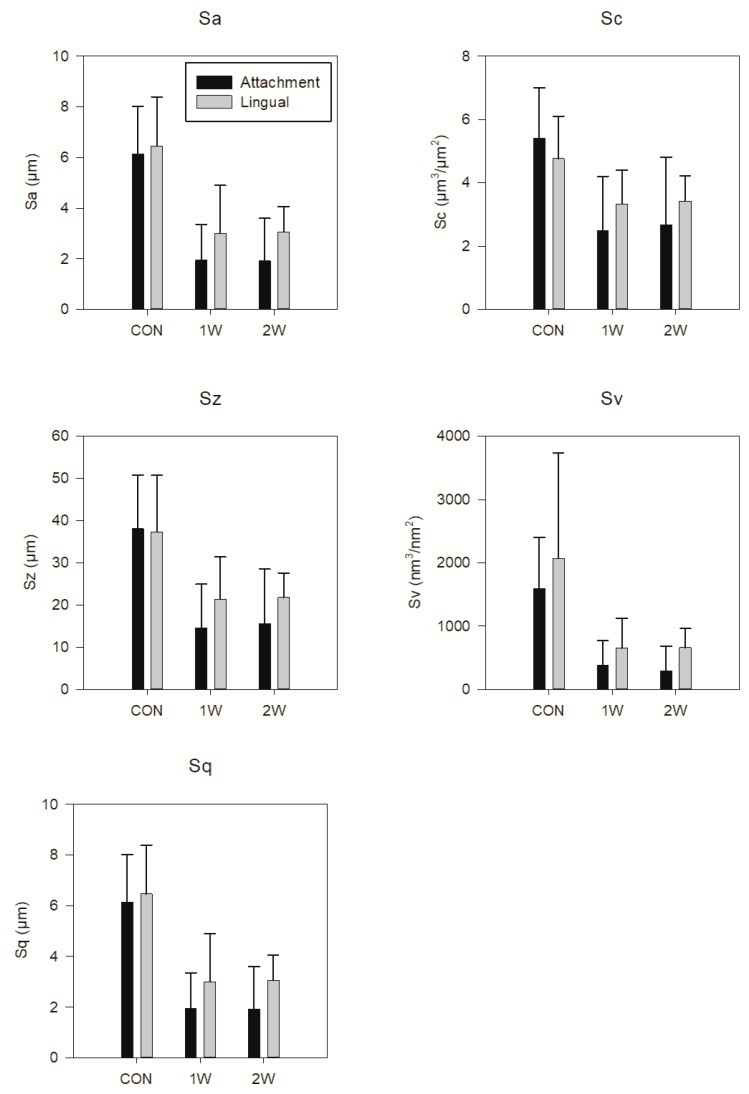
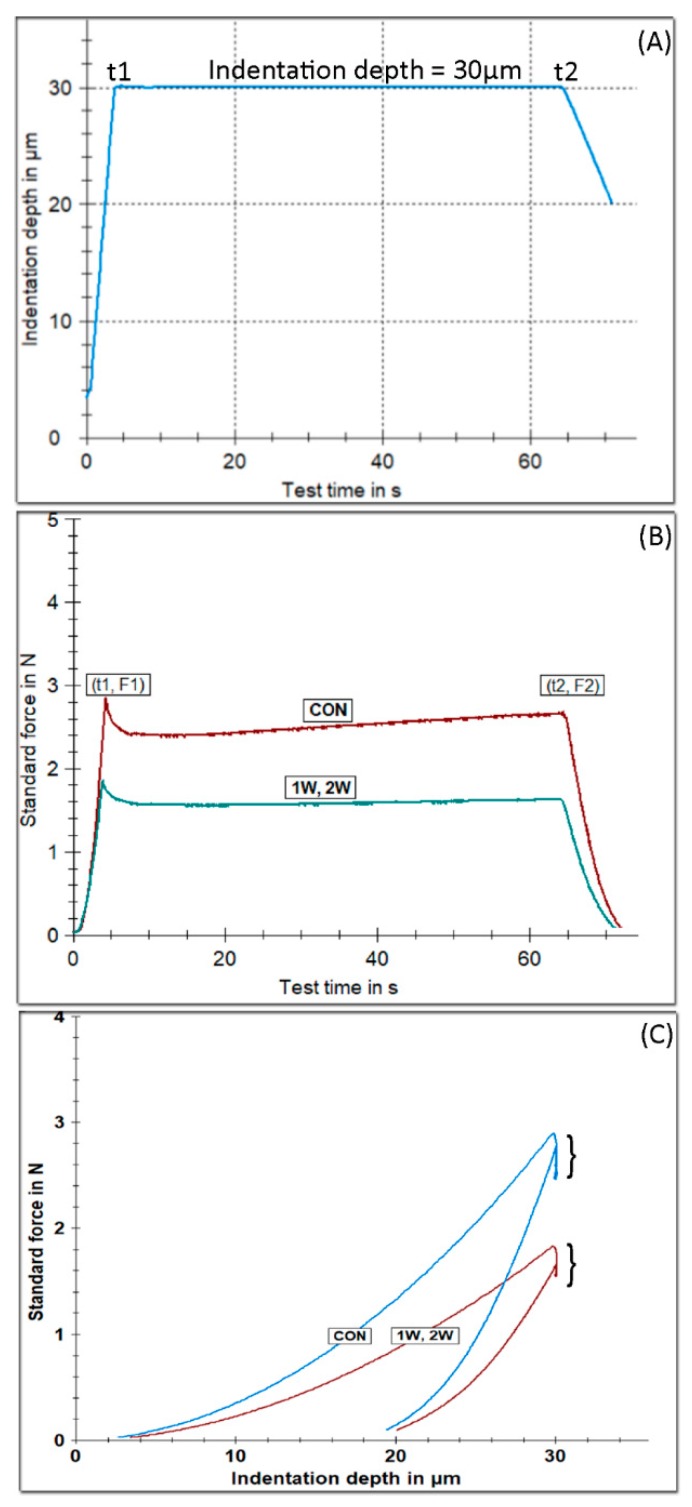
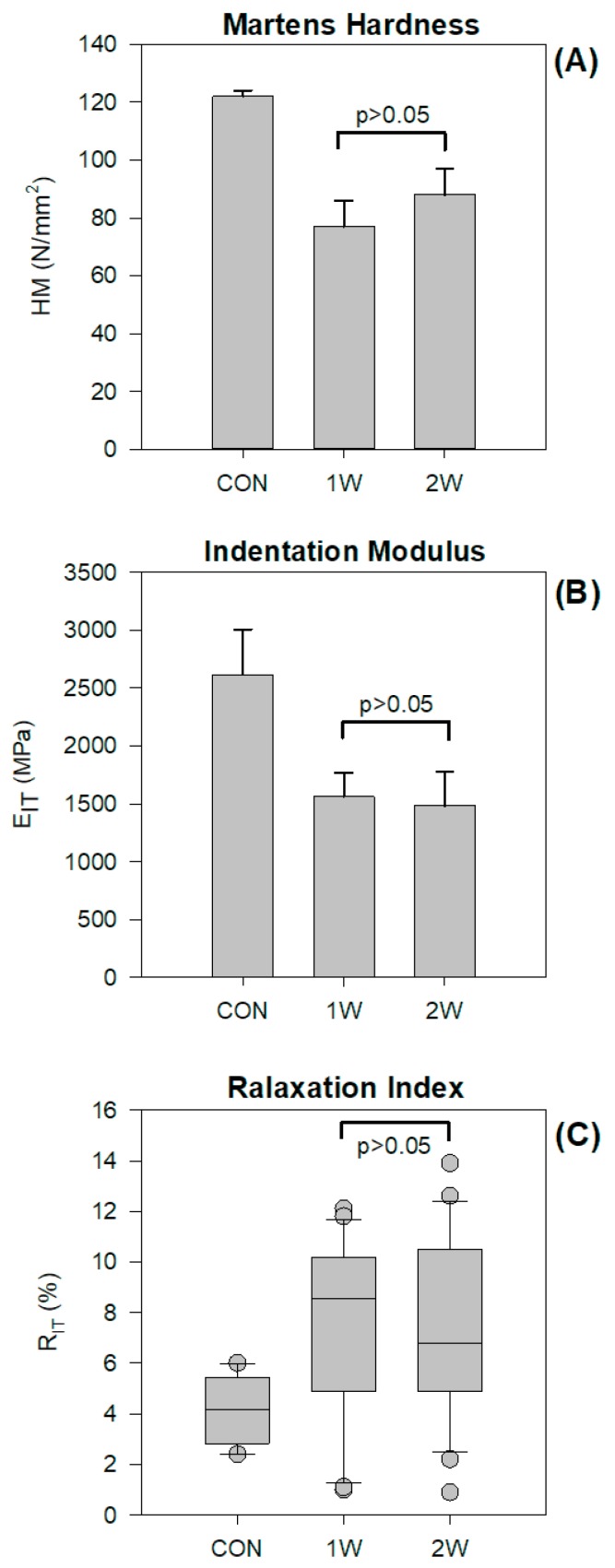
The aim of this study was to estimate the possible changes of surface roughness and the mechanical properties of Invisalign® appliances over one- and two-week of service. Forty appliances with attachments were retrieved after the end of orthodontic treatment from different patients. Half of them had been used for one week (1W), and the rest for two weeks (2W). Ten unused Invisalign® appliances were used as the control (CON). An equal number of teeth possessing attachments were cut of aligners deriving from all groups (1W, 2W, and CON), and the Sa, Sq, Sz, Sc, and Sv roughness parameters of the internal surface of the aligner attachment area and the opposite lingual side (which was in contact to enamel) were determined by optical profilometry. Then, ten first molars originating from all groups were embedded in acrylic resin, and were ground and polished. Instrumented indentation testing (IIT) was performed in order to determine the Martens hardness (HM), indentation modulus (EIT), and relaxation index (RIT), according to ISO 14577-2002. The produced data were statistically processed by one- or two-way analysis of variance (ANOVA) and multiple comparison post-hoc tests (a = 0.05). Both the surface roughness and mechanical properties of the retrieved groups (1W and 2W) showed statistically significant differences compared with CON, but without statistically significant differences between each other. The roughness variables of the as-received material were shown to be reduced after intraoral service demonstrating a wear effect. Ageing has a detrimental effect on the surface roughness and mechanical properties of Invisalign® appliances, although this effect is restricted to the first week of clinical usage.
Keywords: Invisalign®; instrumented indentation testing; mechanical properties; orthodontic appliances; relaxation.
Conflict of interest statement
The authors declare no conflict of interest.
Figures
References
-
- Alexandropoulos A., Al Jabbari Y.S., Zinelis S., Eliades T. Chemical and mechanical characteristics of contemporary thermoplastic orthodontic materials. Aust. Orthod. J. 2015;31:165–170. - PubMed
-
- Gracco A., Mazzoli A., Favoni O., Conti C., Ferraris P., Tosi G., Guarneri M.P. Short-term chemical and physical changes in invisalign appliances. Aust. Orthod. J. 2009;25:34–40. - PubMed
LinkOut - more resources
Full Text Sources
Other Literature Sources
