


Short amylin receptor antagonist peptides improve memory deficits in Alzheimer's disease mouse model
- PMID: 31358858
- PMCID: PMC6662706
- DOI: 10.1038/s41598-019-47255-9
Short amylin receptor antagonist peptides improve memory deficits in Alzheimer's disease mouse model
Erratum in
-
Author Correction: Short amylin receptor antagonist peptides improve memory deficits in Alzheimer's disease mouse model.Sci Rep. 2022 Apr 28;12(1):6982. doi: 10.1038/s41598-022-10922-5. Sci Rep. 2022. PMID: 35484381 Free PMC article. No abstract available.
Abstract
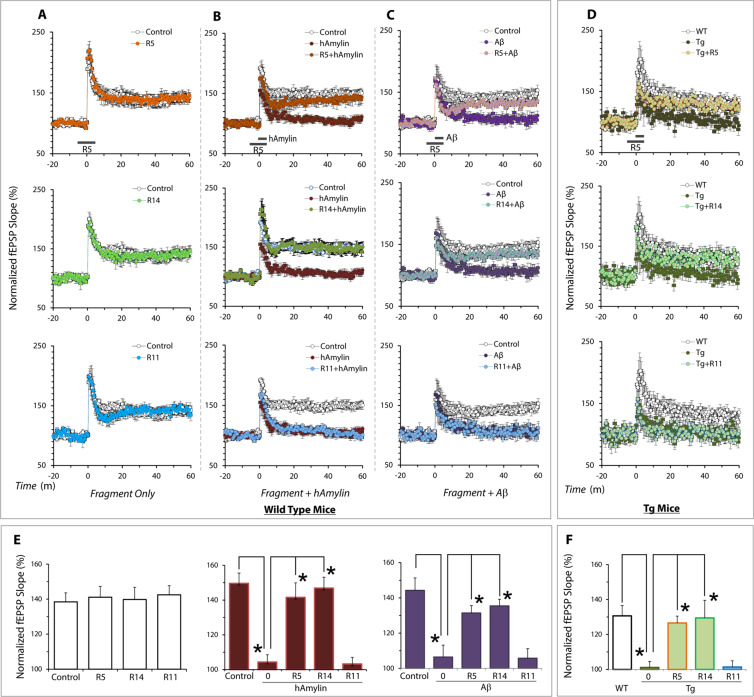
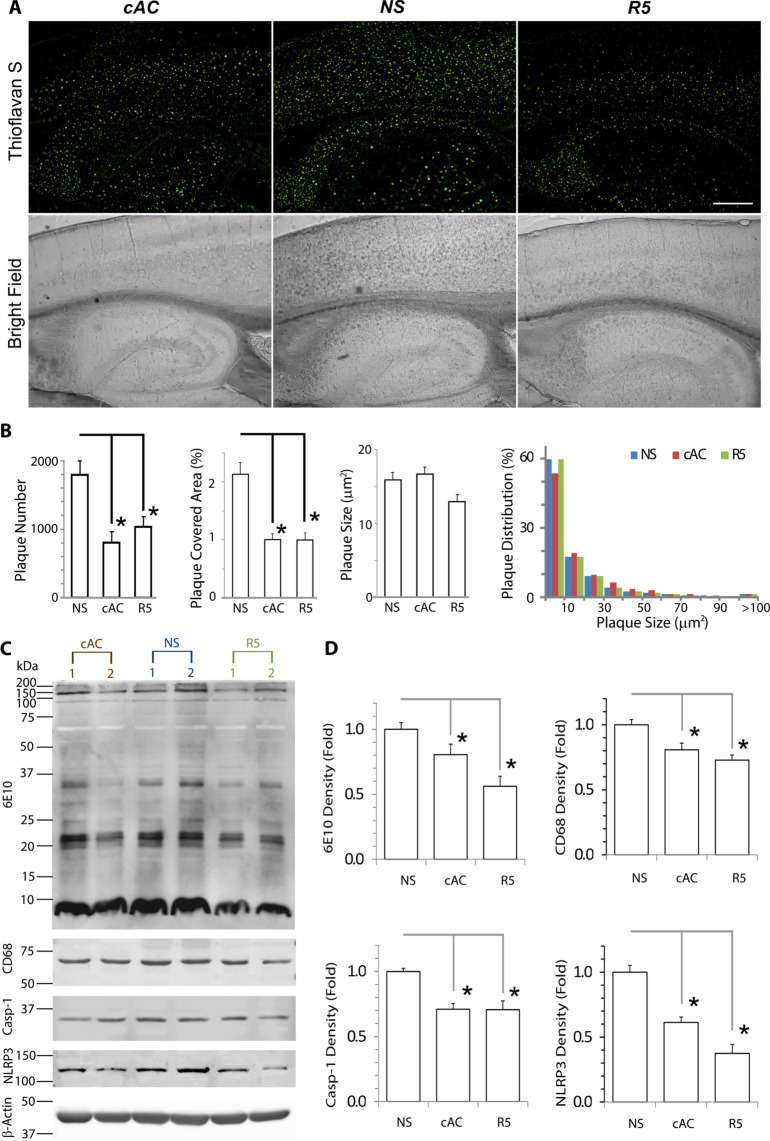
Recent evidence supports involvement of amylin and the amylin receptor in the pathogenesis of Alzheimer's disease (AD). We have previously shown that amylin receptor antagonist, AC253, improves spatial memory in AD mouse models. Herein, we generated and screened a peptide library and identified two short sequence amylin peptides (12-14 aa) that are proteolytically stable, brain penetrant when administered intraperitoneally, neuroprotective against Aβ toxicity and restore diminished levels of hippocampal long term potentiation in AD mice. Systemic administration of the peptides for five weeks in aged 5XFAD mice improved spatial memory, reduced amyloid plaque burden, and neuroinflammation. The common residue SQELHRLQTY within the peptides is an essential sequence for preservation of the beneficial effects of the fragments that we report here and constitutes a new pharmacological target. These findings suggest that the amylin receptor antagonism may represent a novel therapy for AD.
Conflict of interest statement
The corresponding author (JJ, University of Alberta) has filed the following patents related to this manuscript: United States Patent Application Serial No. 15/705,789 and Canada Application Serial No. 2,967,616. Inventors are: Jhamandas, Jack; Soudy, Rania; Kaur, Kamaljit; Fu, Wen; MacTavish, David and Patel, Aarti. Title: Brain Penetrant Amylin Receptor Based Peptides for Alzheimer’s Disease. The patent relates to the generation and application of short amylin receptor antagonist peptides that are used in the studies described in this manuscript.
Figures




References
-
- Alzheimer’s.net. 2017 Alzheimer’s Statistics. http://www.alzheimers.net/resources/alzheimers-statistics/ Accessed January 28, 2019.
Publication types
MeSH terms
Substances
Grants and funding
LinkOut - more resources
Full Text Sources
Medical
Molecular Biology Databases
