


Review of early development of near-infrared spectroscopy and recent advancement of studies on muscle oxygenation and oxidative metabolism
- PMID: 31359263
- PMCID: PMC10717702
- DOI: 10.1007/s12576-019-00697-2
Review of early development of near-infrared spectroscopy and recent advancement of studies on muscle oxygenation and oxidative metabolism
Abstract
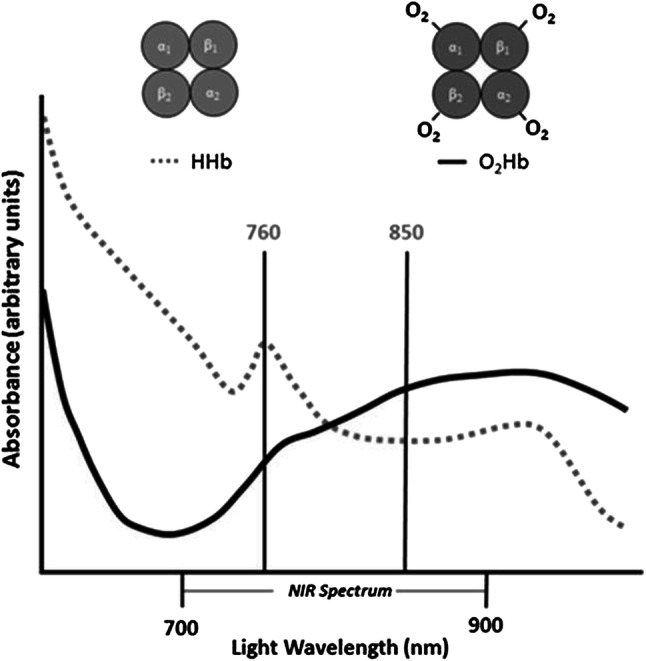
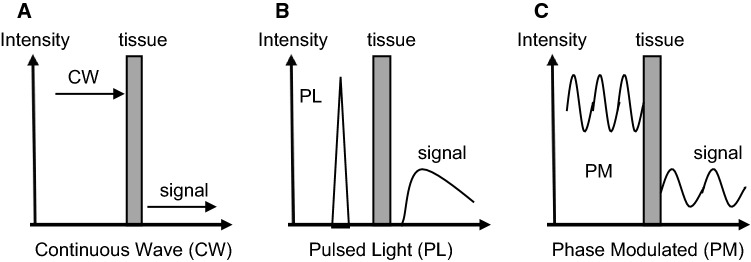
Near-infrared spectroscopy (NIRS) has become an increasingly valuable tool to monitor tissue oxygenation (Toxy) in vivo. Observations of changes in the absorption of light with Toxy have been recognized as early as 1876, leading to a milestone NIRS paper by Jöbsis in 1977. Changes in the absorption and scatting of light in the 700-850-nm range has been successfully used to evaluate Toxy. The most practical devices use continuous-wave light providing relative values of Toxy. Phase-modulated or pulsed light can monitor both absorption and scattering providing more accurate signals. NIRS provides excellent time resolution (~ 10 Hz), and multiple source-detector pairs can be used to provide low-resolution imaging. NIRS has been applied to a wide range of populations. Continued development of NIRS devices in terms of lower cost, better detection of both absorption and scattering, and smaller size will lead to a promising future for NIRS studies.
Keywords: Exercise; Muscle; Oxidative metabolism; Oximetry; Tissue oxygenation.
Conflict of interest statement
Takafumi Hamaoka declares that he has no conflict of interest. Kevin K. McCully is the President of Infrared Rx, Inc, and NIRS software company.
Figures
References
-
- McCully KK, Hamaoka T. Near-infrared spectroscopy: what can it tell us about oxygen saturation in skeletal muscle? Exerc Sport Sci Rev. 2000;28(3):123–127. - PubMed
-
- Quaresima V, Lepanto R, Ferrari M. The use of near infrared spectroscopy in sports medicine. J Sport Med Phys Fit. 2003;43(1):1–13. - PubMed
Publication types
MeSH terms
Substances
Grants and funding
LinkOut - more resources
Full Text Sources
