Effectiveness of a Peer-Led Behavioral Intervention Program on Tobacco Use-Related Knowledge, Attitude, Normative Beliefs, and Intention to Smoke among Adolescents at Iranian Public High Schools
- PMID: 31360358
- PMCID: PMC6592138
- DOI: 10.4103/ijpvm.IJPVM_493_17
Effectiveness of a Peer-Led Behavioral Intervention Program on Tobacco Use-Related Knowledge, Attitude, Normative Beliefs, and Intention to Smoke among Adolescents at Iranian Public High Schools
Abstract
Background: Theory-based tobacco use prevention programs in schools were implemented to evaluate the effectiveness of this peer-led intervention on tobacco use-related knowledge, attitude, normative beliefs, and intention to tobacco use of school children aged 14-17 years old.
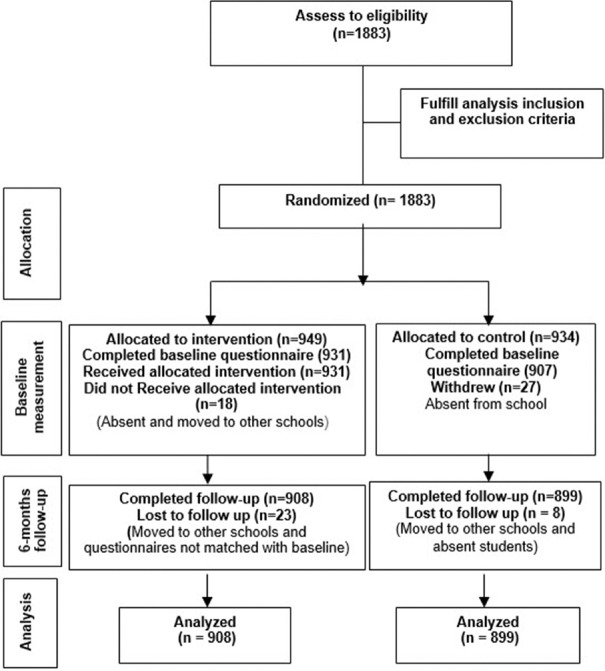
Methods: A school-based cluster randomized controlled intervention study was conducted among 1st, 2nd, and 3rd grade high school children in Sanandaj City, Iran. 4-h integrated tobacco use prevention program comprising of four structured modules was developed and delivered to the intervention group by trained peer educator. Outcome measures comprised changes in students' smoking-related knowledge, attitude, normative beliefs, and intention to tobacco use from baseline to 6-month follow-up through validated anonymous questionnaire.
Results: The present study showed an intervention effect on tobacco use-related knowledge, normative beliefs, and intention to tobacco use but not attitude. The results indicated that there was significant decrease in intention to tobacco use (P ≤ 0.013) observed after 6-month postintervention. The intervention module was also effective in improving smoking knowledge (P ≤ 0.001), normative beliefs with regard to perceived prevalence of cigarette smoking and water-pipe use among adults and adolescents (P ≤ 0.001) in intervention group 6-month postintervention.
Conclusions: Participation in the peer-led education program to tobacco use prevention may have improvement in knowledge, normative beliefs, and intention to tobacco use. An implementation of the peer-led behavioral intervention components in the school setting may have a beneficial effect on public health by decreasing intention to tobacco use among nonsmoker adolescents.
Keywords: Cigarette smoking; high school children; intervention; peer-led intervention; tobacco use prevention; water-pipe use.
Conflict of interest statement
There are no conflicts of interest.
Figures
References
-
- Lim SS, Vos T, Flaxman AD, Danaei G, Shibuya K, Adair-Rohani H, et al. A comparative risk assessment of burden of disease and injury attributable to 67 risk factors and risk factor clusters in 21 regions, 1990-2010: A systematic analysis for the Global Burden of Disease Study 2010. Lancet. 2012;380:2224–60. - PMC - PubMed
-
- Kelishadi R, Shahsanai A, Qorbani M, Esmaeil Motlagh M, Jari M, Ardalan G, et al. Tobacco use and influencing factors among Iranian children and adolescents at national and subnational levels, according to socioeconomic status: The Caspian-IV Study. Iran Red Crescent Med J. 2016;18:e21858. - PMC - PubMed
-
- Riala K, Hakko H, Isohanni M, Järvelin MR, Räsänen P. Teenage smoking and substance use as predictors of severe alcohol problems in late adolescence and in young adulthood. J Adolesc Health. 2004;35:245–54. - PubMed
LinkOut - more resources
Full Text Sources
Miscellaneous