


Exclusive Cutaneous and Subcutaneous Sarcoidal Granulomatous Inflammation due to Immune Checkpoint Inhibitors: Report of Two Cases with Unusual Manifestations and Review of the Literature
- PMID: 31360555
- PMCID: PMC6652043
- DOI: 10.1155/2019/6702870
Exclusive Cutaneous and Subcutaneous Sarcoidal Granulomatous Inflammation due to Immune Checkpoint Inhibitors: Report of Two Cases with Unusual Manifestations and Review of the Literature
Abstract
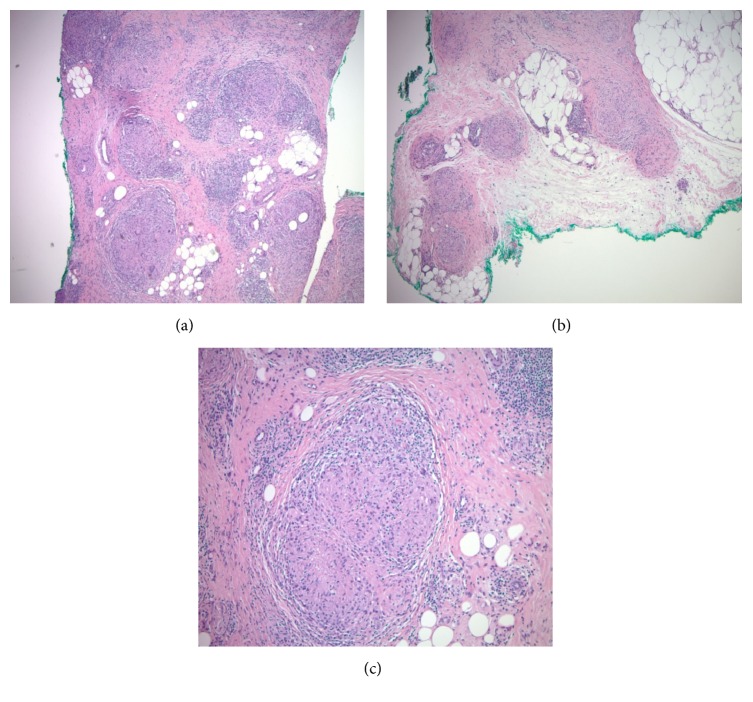
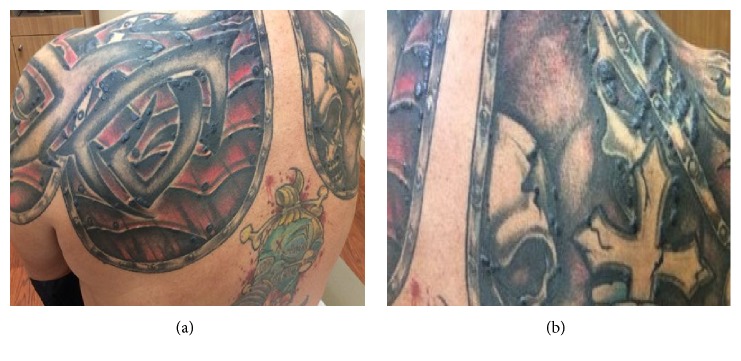
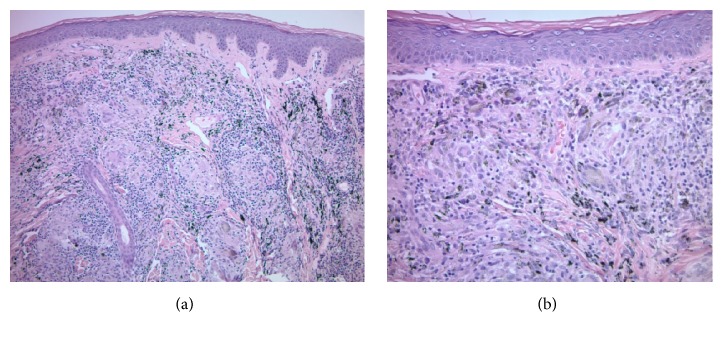
Recent emergence of immune checkpoint inhibitors (ICIs) has revolutionized the treatment of cancers and produced prolonged response by boosting the immune system against tumor cells. The primary target antigens are cytotoxic T-lymphocyte-associated antigen-4 (CTLA-4), a downregulator of T-cell activation, and programmed cell death-1 receptor (PD-1), a regulator of T-cell proliferation. This enhanced immune response can induce autoimmune adverse effects in many organs. Although skin toxicities are the most common, sarcoidal inflammation with exclusive cutaneous involvement is a rare occurrence with only 6 cases reported to date. We report 2 cases with unusual features. One patient is a female who was treated for metastatic renal cell carcinoma with combination of ipilimumab (anti-CTLA-4) and nivolumab (anti-PD-1). She developed deep nodules showing sarcoidal dermatitis and panniculitis on histopathologic exam. The second patient is a male with melanoma of eyelid conjunctiva who was treated prophylactically with ipilimumab. He presented with papules/plaques confined to black tattoos, where the biopsy revealed sarcoidal dermatitis. By a comprehensive literature review, we intend to raise awareness about this potential skin side effect in the growing number of patients receiving targeted immunotherapies. It is crucial to have a high index of suspicion and perform timely biopsies to implement appropriate management strategies.
Figures
References
-
- Hoffman L., Forschner A., Loquai C., et al. Cutaneous, gastrointestinal, hepatic,endocrine, and renal side-effects of anti-PD-1 therapy. European Journal of Cancer. 2016;60:190–209. - PubMed
-
- Cornejo C. M., Haun P., English J., Rosenbach M. Immune checkpoint inhibitors and the development of granulomatous reactions. Journal of the American Academy of Dermatology. 2018 - PubMed
Publication types
LinkOut - more resources
Full Text Sources
