


Recent advances in cerebral cavernous malformation research
- PMID: 31360916
- PMCID: PMC6663315
- DOI: 10.20517/2574-1209.2018.34
Recent advances in cerebral cavernous malformation research
Abstract
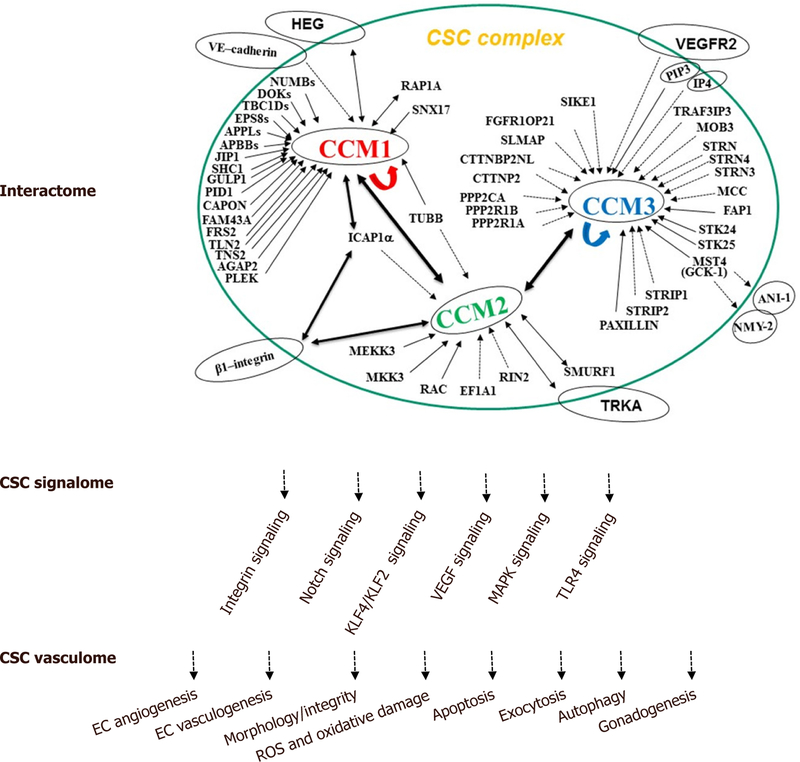
Cerebral cavernous malformations (CCM) are manifested by microvascular lesions characterized by leaky endothelial cells with minimal intervening parenchyma predominantly in the central nervous system predisposed to hemorrhagic stroke, resulting in focal neurological defects. Till date, three proteins are implicated in this condition: CCM1 (KRIT1), CCM2 (MGC4607), and CCM3 (PDCD10). These multi-domain proteins form a protein complex via CCM2 that function as a docking site for the CCM signaling complex, which modulates many signaling pathways. Defects in the formation of this signaling complex have been shown to affect a wide range of cellular processes including cell-cell contact stability, vascular angiogenesis, oxidative damage protection and multiple biogenic events. In this review we provide an update on recent advances in structure and function of these CCM proteins, especially focusing on the signaling cascades involved in CCM pathogenesis and the resultant CCM cellular phenotypes in the past decade.
Keywords: Cerebral cavernous malformation; angiogenesis; cellular function; cerebral cavernous malformation signaling complex; endothelial cells; function domain; microvessel lesions; motif; protein structure.
Conflict of interest statement
Conflicts of interest Both authors declared that there are no conflicts of interest.
Figures
References
-
- Otten P, Pizzolato GP, Rilliet B, Berney J. 131 cases of cavernous angioma (cavernomas) of the CNS, discovered by retrospective analysis of 24,535 autopsies. Neurochirurgie 1989;35:82–3, 128–31. - PubMed
-
- Cavalcanti DD, Kalani MY, Martirosyan NL, Eales J, Spetzler RF, Preul MC. Cerebral cavernous malformations: from genes to proteins to disease. J Neurosurg 2012;116:122–32. - PubMed
-
- Tanriover G, Sozen B, Seker A, Kilic T, Gunel M, Demir N. Ultrastructural analysis of vascular features in cerebral cavernous malformations. Clin Neurol Neurosurg 2013;115:438–44. - PubMed
Grants and funding
LinkOut - more resources
Full Text Sources
Miscellaneous