


Multi-sectoral prioritization of zoonotic diseases: One health perspective from Ahmedabad, India
- PMID: 31361782
- PMCID: PMC6667134
- DOI: 10.1371/journal.pone.0220152
Multi-sectoral prioritization of zoonotic diseases: One health perspective from Ahmedabad, India
Abstract
Background: Prioritizing zoonotic diseases is one of the emerging tasks for developing multi-sectoral collaboration within One Health. Globally, many efforts have been made to prioritize zoonotic diseases at national levels, especially in low resource settings. Prioritization of zoonoses has been conducted in different countries at different levels (i.e. national, regional and local) for different purposes. India has also initiated prioritization of zoonotic diseases at the national level. However, in a country like India with wide climatic variations, different animal-human and vector densities, it is important to look at these zoonotic conditions in local settings too. The present study aims to determine which zoonoses should be prioritized for collaboration between stakeholders in the Indian city of Ahmedabad.
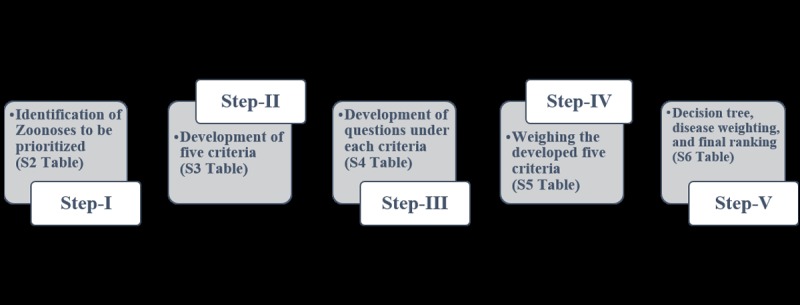
Methods: The present study followed a participatory research method, entailing a stakeholder workshop for prioritizing zoonotic diseases in Ahmedabad. It was carried out through a facilitated consultative process involving 19 experts in zoonoses from the human and animal health systems during a one-day workshop in September 2018. To prioritize the zoonotic diseases, the One Health Zoonotic Disease Prioritization (OHZDP) tool of the U.S. Centers for Disease Control and Prevention was adopted. The Analytical Hierarchical Process (AHP) and decision-tree analysis were used to rank the diseases.
Results: Out of 38 listed zoonotic diseases, 14 were selected for prioritization. These were scored and weighed against five criteria: severity of disease in humans, potential for epidemic and/or pandemic, availability of prevention and/or control strategies, burden of animal disease existing inter-sectoral collaboration. The top five diseases that have been prioritized for Ahmedabad are Rabies, Brucellosis, Avian Influenza (H5N1), Influenza A (H1N1) and Crimean-Congo Hemorrhagic Fever. Sensitivity analysis did not indicate significant changes in zoonotic disease prioritization based on criteria weights.
Conclusion: Prioritization of zoonotic diseases at the local level is essential for development of effective One Health strategies. This type of participatory disease prioritization workshop is highly recommended and can be replicated in other Indian cities, as well as in other low and middle-income countries.
Conflict of interest statement
The authors have declared that no competing interests exist.
Figures

References
-
- Gebreyes WA, Dupouy-Camet J, Newport MJ, Oliveira CJB, Schlesinger LS, Saif YM, et al. The global one health paradigm: challenges and opportunities for tackling infectious diseases at the human, animal, and environment interface in low-resource settings. PLoS neglected tropical diseases. Public Library of Science; 2014;8: e3257 10.1371/journal.pntd.0003257 - DOI - PMC - PubMed
Publication types
MeSH terms
LinkOut - more resources
Full Text Sources
Medical
