


A randomized clinical trial on the effects of bupropion and buprenorphine on the reduction of methamphetamine craving
- PMID: 31362784
- PMCID: PMC6668115
- DOI: 10.1186/s13063-019-3554-6
A randomized clinical trial on the effects of bupropion and buprenorphine on the reduction of methamphetamine craving
Abstract
Background: The purpose of this study was to compare the effect of 300 mg of bupropion and 8 mg of buprenorphine per day on the treatment of methamphetamine withdrawal cravings over a 2-week treatment interval.
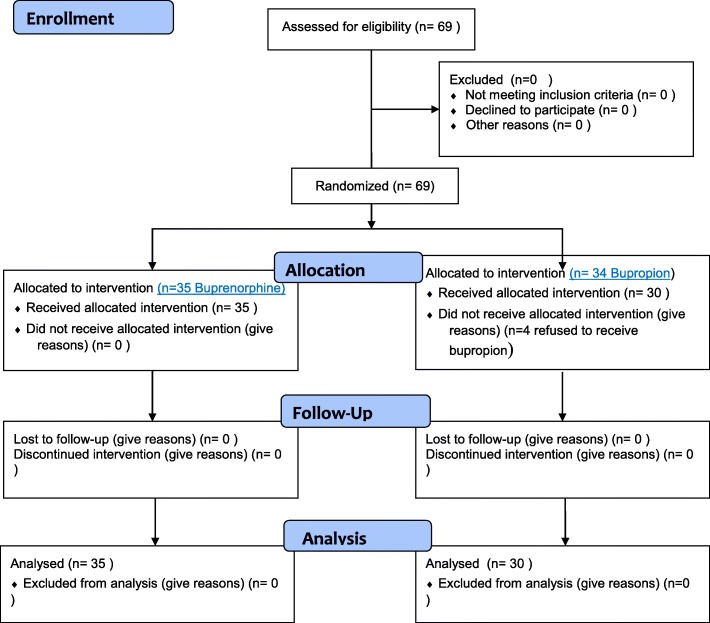
Method: Sixty-five methamphetamine-dependent men who met the DSM-IV-TR (Diagnostic and Statistical Manual of Mental Disorders, 4th edition, text revision) criteria for methamphetamine dependence and withdrawal were randomly divided into two groups. Subjects randomly received 300 mg of bupropion or 8 mg of buprenorphine per day in a psychiatric ward. Of the 65 subjects, 35 (53.8%) received buprenorphine and 30 (46.2%) received bupropion. The subjects were assessed by using methamphetamine craving score, interview, and negative urine drug test.
Findings: There were no statistically significant differences between the two groups in regard to age, education, duration of methamphetamine dependency, marital status, employment, and income. The mean ages were 32.8 years (standard deviation (SD) = 7.26, range = 22 to 59) for the buprenorphine group and 32.21 years (SD = 8.45, range = 17 to 51) for the bupropion group. All 65 patients completed the 2-week study. Both medications were effective in the reduction of methamphetamine cravings. Reduction of craving in the buprenorphine group was significantly more than the bupropion group (P = 0.011). Overall, a significant main effect of day (P <0.001) and group (P = 0.011) and a non-significant group-by-day interaction (P >0.05) were detected.
Conclusions: The results support the safety and effectiveness of buprenorphine and bupropion in the treatment of methamphetamine withdrawal craving. Administration of 8 mg of buprenorphine per day can be recommended for the treatment of methamphetamine withdrawal cravings. We should note that it is to be expected that craving decreases over time without any medication. So the conclusion may not be that bupropion and buprenorphine both lower the craving. As the buprenorphine is superior to bupropion, only buprenorphine does so for sure.
Trial registration: Iranian Registry of Clinical Trials (IRCT) registration number: IRCT2015010320540N1 . Date registered: April 10, 2015.
Keywords: Buprenorphine; Bupropion; Methamphetamine withdrawal craving.
Conflict of interest statement
The authors declare that they have no competing interests.
Figures
References
-
- Mackay-Smith M, Ahmadi J, Pridmore S. Suicide in shooting galleries. ASEAN J Psychiatry. 2015;16:50–56.
-
- Ahmadi J, Ahmed MG. Dubai medical college students’ attitudes towards substance use. J Addict Res Ther. 2013;S6:005. doi: 10.4172/2155-6105.S6-005. - DOI
Publication types
MeSH terms
Substances
Grants and funding
LinkOut - more resources
Full Text Sources
Other Literature Sources
Medical
Research Materials
Miscellaneous
