


Rumen fermentation and microbial community composition influenced by live Enterococcus faecium supplementation
- PMID: 31363877
- PMCID: PMC6667549
- DOI: 10.1186/s13568-019-0848-8
Rumen fermentation and microbial community composition influenced by live Enterococcus faecium supplementation
Abstract
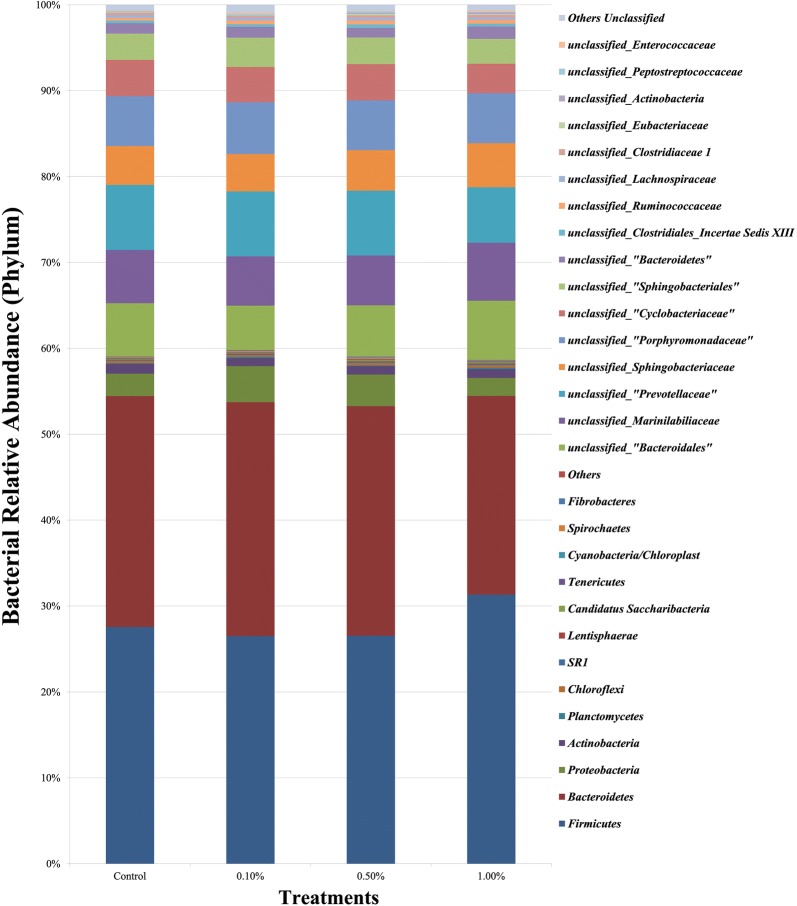
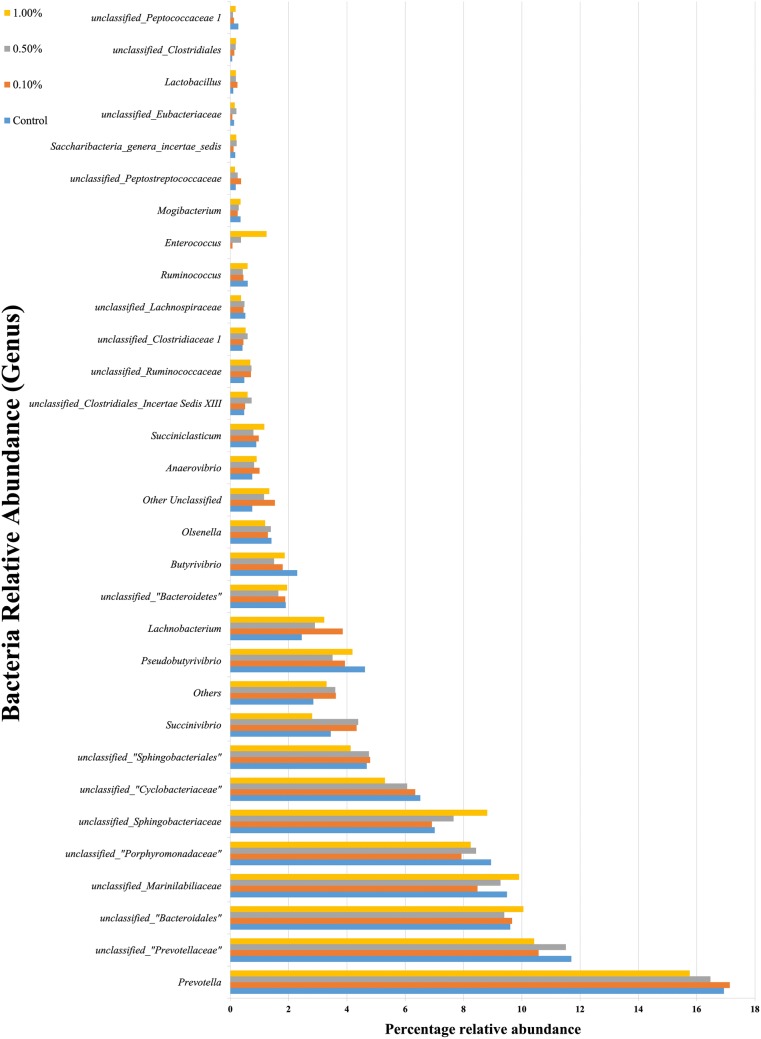
Supplementation of appropriate probiotics can improve the health and productivity of ruminants while mitigating environmental methane production. Hence, this study was conducted to determine the effects of Enterococcus faecium SROD on in vitro rumen fermentation, methane concentration, and microbial population structure. Ruminal samples were collected from ruminally cannulated Holstein-Friesian cattle, and 40:60 rice straw to concentrate ratio was used as substrate. Fresh culture of E. faecium SROD at different inclusion rates (0, 0.1%, 0.5%, and 1.0%) were investigated using in vitro rumen fermentation system. Addition of E. faecium SROD had a significant effect on total gas production with the greatest effect observed with 0.1% supplementation; however, there was no significant influence on pH. Supplementation of 0.1% E. faecium SROD resulted in the highest propionate (P = 0.005) but the lowest methane concentration (P = 0.001). In addition, acetate, butyrate, and total VFA concentrations in treatments were comparatively higher than control. Bioinformatics analysis revealed the predominance of the bacterial phyla Bacteroidetes and Firmicutes and the archaeal phylum Euryarchaeota. At the genus level, Prevotella (15-17%) and Methanobrevibacter (96%) dominated the bacterial and archaeal communities of the in vitro rumen fermenta, respectively. Supplementation of 0.1% E. faecium SROD resulted in the highest quantities of total bacteria and Ruminococcus flavefaciens, whereas 1.0% E. faecium SROD resulted in the highest contents of total fungi and Fibrobacter succinogenes. Overall, supplementation of 0.1% E. faecium SROD significantly increased the propionate and total volatile fatty acids concentrations but decreased the methane concentration while changing the microbial community abundance and composition.
Keywords: Bar-coded pyrosequencing; Enterococcus faecium; In vitro rumen fermentation; Methane concentration; Microbial diversity.
Conflict of interest statement
The authors declare that they have no competing interests.
Figures

References
Grants and funding
LinkOut - more resources
Full Text Sources
