


Notification data and criteria during a large Q-fever epidemic reassessed
- PMID: 31364550
- PMCID: PMC6518550
- DOI: 10.1017/S0950268819000736
Notification data and criteria during a large Q-fever epidemic reassessed
Abstract
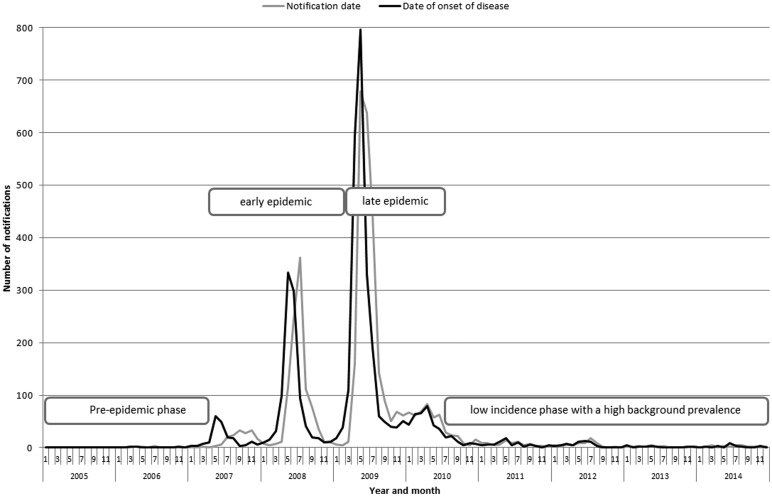
From 2007 to 2010, the largest reported Q-fever epidemic occurred in the Netherlands with 4026 notified laboratory-confirmed cases. During the course of the epidemic, health-seeking behaviour changed and awareness among health professionals increased. Changes in laboratory workflows were implemented. The aim of this study was to analyse how these changes instigated adjustments of notification criteria and how these adjustments affected the monitoring and interpretation of the epidemic. We used the articles on laboratory procedures related to the epidemic and a description of the changes that were made to the notification criteria. We compared the output of a regional laboratory with notifications to the regional Public Health Service and the national register of infectious diseases. We compared the international notification criteria for acute Q-fever. Screening with ELISA IgM phase II and PCR was added to the diagnostic workflow. In the course of the epidemic, serology often revealed a positive IgG/IgM result although cases were not infected recently. With increasing background seroprevalence, the presence of IgM antibodies can only be suggestive for acute Q-fever and has to be confirmed either by seroconversion of IgG or a positive PCR result. Differences in sero-epidemiology make it unlikely that full harmonisation of notification criteria between countries is feasible.
Keywords: Acute Q-fever; PCR; notification criteria; serology.
Figures
References
-
- Raoult D, Marrie T and Mege J (2005) Natural history and pathophysiology of Q fever. Lancet Infectious Diseases 5, 219–226. - PubMed
MeSH terms
LinkOut - more resources
Full Text Sources
