


Effects of large-scale oceanic phenomena on non-cholera vibriosis incidence in the United States: implications for climate change
- PMID: 31364581
- PMCID: PMC6805737
- DOI: 10.1017/S0950268819001316
Effects of large-scale oceanic phenomena on non-cholera vibriosis incidence in the United States: implications for climate change
Abstract
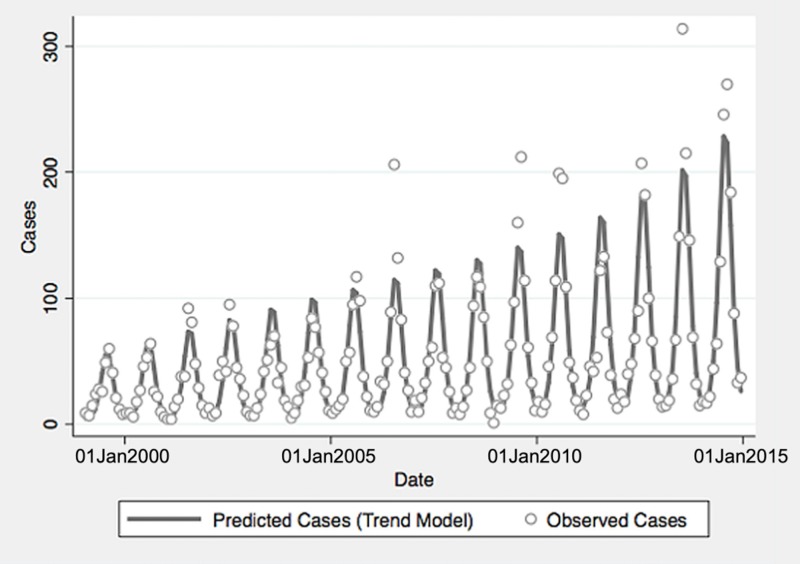
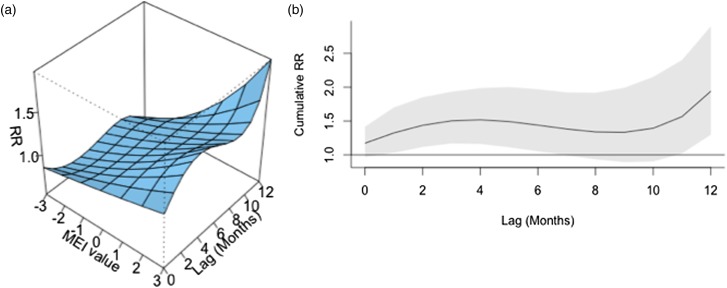
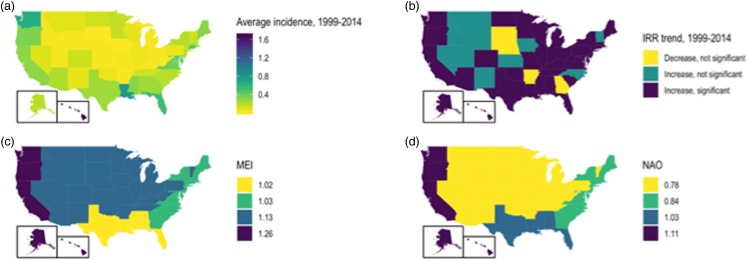
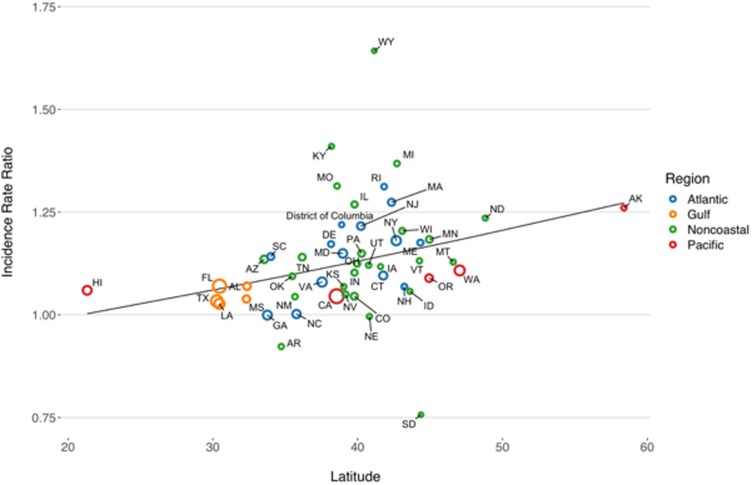
Non-cholera Vibrio (NCV) species are important causes of disease. These pathogens are thermophilic and climate change could increase the risk of NCV infection. The El Niño Southern Oscillation (ENSO) is a 'natural experiment' that may presage ocean warming effects on disease incidence. In order to evaluate possible climatic contributions to observed increases in NCV infection, we obtained NCV case counts for the United States from publicly available surveillance data. Trends and impacts of large-scale oceanic phenomena, including ENSO, were evaluated using negative binomial and distributed non-linear lag models (DNLM). Associations between latitude and changing risk were evaluated with meta-regression. Trend models demonstrated expected seasonality (P < 0.001) and a 7% (6.1%-8.1%) annual increase in incidence from 1999 to 2014. DNLM demonstrated increased vibriosis risk following ENSO conditions over the subsequent 12 months (relative risk 1.940, 95% confidence interval (CI) 1.298-2.901). The 'relative-relative risk' (RRR) of annual disease incidence increased with latitude (RRR per 10° increase 1.066, 95% CI 1.027-1.107). We conclude that NCV risk in the United States is impacted by ocean warming, which is likely to intensify with climate change, increasing NCV risk in vulnerable populations.
Keywords: Climate change; Vibrio fluvialis; Vibrio parahaemolyticus; Vibrio vulnificus; foodborne illness.
Conflict of interest statement
None of the authors has any conflict of interest, financial or otherwise, associated with this work.
Figures
References
-
- Armstrong G, Hollingsworth J and Morris J (1998) Bacterial foodborne infections In Evans A and Brachman P (eds), Bacterial Infections of Humans: Epidemiology and Control, 3rd Edn New York: Plenum Medical Book Company, pp. 109–138.
-
- Franca SM et al. (1980) Vibrio parahaemolyticus in Brazilian coastal waters. JAMA 244, 587–588. - PubMed
-
- Mahon BE et al. (1996) Reported cholera in the United States, 1992–1994: a reflection of global changes in cholera epidemiology. JAMA 276, 307–312. - PubMed
-
- Dechet AM et al. (2008) Nonfoodborne Vibrio infections: an important cause of morbidity and mortality in the United States, 1997–2006. Clinical Infectious Diseases 46, 970–976. - PubMed
MeSH terms
LinkOut - more resources
Full Text Sources
Medical
