


Seventy Years of Tuberculosis Prevention: Efficacy, Effectiveness, Toxicity, Durability, and Duration
- PMID: 31364692
- PMCID: PMC7212403
- DOI: 10.1093/aje/kwz172
Seventy Years of Tuberculosis Prevention: Efficacy, Effectiveness, Toxicity, Durability, and Duration
Abstract
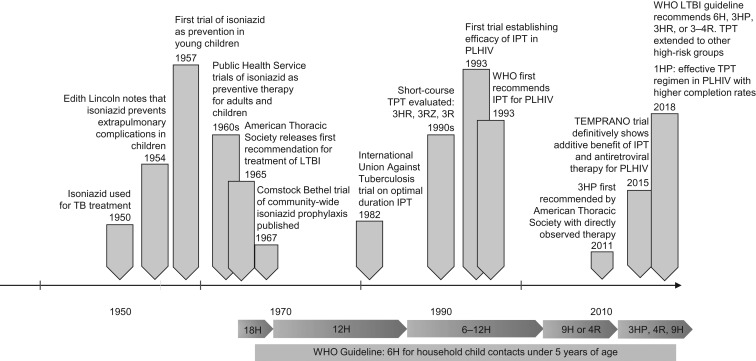
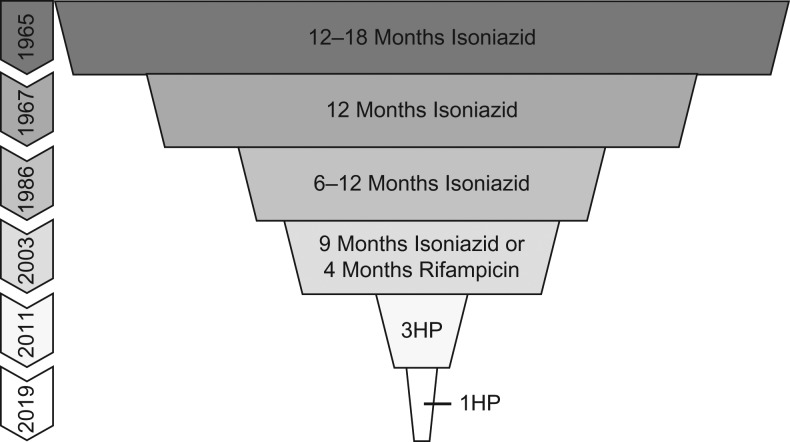
Tuberculosis (TB) has been a leading infectious cause of death worldwide for much of human history, with 1.6 million deaths estimated in 2017. The Department of Epidemiology at the Johns Hopkins Bloomberg School of Public Health has played an important role in understanding and responding to TB, and it has made particularly substantial contributions to prevention of TB with chemoprophylaxis. TB preventive therapy is highly efficacious in the prevention of TB disease, yet it remains underutilized by TB programs worldwide despite strong evidence to support its use in high-risk groups, such as people living with HIV and household contacts, including those under 5 years of age. We review the evidence for TB preventive therapy and discuss the future of TB prevention.
Keywords: TB preventive therapy (TPT); prevention; tuberculosis.
© The Author(s) 2019. Published by Oxford University Press on behalf of the Johns Hopkins Bloomberg School of Public Health. All rights reserved. For permissions, please e-mail: journals.permissions@oup.com.
Figures
References
-
- Comstock GW. Cohort analysis: W.H. Frost’s contributions to the epidemiology of tuberculosis and chronic disease. Soz Praventivmed. 2001;46(1):7–12. - PubMed
-
- López-Gatell H, Cole SR, Hessol NA, et al. Effect of tuberculosis on the survival of women infected with human immunodeficiency virus. Am J Epidemiol. 2007;165(10):1134–1142. - PubMed
Publication types
MeSH terms
Grants and funding
LinkOut - more resources
Full Text Sources
Medical
