


Effects of emodin on ABC transporter gene expression in grass carp (Ctenopharyngodon idellus) exposed to diazinon
- PMID: 31365567
- PMCID: PMC6668774
- DOI: 10.1371/journal.pone.0219866
Effects of emodin on ABC transporter gene expression in grass carp (Ctenopharyngodon idellus) exposed to diazinon
Abstract
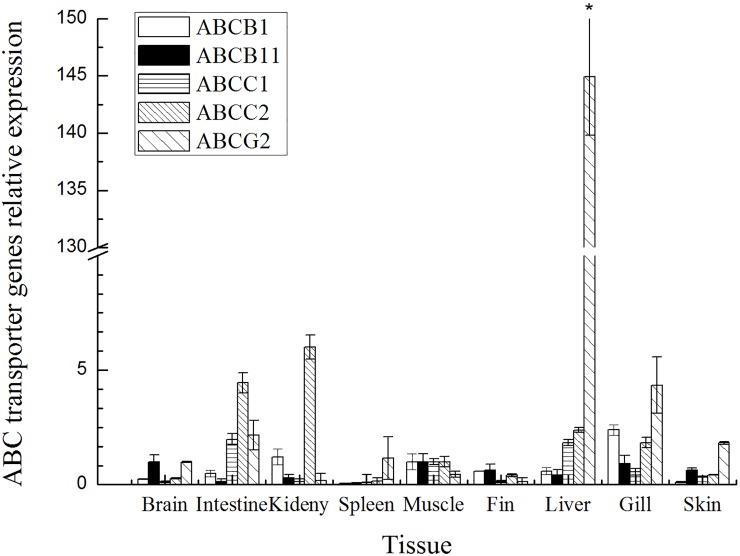
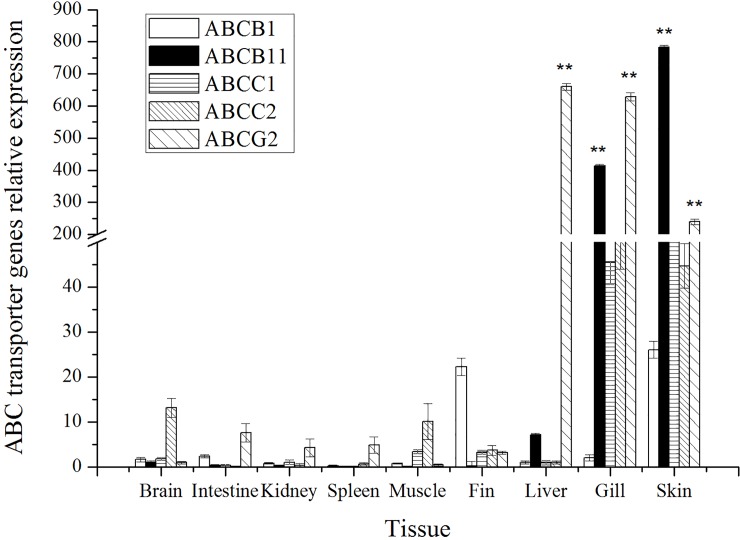
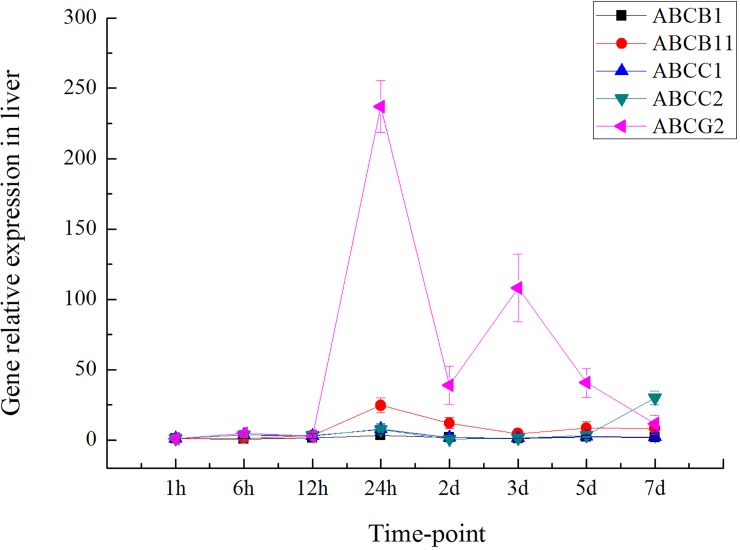
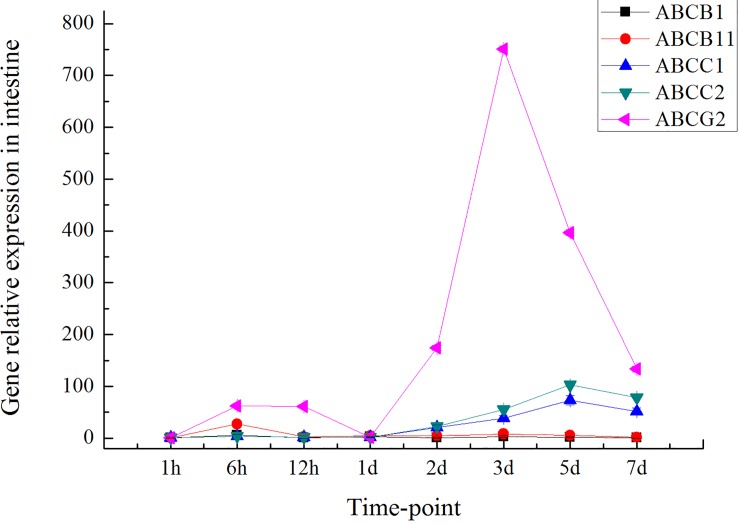
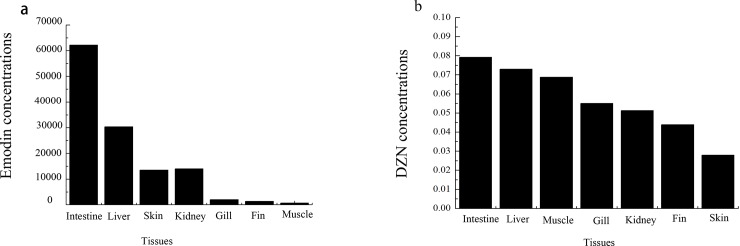
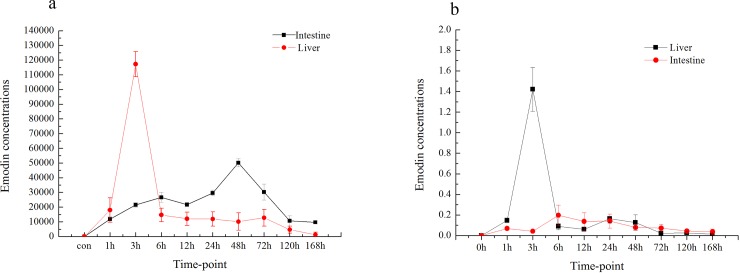
This study aimed to investigate the function of ATP-binding cassette (ABC) transporter genes in grass carp treated with emodin combined with diazinon (DZN) exposure. The transcription levels of five ABC transporter genes in different tissues of grass carp and at different time points were measured by real-time quantitative PCR (qRT-PCR). The analysis of different tissues showed higher ABCB1 expression in the skin (26-fold) and gill (2-fold) than in the liver. In addition, ABCB11 expression was higher in the skin (109-fold) and gill (57-fold) than in the liver, ABCC1 was more highly expressed in the gill (50-fold) than in the liver, and ABCG2 was expressed at higher levels in the skin (659-fold, p < 0.01), gill (628-fold, p < 0.01) and liver (659-fold, p < 0.01) than in brain tissue. The analysis of different time points revealed that the ABCB1, ABCB11, ABCC1, ABCC2 and ABCG2 genes were highly expressed at 24 h in the liver in the experimental group. However, analysis of the intestinal tissue of the experimental group showed that the expression of ABCB1 and ABCB11 peaked at 6 h, the expression of ABCC1 and ABCC2 peaked at 5 d, and the expression of ABCG2 peaked at 3 d. Furthermore, the emodin concentrations in the liver and intestine reached their peak levels (50.18 and 117.24 μg·ml-1, respectively) after 48 and 1 h of treatment with emodin combined with DZN, respectively. The peak DZN concentrations in the liver (1.42 ng·ml-1) and intestine (0.2 ng·ml-1) were detected 3 and 6 h after emodin treatment combined with DZN, respectively. In conclusion, this study shows that the transcript levels of ABC transporters respond to the presence of emodin, which indicates their potential involvement in and contribution with the metabolic process in grass carp.
Conflict of interest statement
The authors have declared that no competing interests exist.
Figures
References
-
- Luckenbach T, Fischer S, Sturm A. Current advances on ABC drug transporters in fish. Comp Biochem Physiol C Toxicol Pharmacol. 2014;165(3):28–52. - PubMed
-
- Dean M, Annilo T. Evolution of the ATP-bingding cassette (ABC) Transporter Superfamily in Vertebrates*. Annual Review of Genomics & Human Genetics. 2005;6(1):123. - PubMed
-
- Leslie EM, Deeley RG, Cole SP. Multidrug resistance proteins: role of P-glycoprotein, MRP1, MRP2, and BCRP (ABCG2) in tissue defense. Toxicology & Applied Pharmacology. 2005;204(3):216–37. - PubMed
-
- Jeong CB, Kim HS, Kang HM, Lee YH, Zhou B, Choe J, et al. Genome-wide identification of ATP-binding cassette (ABC) transporters and conservation of their xenobiotic transporter function in the monogonont rotifer (Brachionus koreanus). Comparative Biochemistry & Physiology Part D Genomics & Proteomics. 2017;21:17–26. - PubMed
-
- Costa J, Reis-Henriques MA, Castro LF, Ferreira M. Gene expression analysis of ABC efflux transporters, CYP1A and GSTα in Nile tilapia after exposure to benzo(a)pyrene. Comparative Biochemistry & Physiology Part C Toxicology & Pharmacology. 2012;155(3):469–82. - PubMed
Publication types
MeSH terms
Substances
LinkOut - more resources
Full Text Sources
Research Materials
