


The Modern Western Diet Rich in Advanced Glycation End-Products (AGEs): An Overview of Its Impact on Obesity and Early Progression of Renal Pathology
- PMID: 31366015
- PMCID: PMC6724323
- DOI: 10.3390/nu11081748
The Modern Western Diet Rich in Advanced Glycation End-Products (AGEs): An Overview of Its Impact on Obesity and Early Progression of Renal Pathology
Abstract
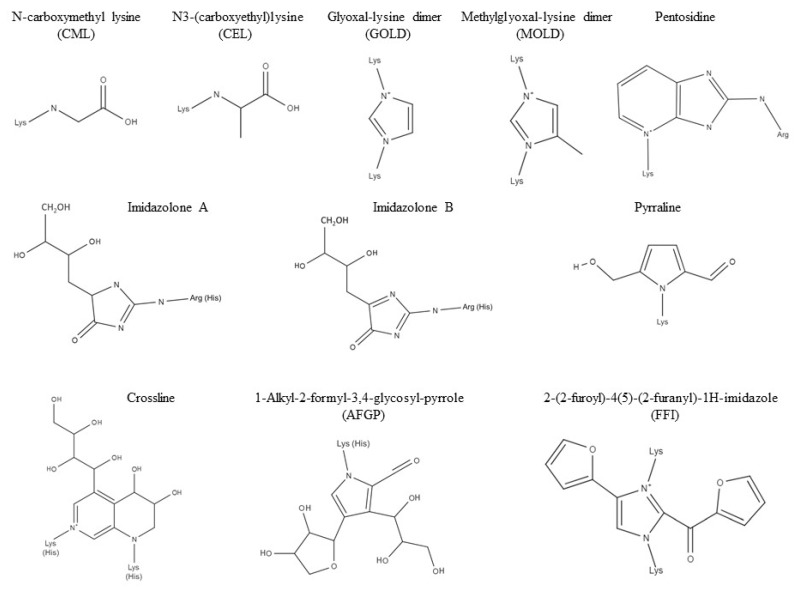
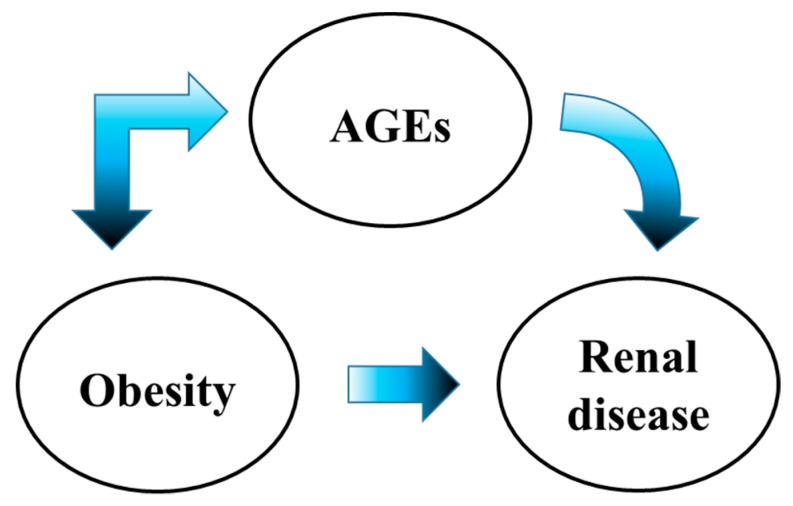
Advanced glycation end-products (AGEs) are an assorted group of molecules formed through covalent bonds between a reduced sugar and a free amino group of proteins, lipids, and nucleic acids. Glycation alters their structure and function, leading to impaired cell function. They can be originated by physiological processes, when not counterbalanced by detoxification mechanisms, or derive from exogenous sources such as food, cigarette smoke, and air pollution. Their accumulation increases inflammation and oxidative stress through the activation of various mechanisms mainly triggered by binding to their receptors (RAGE). So far, the pathogenic role of AGEs has been evidenced in inflammatory and chronic diseases such as chronic kidney disease, cardiovascular disease, and diabetic nephropathy. This review focuses on the AGE-induced kidney damage, by describing the molecular players involved and investigating its link to the excess of body weight and visceral fat, hallmarks of obesity. Research regarding interventions to reduce AGE accumulation has been of great interest and a nutraceutical approach that would help fighting chronic diseases could be a very useful tool for patients' everyday lives.
Keywords: advanced glycation end-products (AGEs); carboximethyl-lysine (CML); diet; obesity; renal disease.
Conflict of interest statement
The authors declare no conflict of interest.
Figures
References
Publication types
MeSH terms
Substances
LinkOut - more resources
Full Text Sources
Medical
