


Herbal remedies used for the treatment of infertility in males and females by traditional healers in the rural areas of the West Bank/Palestine
- PMID: 31366346
- PMCID: PMC6668085
- DOI: 10.1186/s12906-019-2617-2
Herbal remedies used for the treatment of infertility in males and females by traditional healers in the rural areas of the West Bank/Palestine
Abstract
Background: Infertility is considered one of the global public health problems and during human history, it is also considered one of the unsolved problems of the continuous human race. This study aimed to collect and document the ethnopharmacological data on herbal remedies, which traditionally used by Palestinian healers in the rural areas of the West Bank area for the treatment of infertility in males and females.
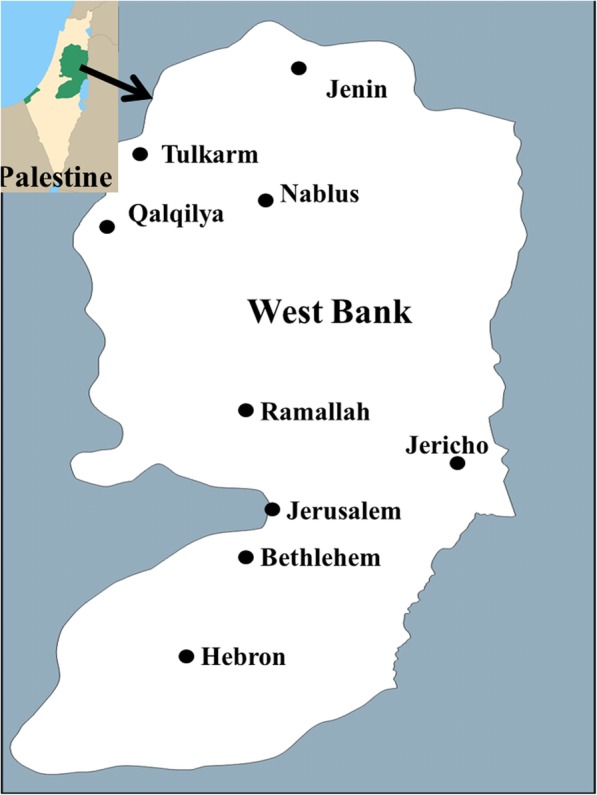
Methods: Using a semi-structured questionnaire, an ethnopharmacological survey of medicinal plants used for the treatment of infertility in the West Bank area of Palestine was investigated. This survey involved 51 traditional healers which were interviewed in rural areas from 9 Palestinian regions.
Results: Information about 31 plants used in the treatment of infertility in females and 24 plants used in the treatment of infertility in males were collected. This information including names of plants, parts used, mode and methods of preparation which were obtained from 51 traditional healers interviewed in rural areas of 9 regions of the West Bank/Palestine. This investigation is the first scientific work in the Middle East area which collected information about herbal remedies used by local Palestinian traditional healers for the treatments of infertility in males and females. The highest Frequency of Citation (FC) of herbal remedies used in case of infertility in females, were 98.04% for pollen grains from Ceratonia siliqua, 88.24% for Anastatica hierochuntica fruits and 84.31% for Parietaria judaica leaves, while the highest Frequency of Citation (FC) of herbal remedies used in case of infertility in males were 96.08% for Ferula hermonis roots, 88.24% for Phlomis brachyodon leaves and 86.27% for Phoenix dactylifera pollen grains.
Conclusion: Herbal healers in the West Bank area of Palestine have a wide range of herbal remedies used in case of infertility in males and in females. Unfortunately, most of them lack scientific evidence of pharmacological or toxicological nature. Therefore, the information obtained in this study can serve as a scientific base for further investigations to determine their efficacy and safety which might contribute to better integration of Palestinian traditional medicine into the global health system in the future.
Keywords: Herbal remedies; Infertility; Traditional healers; West Bank/Palestine.
Conflict of interest statement
The authors declare that they have no financial and/or non-financial competing interests.
Figures


References
-
- Atanasov AG, Waltenberger B, Pferschy-Wenzig E-M, Linder T, Wawrosch C, Uhrin P, Temml V, Wang L, Schwaiger S, Heiss EH. Discovery and resupply of pharmacologically active plant-derived natural products: a review. Biotechnol Adv. 2015;33:1582–1614. doi: 10.1016/j.biotechadv.2015.08.001. - DOI - PMC - PubMed
-
- Hosseinzadeh S, Jafarikukhdan A, Hosseini A, Armand R. The application of medicinal plants in traditional and modern medicine: a review of Thymus vulgaris. Int J Clin Med. 2015;6:635–643. doi: 10.4236/ijcm.2015.69084. - DOI
MeSH terms
Substances
LinkOut - more resources
Full Text Sources
Medical
