. 2019 Jul 31;11(503):eaaw4993.
doi: 10.1126/scitranslmed.aaw4993.

The androgen receptor regulates a druggable translational regulon in advanced prostate cancer

Affiliations

The androgen receptor regulates a druggable translational regulon in advanced prostate cancer

Yuzhen Liu et al. Sci Transl Med. .

Abstract

The androgen receptor (AR) is a driver of cellular differentiation and prostate cancer development. An extensive body of work has linked these normal and aberrant cellular processes to mRNA transcription; however, the extent to which AR regulates posttranscriptional gene regulation remains unknown. Here, we demonstrate that AR uses the translation machinery to shape the cellular proteome. We show that AR is a negative regulator of protein synthesis and identify an unexpected relationship between AR and the process of translation initiation in vivo. This is mediated through direct transcriptional control of the translation inhibitor 4EBP1. We demonstrate that lowering AR abundance increases the assembly of the eIF4F translation initiation complex, which drives enhanced tumor cell proliferation. Furthermore, we uncover a network of pro-proliferation mRNAs characterized by a guanine-rich cis-regulatory element that is particularly sensitive to eIF4F hyperactivity. Using both genetic and pharmacologic methods, we demonstrate that dissociation of the eIF4F complex reverses the proliferation program, resulting in decreased tumor growth and improved survival in preclinical models. Our findings reveal a druggable nexus that functionally links the processes of mRNA transcription and translation initiation in an emerging class of lethal AR-deficient prostate cancer.


Figures

Figure 1.
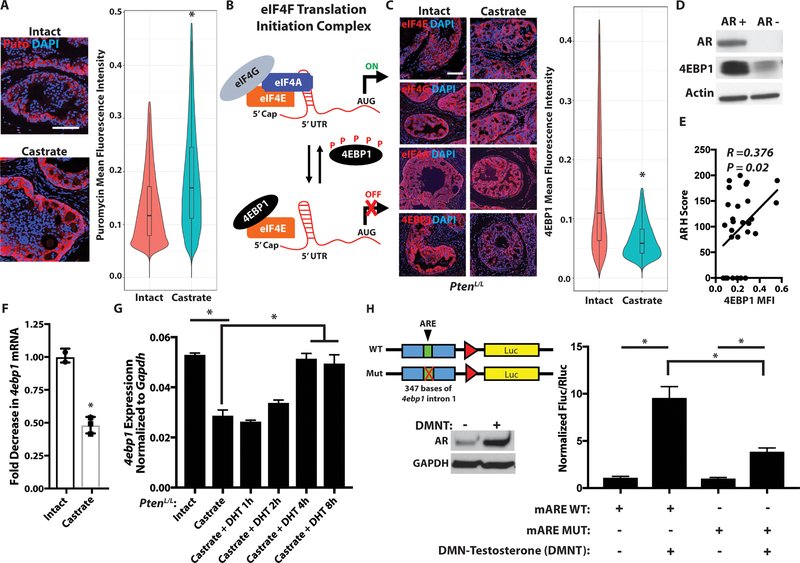
Figure 1.. AR controls translation initiation via a cis-element encoded within the 4ebp1 locus.
(A) Representative puromycin immunofluorescence for de novo protein synthesis in vivo in intact and 8-week castrate PtenL/L ventral prostates (left panel). Violin plot of per cell quantitation of puromycin mean fluorescence intensity. The height of the plot represents the range of new protein synthesis observed, and the width represents the number of cells at each fluorescence intensity [right panel, intact n = 3 (46,711 cells quantified), castrate n = 4 (73,237 cells quantified), *P < 2.2e-16, t-test]. (B) Simplified schematic of the eIF4F translation initiation complex composed of eIF4E, eIF4G, and eIF4A with the inhibitor of the complex, 4EBP1 (P = phosphorylation, AUG = start codon). (C) Representative immunofluorescence for eIF4E, eIF4G, eIF4A, and 4EBP1 in intact and 8-week castrate PtenL/L ventral prostates (left panel). Violin plot of per cell quantitation of 4EBP1 mean fluorescence intensity [right panel, intact n = 6 (148,974 cells quantified), castrate n = 5 (111,046 cells quantified), *P < 2.2e-16, t-test]. (D) Representative western blot for AR, 4EBP1, and actin in human AR+ parental and AR- APIPC (AR Program Independent Prostate Cancer) cells. (E) Correlation plot of 29 human non-neuroendocrine CRPC LuCaP prostate cancer PDX models comparing AR protein content (y-axis, AR H Score) and 4EBP1 protein expression [x-axis, 4EBP1 mean fluorescence intensity (MFI)] (R = 0.376, P = 0.02, Spearman’s correlation). (F) 4ebp1 mRNA expression by RNASeq in intact and 8-week castrate PtenL/L ventral prostates (intact n = 2, castrate n = 3, *P = 0.002, t-test). (G) 4ebp1 mRNA expression by qPCR in primary intact (DHT+) and castrate (DHT-) PtenL/L prostate cancer cells. 1 nM DHT was added back to castrate cells over the indicated time points (3 biological replicates, *P < 0.05, t-test). (H) Schematic of the wild-type (WT) and mutant 4ebp1 intron reporter constructs cloned into the pGL4.28 vector (red triangle = minimal promoter region, luc = firefly luciferase). Representative western blot of AR upon addition of testosterone analog DMNT in LNCaP cells (left panel). Luciferase assay of the putative wild-type (WT) and mutated (MUT) mouse 4ebp1 androgen response element (mARE) (right panel, 6 biological replicates, *P < 0.0001, ANOVA). All scale bars = 100 μm. Data presented as mean +/− SEM.
Figure 2.
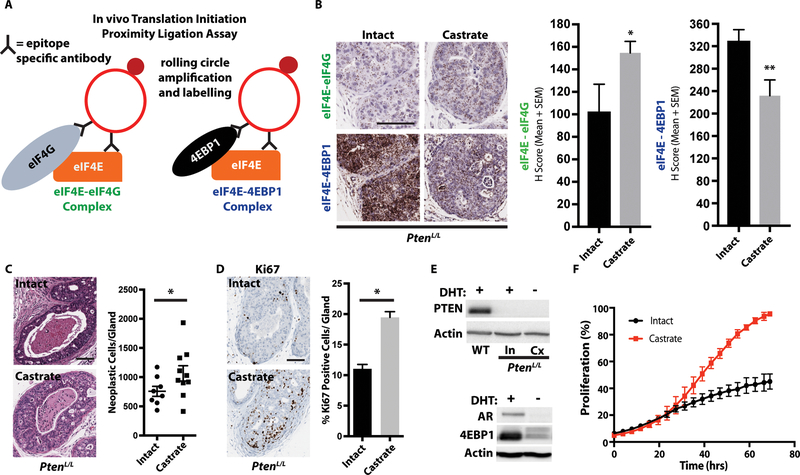
Figure 2.. 4EBP1 expression controls eIF4E-eIF4G interaction dynamics and proliferation in a cell-autonomous manner.
(A) Schematic of the eIF4E-eIF4G and eIF4E-4EBP1 proximity ligation assays, which allow for the quantification of eIF4F translation initiation complexes and 4EBP1 inhibitory complexes in vivo. (B) Representative images of the eIF4E-eIF4G and eIF4E-4EBP1 proximity ligation assays in intact and 8-week castrate PtenL/L ventral prostates (left panel). Quantification of the proximity ligation assay (right panel, intact n = 6, castrate n = 7, *P = 0.03, **P = 0.009, t-test). (C) Representative hematoxylin and eosin staining of intact and 8-week castrate PtenL/L ventral prostates (left panel), with quantification (right panel, intact n = 8, castrate n = 10, *P = 0.04, t-test). (D) Representative Ki67 staining of intact and 8-week castrate PtenL/L ventral prostates (left panel), with quantification [right panel, intact n = 7 (151 glands quantified), castrate n = 9 (206 glands quantified), *P < 0.0001, t-test]. (E) Representative western blot for PTEN and actin in wild-type (WT), intact PtenL/L, and 8-week castrate PtenL/L primary organoids (top panel). Representative western blot for AR, 4EBP1, and actin in intact PtenL/L and 8-week castrate PtenL/L primary organoids (bottom panel). (F) Growth curves of intact and castrate PtenL/L primary cells (3 biological replicate, P = 0.03, t-test). All scale bars = 100 μm. Data presented as mean +/− SEM.
Figure 3.
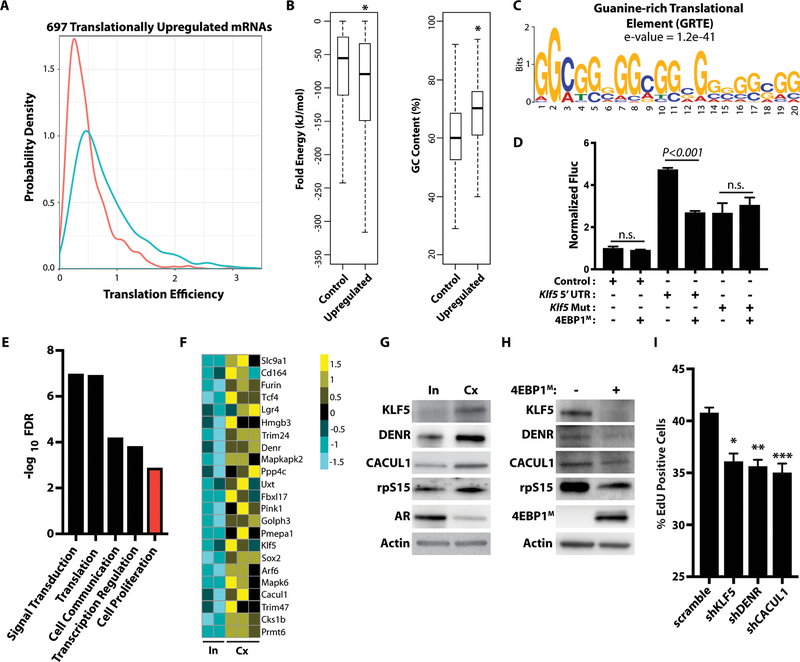
Figure 3.. AR and eIF4F-mediated mRNA-specific translation controls a regulon of functional cell proliferation regulators
(A) Probability density graph of 697 translationally upregulated mRNAs between intact (n = 2) and castrate (n = 3) PtenL/L ventral prostates. Translation efficiency = ribosome-bound mRNA/total mRNA (P < 2.2e-16, Kolmogorov-Smirnov Test). (B) Folding energy (P = 0.004339) and %GC content (P < 2.2e-16) between 5’ UTRs of control mRNA (n = 19009) and upregulated mRNA (n = 187, t-test). Whiskers represent 1.5 times the interquartile range. (C) The GRTE consensus sequence (e-value = 1.2e-41). (D) Luciferase assay of the control vector, wild-type Klf5 5’ UTR luciferase construct, and its GRTE deletion mutant with or without 4EBP1M induction. Luciferase assay was normalized to luc and RPS19 mRNA (n.s. = not statistically significant, n > 3 biological replicates/condition, t-test). Data presented as mean +/− SEM. (E) Gene set enrichment analysis of the translationally up-regulated mRNA (log2 fold change ≥ 0.75, FDR < 0.1) in castrate PtenL/L mice. (F) Heatmap of translationally upregulated proliferation regulators in AR-low prostate cancer (log2 fold change ≥ 0.75, FDR < 0.1). (G) Representative western blot analysis of KLF5, DENR, CACUL1, rpS15, AR, and actin in primary intact (In = intact, DHT +) and castrate (Cx = castrate, DHT-) PtenL/L organoids. (H) Representative western blot analysis of KLF5, DENR, CACUL1, rpS15, AR, and actin in primary PtenL/L;4ebp1M organoids with or without 4EBP1M induction. (I) Cell proliferation EdU incorporation assay in scramble, shKLF5, shDENR, or shCACUL castrate (DHT-) PtenL/L primary cells (replicate of 4–6 per condition, *P = 0.02, **P < 0.0001, ***P = 0.0003, t-test). Data presented as mean +/− SEM.
Figure 4.
Figure 4.. Increased eIF4F complex formation is necessary for AR-low prostate cancer initiation and progression.
(A) Schematic diagram of testing the impact of inhibiting eIF4F complex formation on AR-low prostate cancer initiation. PtenL/L;4ebp1M mice were castrated and immediately put on vehicle or doxycycline (dox) for 8 weeks. (B) Representative hematoxylin and eosin staining of vehicle-treated (−4EBP1M) and doxycycline-treated (+4EBP1M) PtenL/L;4ebp1M ventral prostates (left panel). Quantification of tumor volumes after 8 weeks of inhibition of eIF4F complex formation started immediately after castration (right panel, vehicle - n = 9, doxycycline - n = 9, *P = 0.04). (C) Representative Ki67 staining of vehicle-treated (−4EBP1M) and doxycycline-treated (+4EBP1M) PtenL/L;4ebp1M ventral prostates (left panel). Ki67 quantification after 8-week castration and immediate vehicle or doxycycline treatment [right panel, vehicle - n = 9 (205 glands quantified), doxycycline - n = 8 (169 glands quantified), *P < 0.0001, t-test]. (D) Schematic diagram of testing the impact of inhibiting eIF4F assembly on AR-low prostate cancer progression. PtenL/L;4ebp1M mice were castrated and allowed to form AR-low tumors for 12 weeks followed by an additional 12-week vehicle or doxycycline (dox) treatment. (E) PtenL/L;4ebp1M ventral prostate weights after 12-week castration followed by an additional 12-week vehicle or doxycycline treatment (vehicle - n = 10, doxycycline - n = 9, *P = 0.0018, t-test). (F) Representative images of PtenL/L;4ebp1M ventral prostates with or without 4ebp1M induction in the progression experiment. (G) PtenL/L;4ebp1M ventral prostate Ki67 quantification after 12-week castration followed by an additional 12-week vehicle or doxycycline treatment [vehicle - n = 9 (197 glands quantified), doxycycline - n = 7 (139 glands quantified), *P < 0.0001, t-test]. All scale bars = 100 μm. Data presented as mean +/− SEM.
Figure 5.
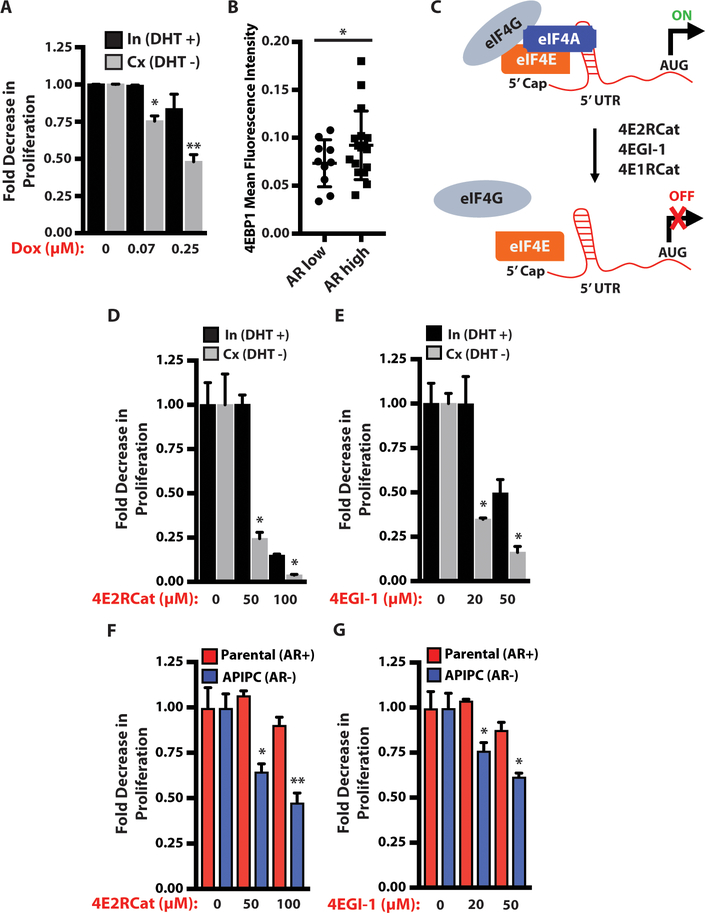
Figure 5.. AR-low prostate cancer is more sensitive to disruption of the eIF4E-eIF4G interaction than AR-intact prostate cancer.
(A) Intact and castrate PtenL/L;4ebp1M primary prostate cancer cells treated with doxycycline for 48 hours. Proliferation was measured using the IncuCyte platform (In = intact, Cx = castrate, assay completed in triplicate, *P = 0.0026, **P = 0.03, t-test). (B) 4EBP1 protein immunofluorescence quantification of a tissue microarray composed of end-stage metastatic CRPC patient specimens classified by AR protein expression (2–4 tumors sampled per patient, AR low - n = 10, AR high - n = 17, *P = 0.0089, t-test). (C) Simplified schematic of the mechanism of action of 4E1RCat, 4E2RCat, and 4EGI-1, which disrupt the eIF4E-eIF4G interaction. (D) Intact and castrate PtenL/L cells treated with 4E2RCat for 48 hours. Proliferation was measured using the IncuCyte platform (In = intact, Cx = castrate, assay completed in triplicate, *P < 0.0001, t-test). (E) Intact and castrate PtenL/L cells treated with 4EGI-1 for 48 hours. Proliferation was measured using the IncuCyte platform (In = intact, Cx = castrate, assay completed in triplicate, *P = 0.002, t-test). (F) AR+ parental and AR- APIPC prostate cancer cells treated with 4E2RCat for 48 hours. Proliferation was measured using the IncuCyte platform (assay completed in triplicate, *P < 0.0001, **P = 0.0003, t-test). (G) AR+ parental and AR- APIPC prostate cancer cells treated with 4EGI-1 for 48 hours. Proliferation was measured using the IncuCyte platform (assay completed in triplicate, *P = 0.0003, t-test). Data presented as mean +/− SEM.
Figure 6.
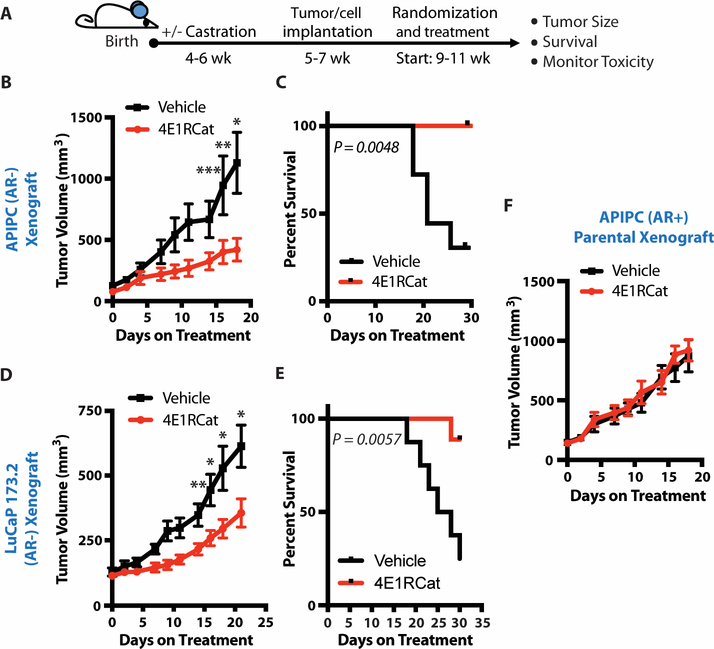
Figure 6.. Targeting the eIF4E-eIF4G interaction in AR-deficient prostate cancer decreases tumor growth and improves survival.
(A) Schematic of the eIF4E-eIF4G interaction inhibitor preclinical trials. (B) AR- APIPC xenograft preclinical trial testing the efficacy of 4E1RCat on AR-low prostate cancer tumor growth. Castrated mice were treated with 15 mg/kg 4E1RCat or vehicle (n = 8 – 4E1RCat-treated, n = 7 - vehicle-treated mice, *P = 0.0124, **P = 0.045, ***P = 0.05, t-test). (C) AR- APIPC xenograft preclinical trial testing the impact of 4E1RCat on AR-low prostate cancer survival. Castrated mice were treated with 15 mg/kg 4E1RCat or vehicle (n = 8 – 4E1RCat-treated, n = 7 - vehicle-treated mice, P = 0.0048, log-rank test). (D) LuCaP 173.2 PDX preclinical trial testing the efficacy of 4E1RCat on AR-low prostate tumor growth. Castrated mice were treated with 15 mg/kg 4E1RCat or vehicle (n = 9 – 4E1RCat-treated, n = 8 - vehicle-treated mice, *P = 0.02, **P = 0.01, t-test). (E) LuCaP 173.2 PDX preclinical trial testing the impact of 4E1RCat in AR-low prostate cancer survival. Castrated mice were treated with 15 mg/kg 4E1RCat or vehicle (n = 9 – 4E1RCat-treated, n = 8 - vehicle-treated mice, P = 0.0057, log-rank test). (F) AR+ parental APIPC xenograft preclinical trial testing the efficacy of 4E1RCat on AR+ prostate cancer tumor growth. Uncastrated mice were treated with 15 mg/kg 4E1RCat or vehicle (n = 8 – 4E1RCat-treated, n = 7 - vehicle-treated mice). Data presented as mean +/− SEM.

Comment in

References

    1. Dehm SM, Tindall DJ, Androgen receptor structural and functional elements: role and regulation in prostate cancer. Mol Endocrinol 21, 2855–2863 (2007). - PubMed
    1. Hsieh AC, Small EJ, Ryan CJ, Androgen-response elements in hormone-refractory prostate cancer: implications for treatment development. Lancet Oncol 8, 933–939 (2007). - PubMed
    1. Sendoel A, Dunn JG, Rodriguez EH, Naik S, Gomez NC, Hurwitz B, Levorse J, Dill BD, Schramek D, Molina H, Weissman JS, Fuchs E, Translation from unconventional 5’ start sites drives tumour initiation. Nature 541, 494–499 (2017). - PMC - PubMed
    1. Schwanhausser B, Busse D, Li N, Dittmar G, Schuchhardt J, Wolf J, Chen W, Selbach M, Global quantification of mammalian gene expression control. Nature 473, 337–342 (2011). - PubMed
    1. Signer RA, Magee JA, Salic A, Morrison SJ, Haematopoietic stem cells require a highly regulated protein synthesis rate. Nature 509, 49–54 (2014). - PMC - PubMed

Publication types

Substances