


Effectiveness of a mobile preconception lifestyle programme in couples undergoing in vitro fertilisation (IVF): the protocol for the PreLiFe randomised controlled trial (PreLiFe-RCT)
- PMID: 31366659
- PMCID: PMC6678004
- DOI: 10.1136/bmjopen-2019-029665
Effectiveness of a mobile preconception lifestyle programme in couples undergoing in vitro fertilisation (IVF): the protocol for the PreLiFe randomised controlled trial (PreLiFe-RCT)
Abstract
Introduction: Infertility and in vitro fertilisation (IVF; with or without intracytoplasmic sperm injection) result in considerable emotional and financial burden. Increasing evidence suggests that lifestyle factors, including diet, physical activity and personal well-being, are associated with IVF-success rates. Currently, IVF is not routinely combined with a lifestyle programme. The preconception lifestyle (PreLiFe) randomised controlled trial (RCT) assesses the effects of a new mobile PreLiFe programme in couples undergoing IVF.
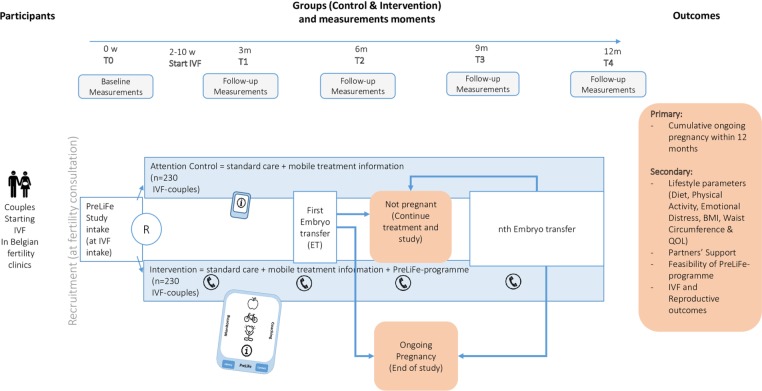
Methods and analysis: A multicentre RCT including 460 heterosexual couples starting IVF in Belgian fertility clinics. IVF couples are randomised between an attention control group or the PreLiFe programme for a period of 12 months or until an ongoing pregnancy is confirmed by ultrasound. The attention control programme includes a mobile application with treatment information (ie, appointments and medication instructions) in addition to standard care. The PreLiFe programme includes a mobile application with the same treatment information in combination with a lifestyle programme. This new lifestyle programme includes tailored advice and skills training on diet, physical activity and mindfulness in combination with text messages and telephone interaction with a healthcare professional trained in motivational interviewing. The primary outcome of this RCT is the cumulative ongoing pregnancy rate within 12 months after randomisation. Secondary outcomes include changes in diet, physical activity, emotional distress, body mass index, waist circumference, quality of life and other reproductive outcomes including IVF discontinuation, clinical pregnancy rate and time to pregnancy. Additionally, partner support and the feasibility (use and acceptability) of the PreLiFe programme will be evaluated in the intervention group. Analysis will be according to intention to treat.
Ethics and dissemination: This study has been approved by the Medical Ethical Committee of the Leuven University Hospital (Belgium) and the other recruiting clinics. The findings of this RCT will be disseminated through presentations at international scientific meetings and peer-reviewed publications.
Trial registration number: NCT03790449; Pre-results.
Keywords: IVF; diet; fertility treatment; infertility; lifestyle; mHealth; mindfulness; physical activity; reproductive outcome.
© Author(s) (or their employer(s)) 2019. Re-use permitted under CC BY-NC. No commercial re-use. See rights and permissions. Published by BMJ.
Conflict of interest statement
Competing interests: None declared.
Figures
References
Publication types
MeSH terms
Associated data
LinkOut - more resources
Full Text Sources
Medical
