


Immune suppression in chronic hepatitis B infection associated liver disease: A review
- PMID: 31367154
- PMCID: PMC6658392
- DOI: 10.3748/wjg.v25.i27.3527
Immune suppression in chronic hepatitis B infection associated liver disease: A review
Abstract
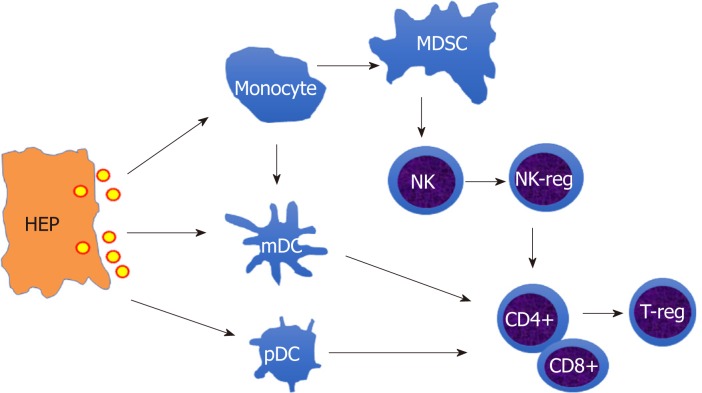
Hepatitis B virus (HBV) infection is one the leading risk factors for chronic hepatitis, liver fibrosis, cirrhosis and hepatocellular cancer (HCC), which are a major global health problem. A large number of clinical studies have shown that chronic HBV persistent infection causes the dysfunction of innate and adaptive immune response involving monocytes/macrophages, dendritic cells, natural killer (NK) cells, T cells. Among these immune cells, cell subsets with suppressive features have been recognized such as myeloid derived suppressive cells(MDSC), NK-reg, T-reg, which represent a critical regulatory system during liver fibrogenesis or tumourigenesis. However, the mechanisms that link HBV-induced immune dysfunction and HBV-related liver diseases are not understood. In this review we summarize the recent studies on innate and adaptive immune cell dysfunction in chronic HBV infection, liver fibrosis, cirrhosis, and HCC, and further discuss the potential mechanism of HBV-induced immunosuppressive cascade in HBV infection and consequences. It is hoped that this article will help ongoing research about the pathogenesis of HBV-related hepatic fibrosis and HBV-related HCC.
Keywords: Dendritic cells; Hepatitis B virus; Hepatocellular carcinoma; Liver fibrosis; Monocytes; Regulatory T cells; Regulatory natural killer cells.
Conflict of interest statement
Conflict-of-interest statement: No potential conflicts of interest. No financial support.
Figures
References
-
- Dandri M, Locarnini S. New insight in the pathobiology of hepatitis B virus infection. Gut. 2012;61 Suppl 1:i6–17. - PubMed
-
- Guidotti LG, Chisari FV. Immunobiology and pathogenesis of viral hepatitis. Annu Rev Pathol. 2006;1:23–61. - PubMed
-
- Artis D, Spits H. The biology of innate lymphoid cells. Nature. 2015;517:293–301. - PubMed
Publication types
MeSH terms
LinkOut - more resources
Full Text Sources
Other Literature Sources
Medical
