


Effect of storage temperature on lipid oxidation and changes in nutrient contents in peanuts
- PMID: 31367356
- PMCID: PMC6657719
- DOI: 10.1002/fsn3.1069
Effect of storage temperature on lipid oxidation and changes in nutrient contents in peanuts
Abstract
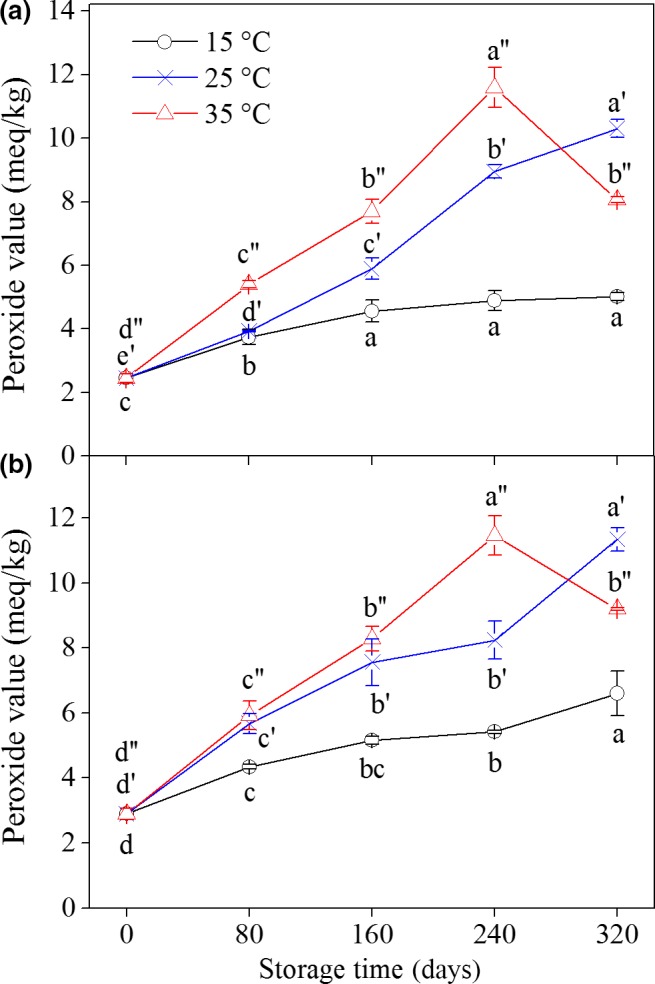
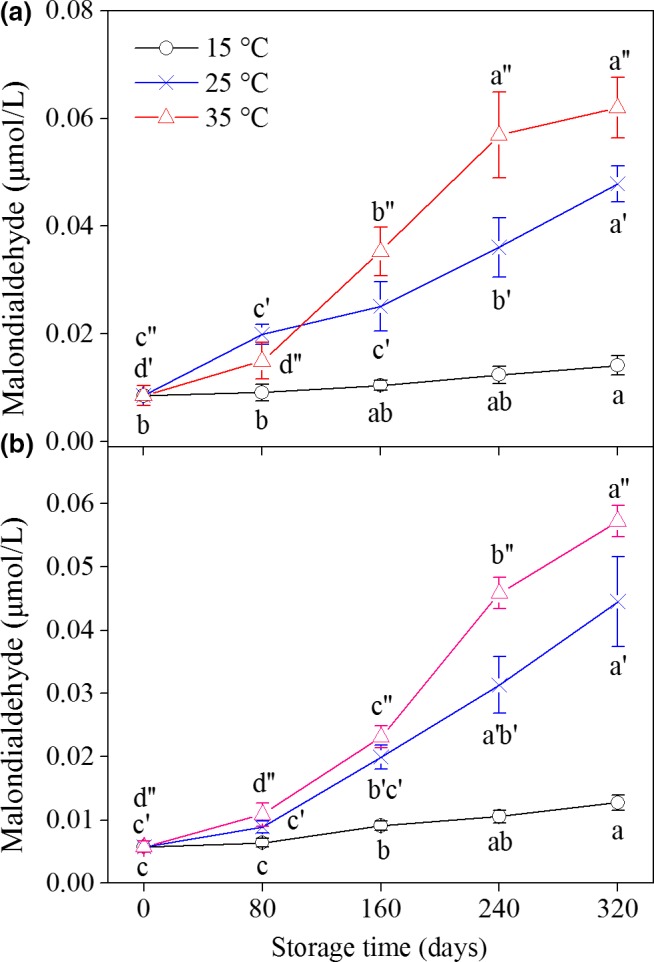
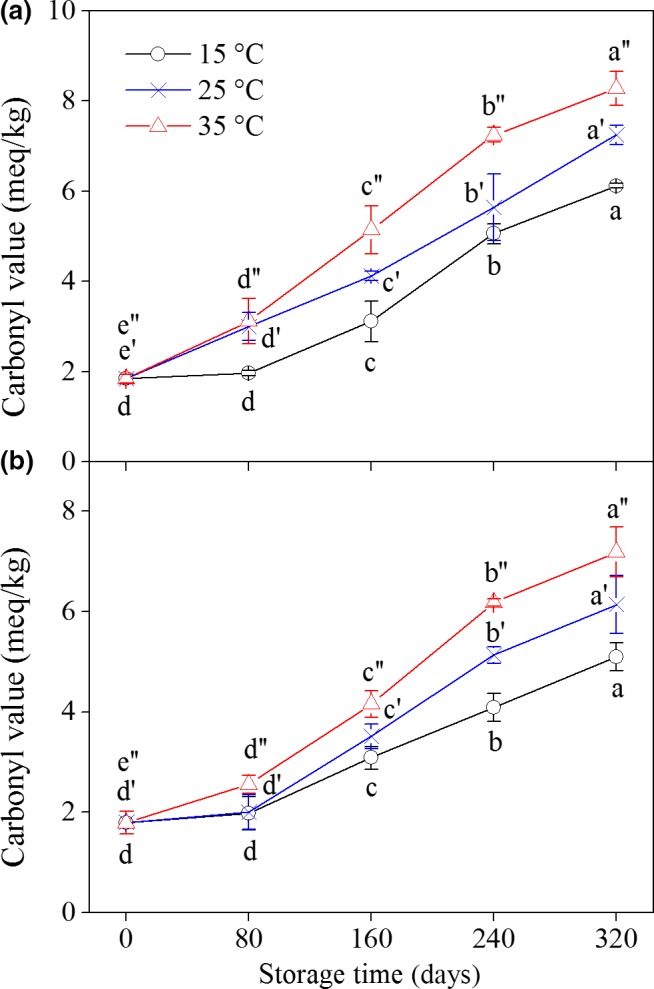
Peanut, an important oil crop worldwide, is highly susceptible to oxidative damage during storage due to its high level of fats and unsaturated fatty acids which will affects its nutritional value and agricultural importance. Therefore, it is significantly important to research the physicochemical properties changes of peanuts during storage. Peanuts belong to two varieties were stored at various temperatures (15°C, 25°C, and 35°C) for 320 days. Peroxide value (PV), carbonyl value (CV), and malondialdehyde (MDA) content of oil extracted from peanuts were determined every 80 days to evaluate lipid oxidation degree. Proximate composition (fat, protein, total sugar, moisture, and ash), fatty acid, and amino acid compositions were also assessed. All samples exhibited increased CV and MDA contents during storage. The PV of peanuts increased continuously when stored at 15°C and 25°C, but the PV increased firstly and then decreased sharply when stored at 35°C. Storage significantly affected the contents of lipids, proteins, total sugars, and moisture in peanuts but did not influence the ash content. In general, the fatty acid and amino acid compositions changed significantly during storage at different temperatures. High temperatures lead to a high degree of lipid oxidation and nutrient loss. The results above of this study can provide a theoretical basis for the actual storage and preservation of peanuts.
Keywords: lipid oxidation; nutrient contents; peanut; storage temperature.
Conflict of interest statement
The authors declare that they do not have any conflict of interest.
Figures
References
-
- Abegaz, E. G. , Kerr, W. L. , & Koehler, P. E. (2004). The role of moisture in flavor changes of model peanut confections during storage. LWT ‐ Food Science and Technology, 37(2), 215–225. 10.1016/j.lwt.2003.07.007 - DOI
-
- AOAC (1995). Official methods of analysis (16th ed). Arlington, VA: Association of Official Analytical Chemists.
-
- Baker, G. L. , Sims, C. A. , Gorbet, D. A. , Sanders, T. H. , & O'Keefe, S. F. (2010). Storage water activity effect on oxidation and sensory properties of high‐oleic peanuts. Journal of Food Science, 67(5), 1600–1603. 10.1111/j.1365-2621.2002.tb08690.x - DOI
-
- Brannan, G. L. , Koehler, P. E. , & Ware, G. O. (1999). Physico‐chemical and sensory characteristics of defatted roasted peanuts during storage. Peanut Science, 26(1), 44–53.
LinkOut - more resources
Full Text Sources
Research Materials
Miscellaneous
