


Contemporary surgical practice in the management of anal fistula: results from an international survey
- PMID: 31368010
- PMCID: PMC6736896
- DOI: 10.1007/s10151-019-02051-5
Contemporary surgical practice in the management of anal fistula: results from an international survey
Abstract
Background: Management of anal fistula (AF) remains challenging with many controversies. The purpose of this study was to explore current surgical practice in the management of AF with a focus on technical variations among surgeons.
Methods: An online survey was conducted by inviting all surgeons and physicians on the membership directory of European Society of Coloproctology and American Society of Colon and Rectal Surgeons. An invitation was extended to others via social media. The survey had 74 questions exploring diagnostic and surgical techniques.
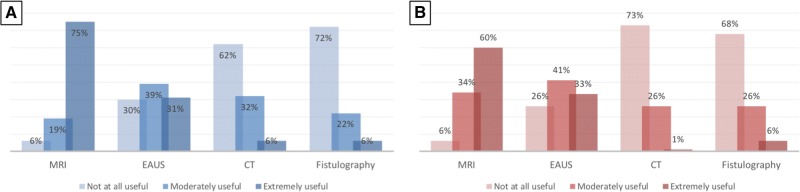
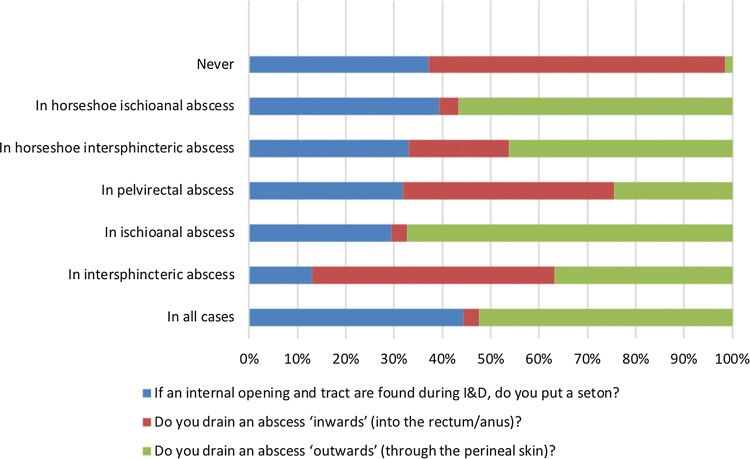
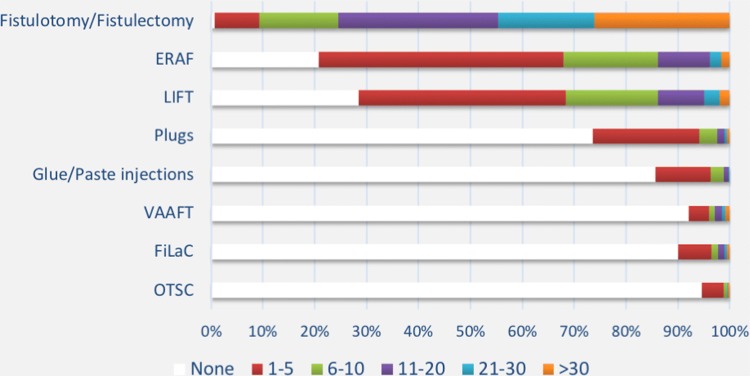
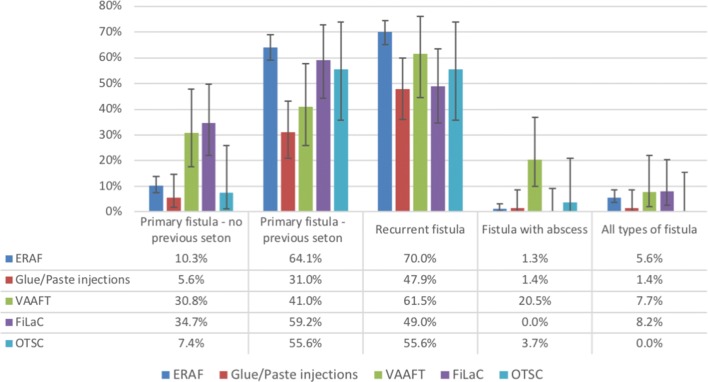
Results: In March 2018, 3572 physicians on membership directory were invited to take part in the study 510 of whom (14%) responded to the survey. Of these respondents, 492 (96%) were surgeons. Respondents were mostly colorectal surgeons (84%) at consultant level (84%), age ≥ 40 years (64%), practicing in academic (53%) or teaching (30%) hospitals, from the USA (36%) and Europe (34%). About 80% considered fistulotomy as the gold standard treatment for simple fistulas. Endorectal advancement flap was performed using partial- (42%) or full-thickness (44%) flaps. Up to 38% of surgeons performed ligation of the intersphincteric fistula tract (LIFT) sometimes with technical variations. Geographic and demographic differences were found in both the diagnostic and therapeutic approaches to AF. Declared rates of recurrence and fecal incontinence with these techniques were variable and did not correlate with surgeons' experience. Only 1-4% of surgeons were confident in performing the most novel sphincter-preserving techniques in patients with Crohn's disease.
Conclusions: Profound technical variations exist in surgical management of AF, making it difficult to reproduce and compare treatment outcomes among different centers.
Keywords: Anal fistula; Incontinence; LIFT; Recurrence; Survey; VAAFT.
Conflict of interest statement
The authors declare that they have no conflict of interest.
Figures
References
MeSH terms
LinkOut - more resources
Full Text Sources
Molecular Biology Databases
