


Seroprevalence of leptospirosis and Japanese encephalitis in swine in ten provinces of Vietnam
- PMID: 31369564
- PMCID: PMC6675114
- DOI: 10.1371/journal.pone.0214701
Seroprevalence of leptospirosis and Japanese encephalitis in swine in ten provinces of Vietnam
Abstract
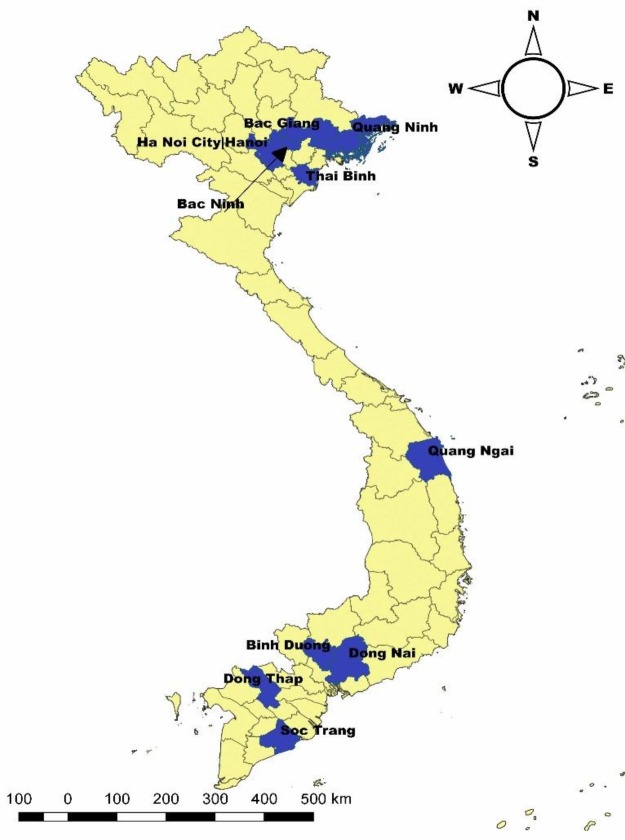
Background: Leptospirosis is an important zoonotic disease with a global distribution, affecting a wide range of mammalian animals and humans. Japanese encephalitis (JE) virus is the major vector-borne zoonotic disease in the Asia-Pacific region. The main objective of this study was to evaluate the seroprevalence of serovar-specific Leptospira and JE in swine from 10 provinces in Vietnam.
Methods: Samples were initially collected for swine influenza surveillance from March to April 2017 at large-scale farms (with at least 50 sows and/or 250 fattening pigs) with pigs that tested positive for influenza in the previous surveillance period (2015-16).
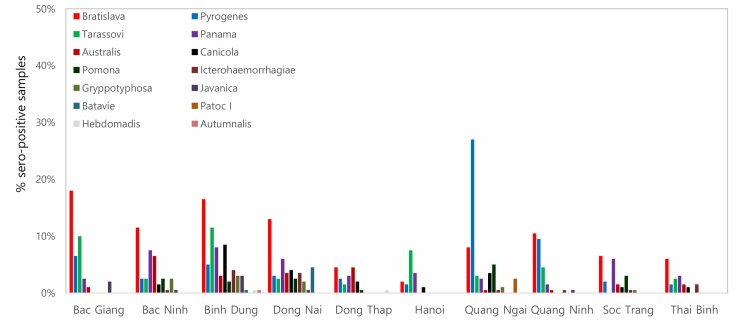
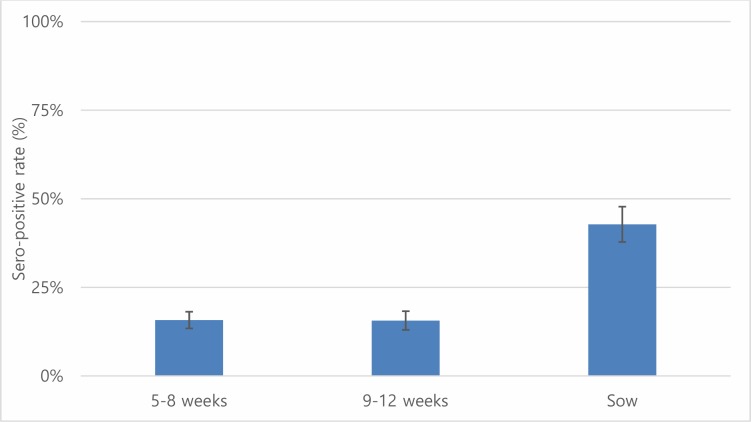
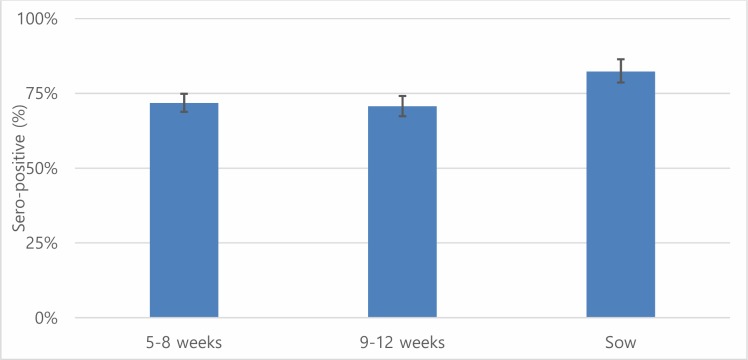
Findings: A total of 2,000 sera samples were analyzed from 10 provinces. Overall, the seroprevalence of leptospirosis was 21.05% (95% CI: 19.28-22.90) using a cut-off titer of ≥ 1:100. The apparent prevalence of JE was 73.45% (95% CI: 71.46-75.37) while the true prevalence was slightly higher (74.46%, 95% credible interval: 73.73-86.41). We found a relatively high presence of leptospirosis and JE in pigs kept on large farms. Prevalence was comparable with other studies suggesting opportunistic testing of samples collected for other surveillance purposes can be a valuable tool to better understand and prevent the potential transmission of these zoonotic diseases from pigs to people in Vietnam.
Conclusion: Our study provides evidence to veterinarians and animal health professionals for evidence-based practice such as diagnosis, vaccination and zoonotic control. Further investigation into the possible role of different domestic animals, wildlife species or environmental factors is needed to identify the potential risk factors and transmission routes in Vietnam.
Conflict of interest statement
The authors have declared that no competing interests exist.
Figures
References
-
- Bharti AR, Nally JE, Ricaldi JN, Matthias MA, Diaz MM, Lovett MA, et al. Leptospirosis: a zoonotic disease of global importance. The Lancet infectious diseases. Elsevier; 2003;3: 757–771. - PubMed
-
- Faine S. Leptospira and leptospirosis CRC Press Inc.; 1994.
-
- Mackenzie JS, Williams DT, Smith DW. Japanese encephalitis virus: the geographic distribution, incidence, and spread of a virus with a propensity to emerge in new areas. Perspectives in Medical Virology. Elsevier; 2006;16: 201–268.
Publication types
MeSH terms
LinkOut - more resources
Full Text Sources
Miscellaneous
