


Right-to-left shunts and hormonal therapy influence cerebral vasomotor reactivity in patients with migraine with aura
- PMID: 31369637
- PMCID: PMC6675040
- DOI: 10.1371/journal.pone.0220637
Right-to-left shunts and hormonal therapy influence cerebral vasomotor reactivity in patients with migraine with aura
Abstract
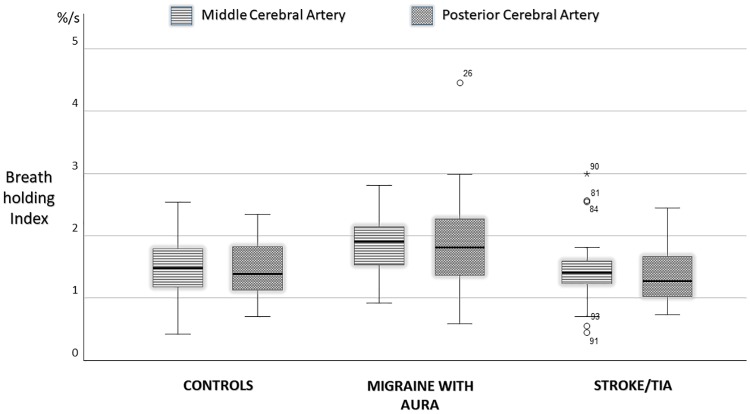
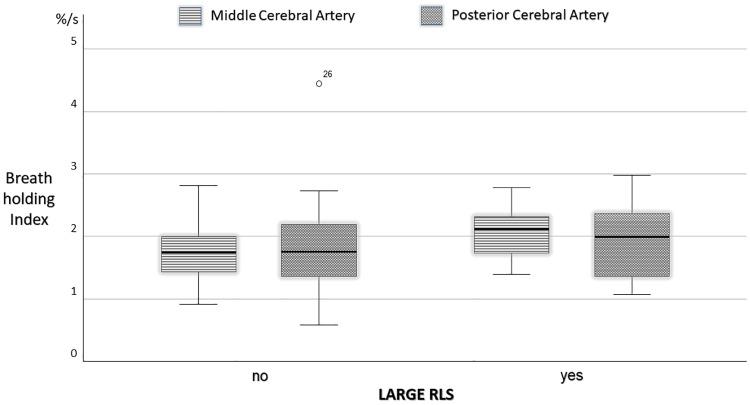
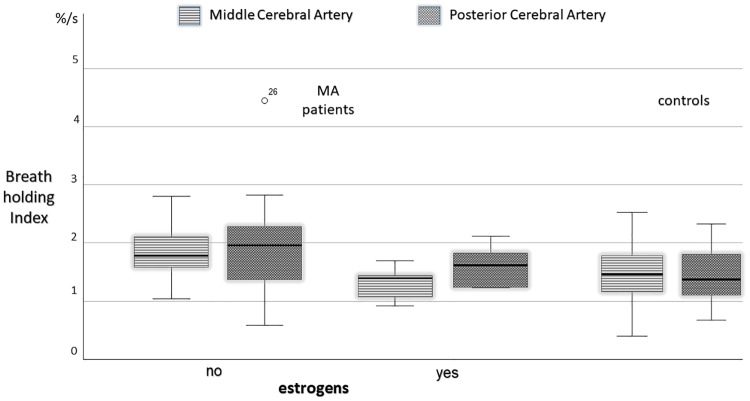
Patent Foramen Ovale and impaired cerebral hemodynamics were proposed among the pathophysiological mechanisms explaining the increased risk for stroke in patients with Migraine with Aura (MA). Our study aimed at comparing the vasomotor reactivity (VMR) of the anterior and the posterior cerebral circulation in patients with Migraine with Aura, in patients with acute vascular ischemic accidents, and in controls. We hypothesized that VMR in MA patients is preserved in the anterior circulation and reduced in the posterior circulation. We prospectively assessed with Transcranial Doppler the vasomotor reactivity to breath holding of the Middle and Posterior Cerebral Arteries (MCA, PCA) in MA patients, in acute vascular patients and healthy controls. We also evaluated the possible effect of clinical characteristics of MA (attack frequency, aura length or type, disease history), vascular factors and the presence of right-to-left shunt on VMR. Diverging from our hypothesis, MA patients displayed a higher breath-holding index (BHI) than controls in the MCA (1.84±0.47%/s vs 1.53±0.47%/s, p = .001) as well as in the PCA (1.87±0.65%/s vs 1.47±0.44%/s, p < .001). In MA patients, MCA BHI was higher in those with large right-to-left shunts (2.09±0.42 vs 1.79±0.47, p = .046) and lower in those taking estrogens (1.30±0.30%/s vs 1.9±0.45%/s, p = .009). We did not observe an effect of MA characteristics on BHI. The increased BHI in MA patients with large right-to-left shunts could be explained by the vasoactive effect in the cerebral circulation of substances bypassing the deactivating pulmonary filters or by a constitutional trait of the vascular system associating persistent right-to-left shunts and hyper-reactive hemodynamics. Our results discourage the hypothesis that altered hemodynamics contribute to increasing the stroke risk in all MA patients. However, estrogens can lower VMR, curtailing the hemodynamic resources of MA patients.
Conflict of interest statement
The authors have declared that no competing interests exist.
Figures
References
MeSH terms
Substances
LinkOut - more resources
Full Text Sources
Miscellaneous
