


Acupuncture for Depression: A Systematic Review and Meta-Analysis
- PMID: 31370200
- PMCID: PMC6722678
- DOI: 10.3390/jcm8081140
Acupuncture for Depression: A Systematic Review and Meta-Analysis
Abstract
Background: Depression is commonly treated with anti-depressant medication and/or psychological interventions. Patients with depression are common users of complementary therapies, such as acupuncture, either as a replacement for, or adjunct to, their conventional treatments. This systematic review and meta-analysis examined the effectiveness of acupuncture in major depressive disorder.
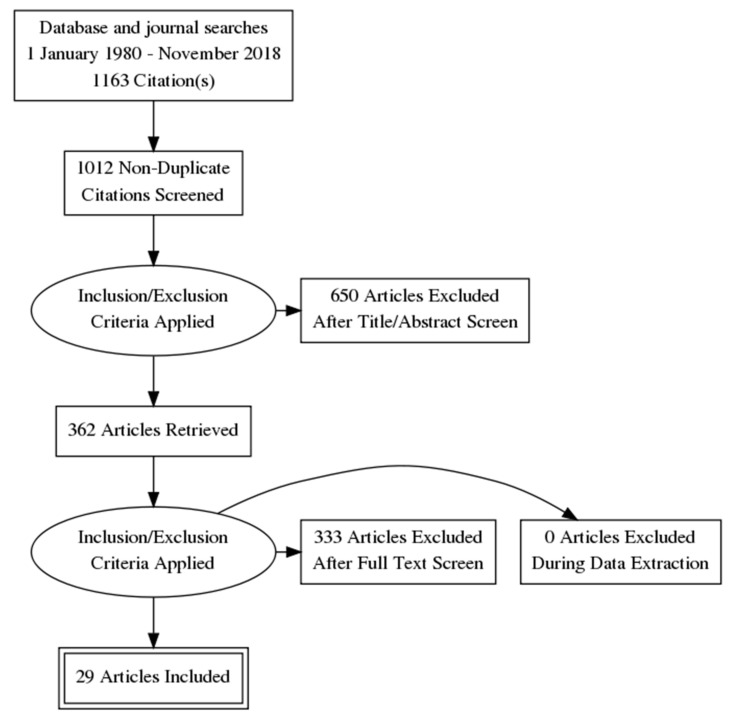
Methods: A search of English (Medline, PsychINFO, Google Scholar, and CINAL), Chinese (China National Knowledge Infrastructure Database (CNKI) and Wanfang Database), and Korean databases was undertaken from 1980 to November 2018 for clinical trials using manual, electro, or laser acupuncture.
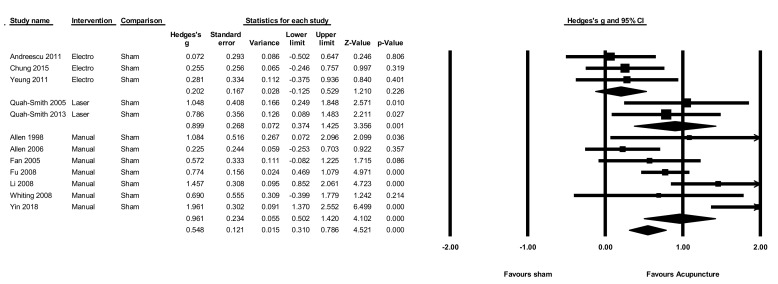
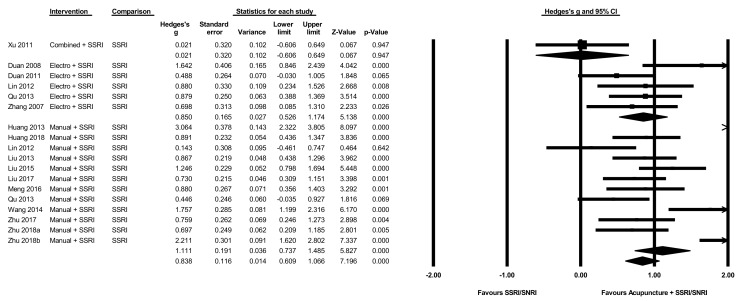
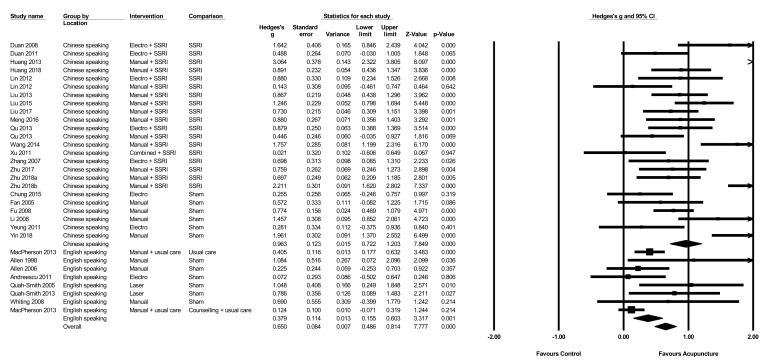
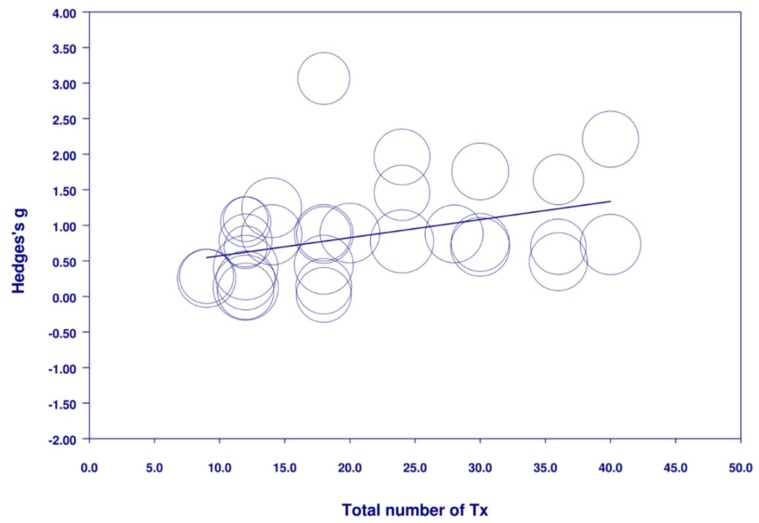
Results: Twenty-nine studies including 2268 participants were eligible and included in the meta-analysis. Twenty-two trials were undertaken in China and seven outside of China. Acupuncture showed clinically significant reductions in the severity of depression compared to usual care (Hedges (g) = 0.41, 95% confidence interval (CI) 0.18 to 0.63), sham acupuncture (g = 0.55, 95% CI 0.31 to 0.79), and as an adjunct to anti-depressant medication (g = 0.84, 95% CI 0.61 to 1.07). A significant correlation between an increase in the number of acupuncture treatments delivered and reduction in the severity of depression (p = 0.015) was found.
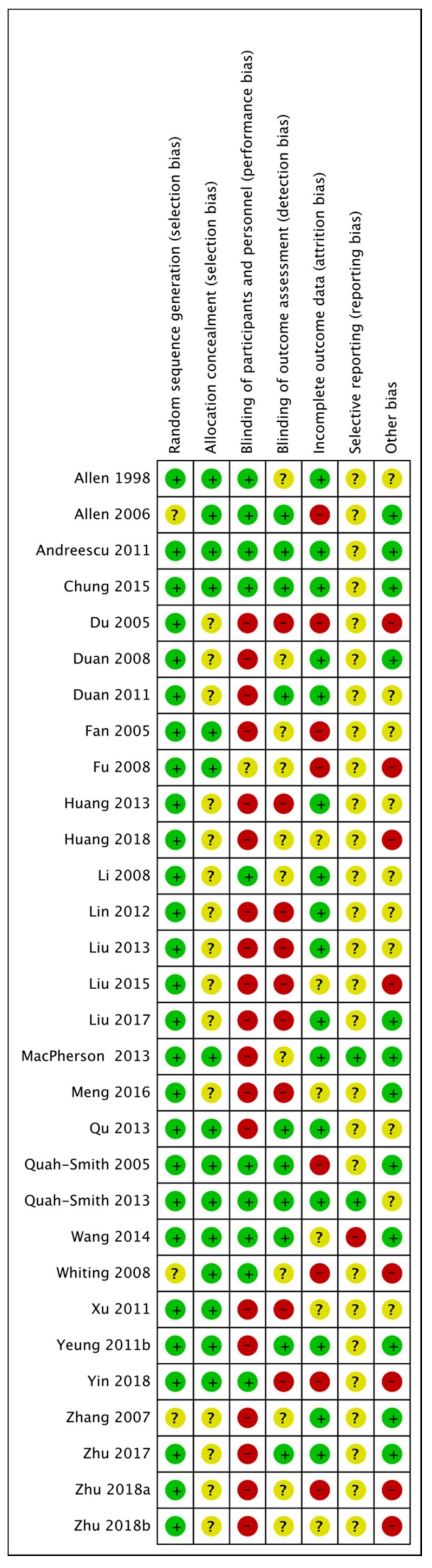
Limitations: The majority of the included trials were at a high risk of bias for performance blinding. The applicability of findings in Chinese populations to other populations is unclear, due to the use of a higher treatment frequency and number of treatments in China. The majority of trials did not report any post-trial follow-up and safety reporting was poor.
Conclusions: Acupuncture may be a suitable adjunct to usual care and standard anti-depressant medication.
Keywords: acupuncture; depression; dosage; frequency.
Conflict of interest statement
M.A., C.A.S., D.N. and G.-Y.Y. As a medical research institute, NICM Health Research Institute receives research grants and donations from foundations, universities, government agencies and industry. Sponsors and donors provide untied and tied funding for work to advance the vision and mission of the Institute. This study was not specifically supported by donor or sponsor funding to NICM. L.-Q.W.: none P.H.: Hay receives/has received sessional fees and lecture fees from the Australian Medical Council, Therapeutic Guidelines publication, and New South Wales Institute of Psychiatry and royalties/honoraria from Hogrefe and Huber, McGraw Hill Education, and Blackwell Scientific Publications, Biomed Central and PlosMedicine and she has received research grants from the NHMRC and ARC. She is Chair of the National Eating Disorders Collaboration Steering Committee in Australia (2019-) and Member of the ICD-11 Working Group for Eating Disorders (2012-) and was Chair Clinical Practice Guidelines Project Working Group (Eating Disorders) of RANZCP (2012–2015). She has prepared a report under contract and conducted education for Psychiatrists funded by Shire Pharmaceuticals (2017–2018). All views in this paper are her own. H.M.: MacPherson is an Emeritus Professor of Acupuncture Research, Department of Health Sciences, University of York, UK, Chair of Trustees of the Northern College of Acupuncture, York, UK, and Clinical Director of the York Clinic for Integrated Healthcare, York, UIK. M.S.L.: Korea Instutute of Oriental Medicine is a Korean government funded institute for researching Korean Medicine (KIOM).
Figures
References
-
- Malhi G.S., Bassett D., Boyce P., Bryant R., Fitzgerald P.B., Fritz K., Hopwood M., Lyndon B., Mulder R., Murray G., et al. Royal Australian and New Zealand College of Psychiatrists clinical practice guidelines for mood disorders. Aust. N. Z. J. Psychiatry. 2015;49:1087–1206. doi: 10.1177/0004867415617657. - DOI - PubMed
-
- National Institute for Health and Care Excellence . Depression in Adults: Recognition and Management (NICE Clinical Guideline 30) NICE; London, UK: 2009. - PubMed
Publication types
Grants and funding
LinkOut - more resources
Full Text Sources
Molecular Biology Databases
