


Risk versus reward: host dependent parasite mortality rates and phenotypes in the facultative generalist Triphysaria versicolor
- PMID: 31370799
- PMCID: PMC6669981
- DOI: 10.1186/s12870-019-1856-1
Risk versus reward: host dependent parasite mortality rates and phenotypes in the facultative generalist Triphysaria versicolor
Abstract
Background: Parasitic plants engage in a complex molecular dialog with potential host plants to identify a host and overcome host defenses to initiate development of the parasitic feeding organ, the haustorium, invade host tissues, and withdraw water and nutrients. While one of two critical signaling events in the parasitic plant life cycle (germination via stimulant chemicals) has been relatively well-studied, the signaling event that triggers haustorium formation remains elusive. Elucidation of this poorly understood molecular dialogue will shed light on plant-plant communication, parasitic plant physiology, and the evolution of parasitism in plants.
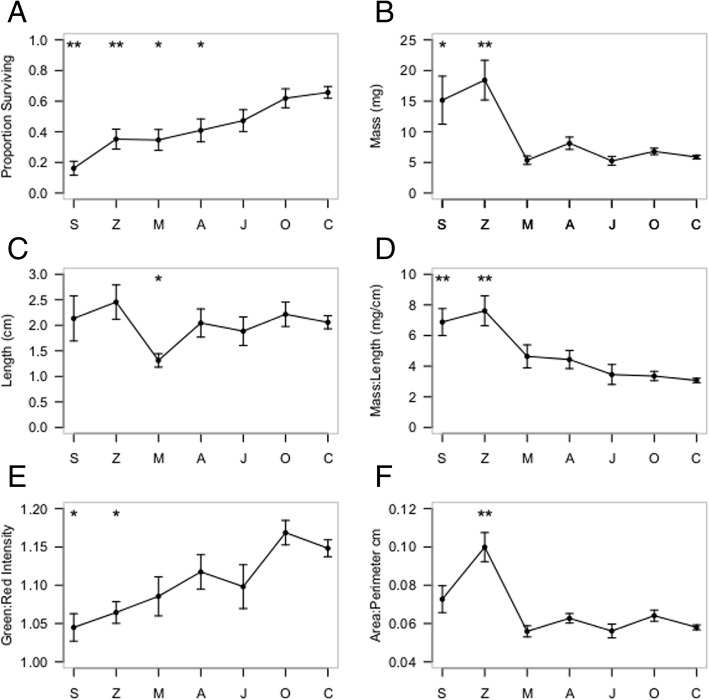
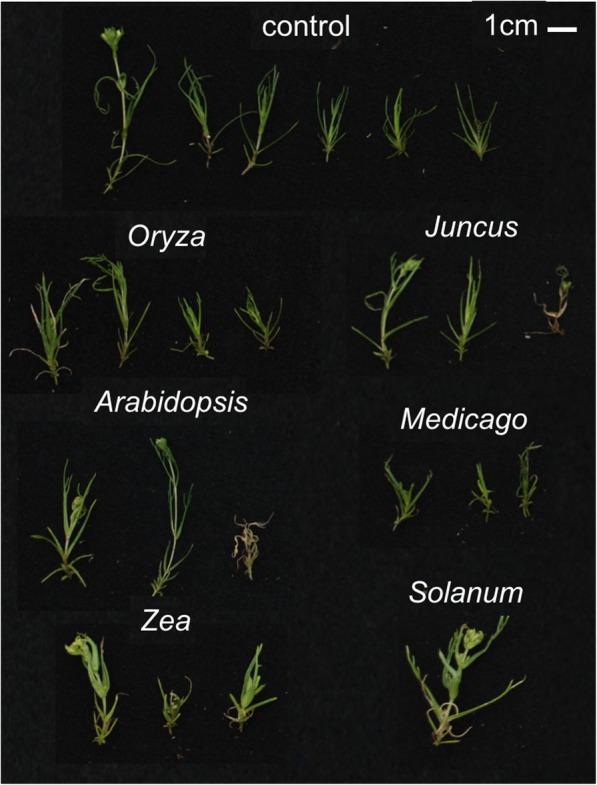
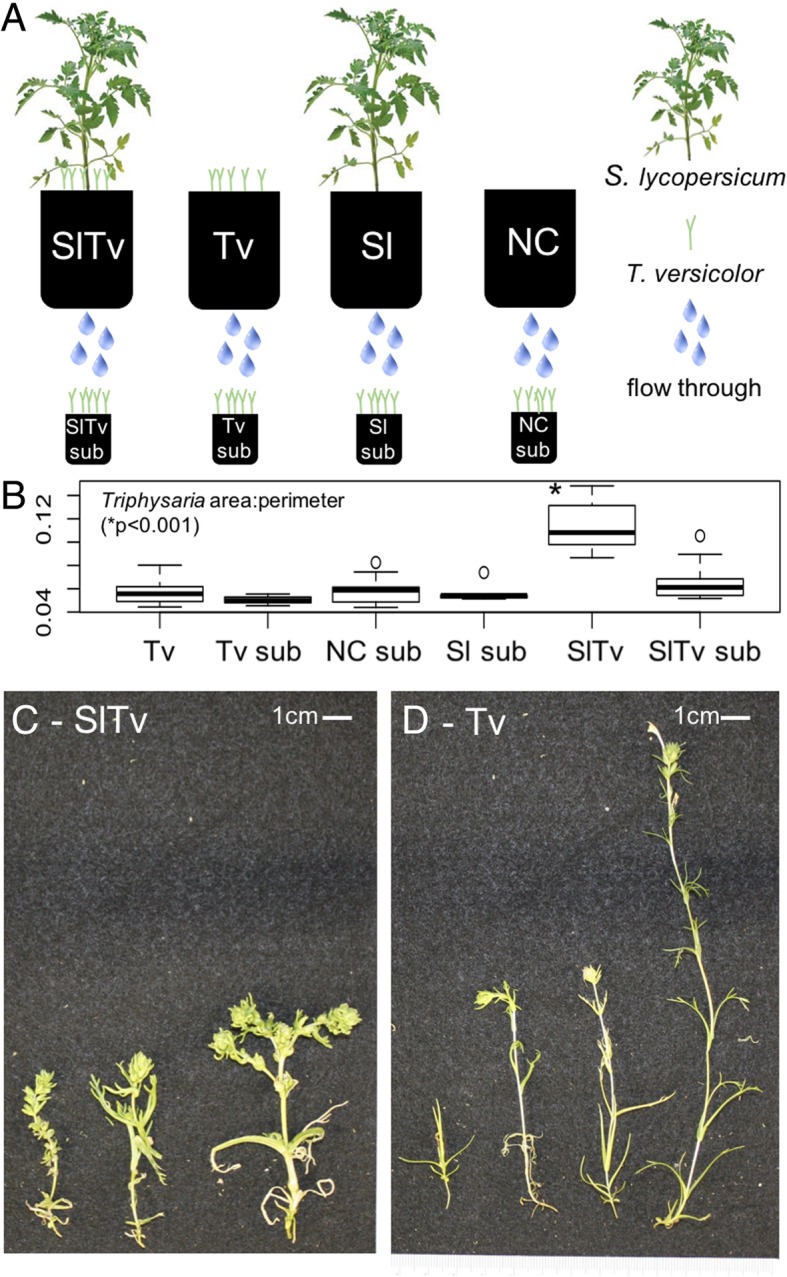
Results: Here we present an experimental framework that develops easily quantifiable contrasts for the facultative generalist parasitic plant, Triphysaria, as it feeds across a broad range of diverse flowering plants. The contrasts, including variable parasite growth form and mortality when grown with different hosts, suggest a dynamic and host-dependent molecular dialogue between the parasite and host. Finally, by comparing transcriptome datasets from attached versus unattached parasites we gain insight into some of the physiological processes that are altered during parasitic behavior including shifts in photosynthesis-related and stress response genes.
Conclusions: This work sheds light on Triphysaria's parasitic life habit and is an important step towards understanding the mechanisms of haustorium initiation factor perception, a unique form of plant-plant communication.
Conflict of interest statement
The authors declare that they have no competing interests.
Figures
References
-
- Bandaranayake Pradeepa C. G., Yoder John I. Parasitic Orobanchaceae. Berlin, Heidelberg: Springer Berlin Heidelberg; 2013. Haustorium Initiation and Early Development; pp. 61–74.
-
- Barkman Todd J, McNeal Joel R, Lim Seok-Hong, Coat Gwen, Croom Henrietta B, Young Nelson D, dePamphilis Claude W. Mitochondrial DNA suggests at least 11 origins of parasitism in angiosperms and reveals genomic chimerism in parasitic plants. BMC Evolutionary Biology. 2007;7(1):248. doi: 10.1186/1471-2148-7-248. - DOI - PMC - PubMed
-
- Thurman LD. Genecological studies in Orthocarpus subgenus Triphysaria. Berkeley: University of California; 1966.
