. 2019 Jul;35(4):415-424.
doi: 10.6515/ACS.201907_35(4).20181218A.

Protective Roles and Mechanisms of Taurine on Myocardial Hypoxia/Reoxygenation-Induced Apoptosis

Affiliations

Protective Roles and Mechanisms of Taurine on Myocardial Hypoxia/Reoxygenation-Induced Apoptosis

Xiaohong Yang et al. Acta Cardiol Sin. 2019 Jul.

Abstract

Background: This study aimed to investigate the protective roles and mechanisms of taurine on myocardial ischemia/reperfusion (I/R)-induced cell apoptosis, and thus provide evidence for the treatment of myocardial I/R injury and the development of related drugs.

Methods: The cardiomyocytes of neonatal rats were used to prepare the hypoxia/reoxygenation (H/R) injury model; gene transfection and small interfering RNA (siRNA) target gene silencing techniques were performed, along with methyl thiazolyl tetrazolium (MTT) assay to detect cell survival, flow cytometry to detect cell apoptosis, and Western blot to measure protein expressions.

Results: Compared with the H/R group, the apoptosis rates of cardiomyocytes in the three taurine (TAU)-protection groups were significantly decreased (p < 0.05). As the TAU concentration increased, the expression of Bcl-2 protein in H/R cardiomyocytes also gradually increased (p < 0.05), while the protein expressions of p53 up-regulated modulator of apoptosis (PUMA), C/EBP homologous protein (CHOP), Bax, glucose-regulated protein 78kD (GRP78), and caspase-3 gradually decreased (p < 0.01). TAU strongly downregulated the expression of PUMA-transfected cardiomyocytes. After targeted silencing of PUMA, the apoptosis rate was significantly decreased, while the expression of Bcl-2 protein was increased, and that of Bax protein was decreased (p < 0.05).

Conclusions: TAU significantly inhibited myocardial H/R-induced apoptosis, and the mechanism may be related to a downregulated expression of PUMA.

Keywords: Apoptosis; Ischemia/reperfusion injury; Myocardium; Taurine.


Figures
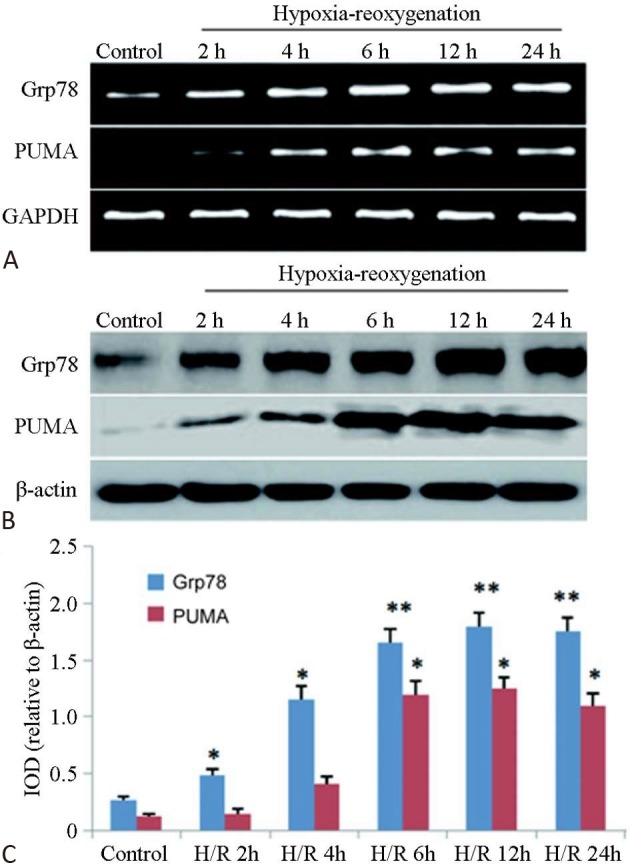
Figure 1
Figure 1
Expression changes of PUMA and GRP78 in the cardiomyocytes at different time points after H/R (n = 3). (A) RT-PCR; (B) Western blot; (C) Histogram of the protein expressions.
Figure 2
Figure 2
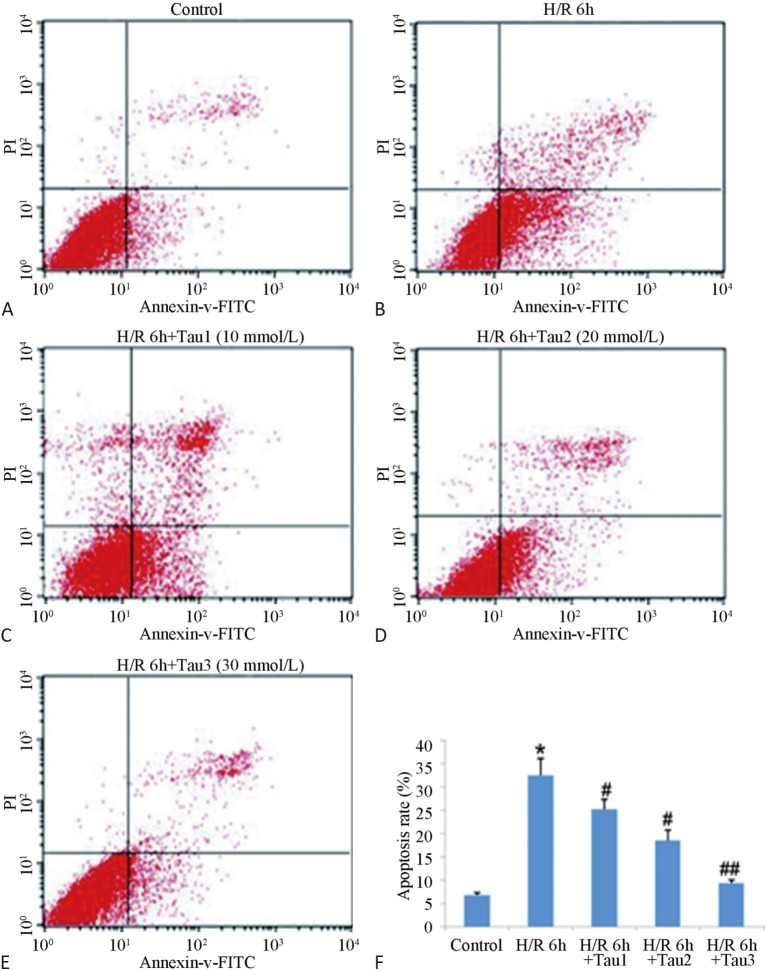
Inhibition of TAU against H/R caused myocardial cell apoptosis. Note: TAU was added an hour before myocardial cell hypoxia treatment. (A) Control group; (B) H/R 6h group; (C) H/R 6h+Tau (10 mmol/L) GROUP, a final concentration of 10 mmol/L taurine was added 1 hour before hypoxia; (D) H/R 6h+Tau (20 mmol/L) GROUP, a final concentration of 20 mmol/L taurine was added 1 hour before hypoxia; (E) H/R 6h+Tau (30 mmol/L) GROUP, a final concentration of 30 mmol/L taurine was added 1 hour before hypoxia; (F) Statistical analysis of the apoptosis rate. ** p < 0.01 vs. control; # p < 0.05, ## p < 0.05 vs. H/R 6 h.
Figure 3
Figure 3
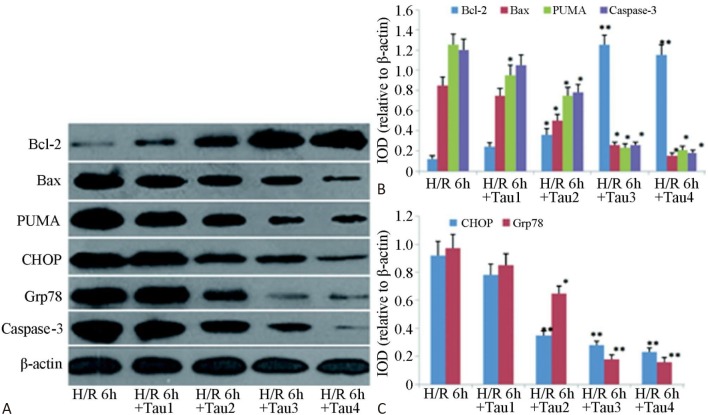
Impacts of TAU on expressions of apoptosis-related proteins in post-H/R cardiomyocytes. Note: TAU was added an hour before myocardial cell hypoxia treatment, the final concentrations of TAU in Tau1, Tau2, Tau3, and Tau4 were 10, 20, 30 and 60 mmol/L, respectively. (A) Result of detecting bcl-2, Bax, PUMA and caspase-3 proteins by Western blot. (B) Grayscale analysis result of PUMA caspase-3 bcl-2, Bax. (C) Grayscale analysis result of GRP78 CHOP. * p < 0.05, ** p < 0.01 vs. H/R 6 h.
Figure 4
Figure 4
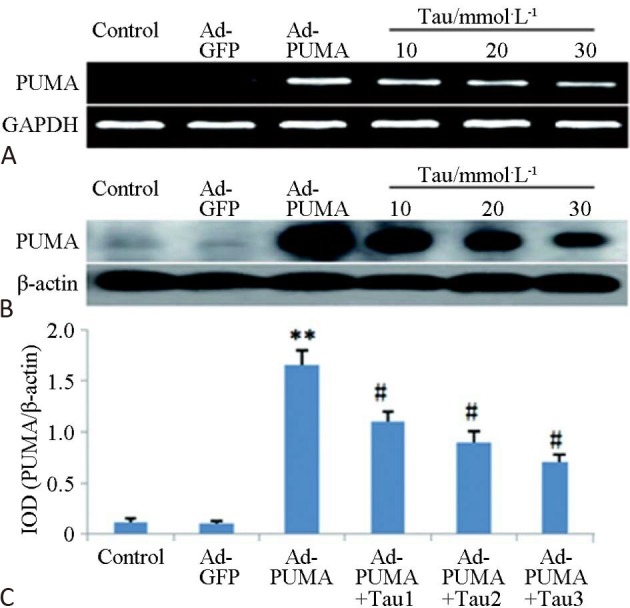
Inhibition effects of TAU on overexpression of PUMA in post-H/R cardiomyocytes. (A) RT-PCR; (B) Western blot; (C) Histogram of protein expressions. ** p < 0.01 vs control; # p <0.05 vs. H/R 6 h.
Figure 5
Figure 5
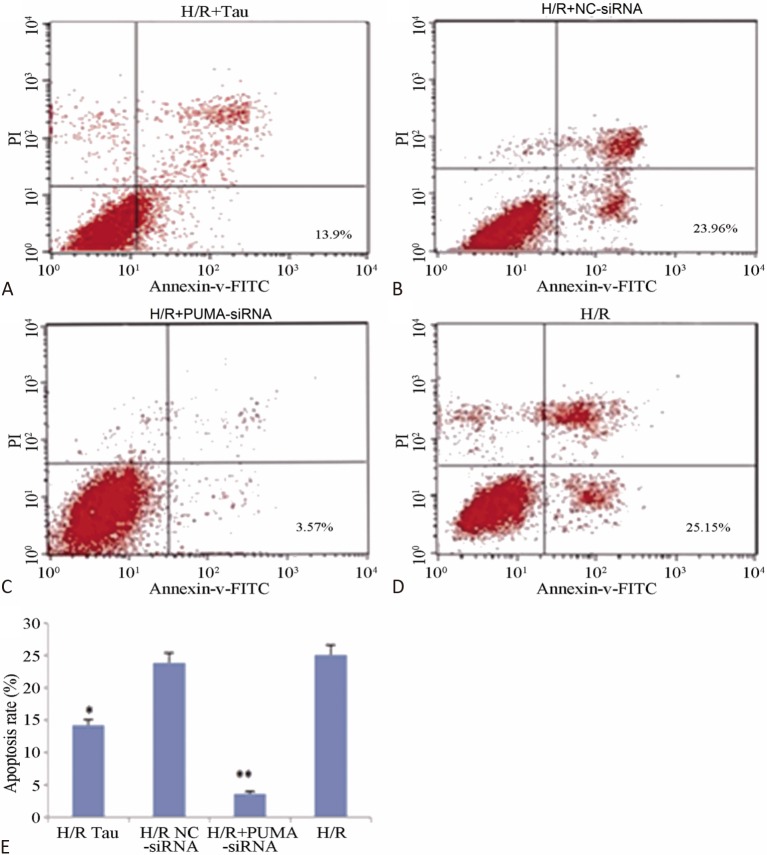
Impacts of PUMA silencing on post-H/R myocardial cell apoptosis. (A) H/R+Tau group, a final concentration of 10 mmol/L taurine was added 1 hour before hypoxia; (B) H/R+NC-siRNA group; (C) H/R+PUMA-siRNA group; (D) H/R group, means hypoxia for 5 hours/reoxygenation for 6 hours; (E) Histogram of apoptosis rate in each group. * p < 0.05, ** p < 0.01 vs. H/R.
Figure 6
Figure 6
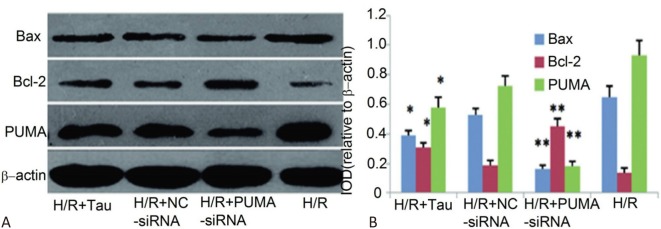
Impacts of PUMA silencing on levels of apoptosis-associated proteins in post-H/R myocardial cells. (A) Result of detecting bcl-2, Bax, PUMA and caspase-3 proteins by Western blot. (B) A histogram of relative expression levels of Bax, bcl-2 and PUMA. * p < 0.05, ** p < 0.01 vs. H/R.

References

    1. Siddall HK, Warrell CE, Yellon DM, Mocanu MM. Ischemia-reperfusion injury and cardio-protection: investigating PTEN, the phosphatase that negatively regulates PI3K, using a congenital model of PTEN haplo-insufficiency. Basic Res Cardiol. 2008;103:560–568. - PubMed
    1. Zhao S, Wang Y, Zhang X, et al. Melatonin protects against hypoxia/reoxygenation-induced dysfunction of human umbilical vein endothelial cells through inhibiting reactive oxygen species generation. Acta Cardiol Sin. 2018;34:424–431. - PMC - PubMed
    1. Serdar Kuyumcu M, Kuyumcu A, Yayla Ç, et al. The relationship between nesfatin-1 levels and SYNTAX score in patients with non-ST segment elevation myocardial infarction. Acta Cardiol Sin. 2018;34:386–393. - PMC - PubMed
    1. Kurtul A, Namik Murat S. Milking-like effect secondary to dynamic systolic compression of right coronary artery by a postinfarction left ventricular aneurysm. Acta Cardiol Sin. 2018;34:443–445. - PMC - PubMed
    1. Kim NH, Kang PM. Apoptosis in cardiovascular diseases: mechanism and clinical implications. Korean Circ J. 2010;40:299–305. - PMC - PubMed

LinkOut - more resources