


Physical therapist clinical reasoning and classification inconsistencies in headache disorders: a United States survey
- PMID: 31373539
- PMCID: PMC7006737
- DOI: 10.1080/10669817.2019.1645414
Physical therapist clinical reasoning and classification inconsistencies in headache disorders: a United States survey
Abstract
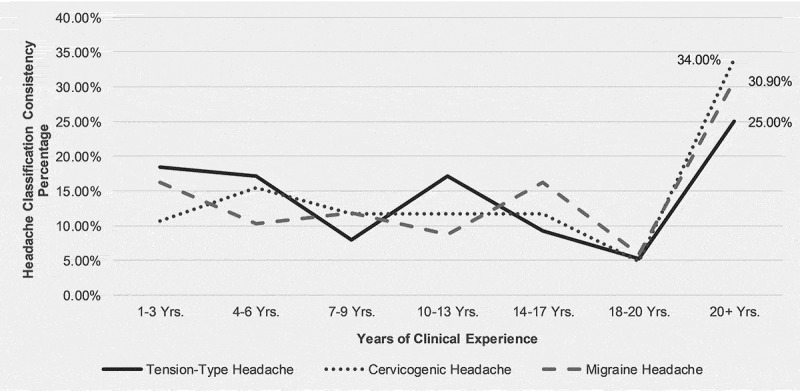
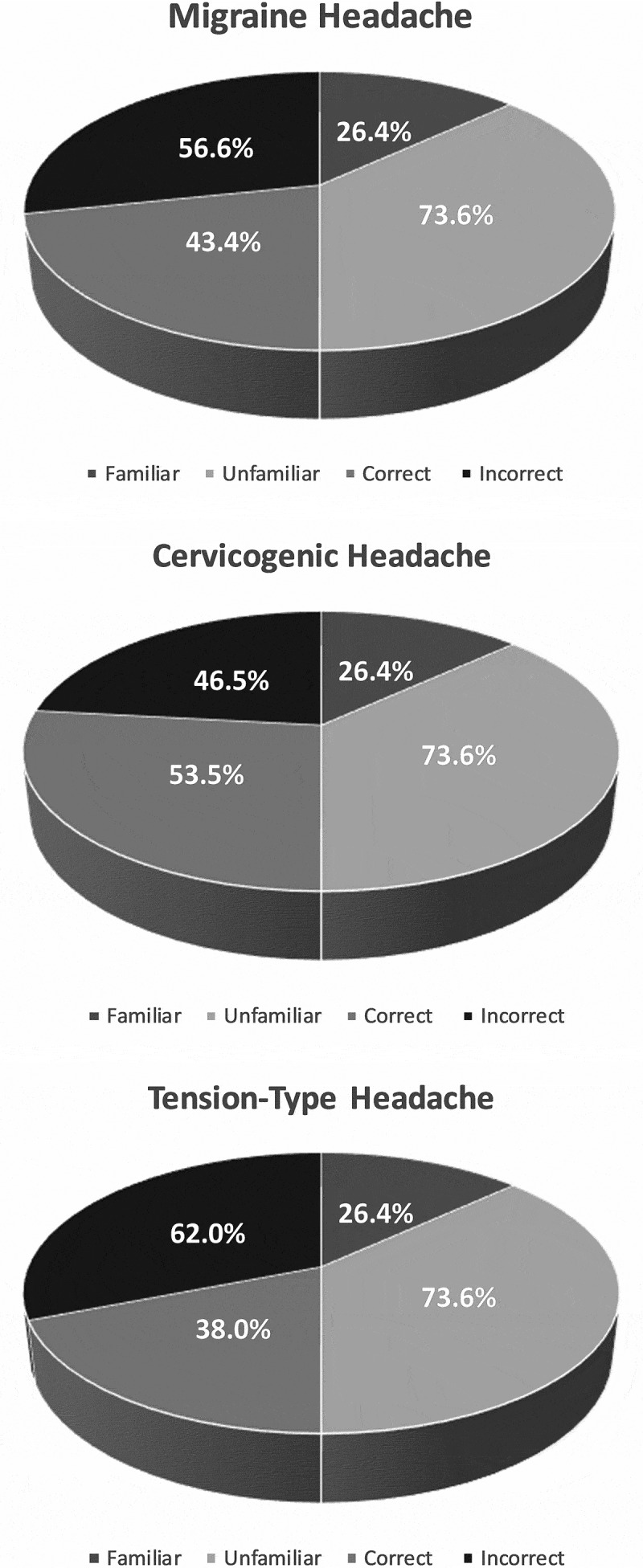
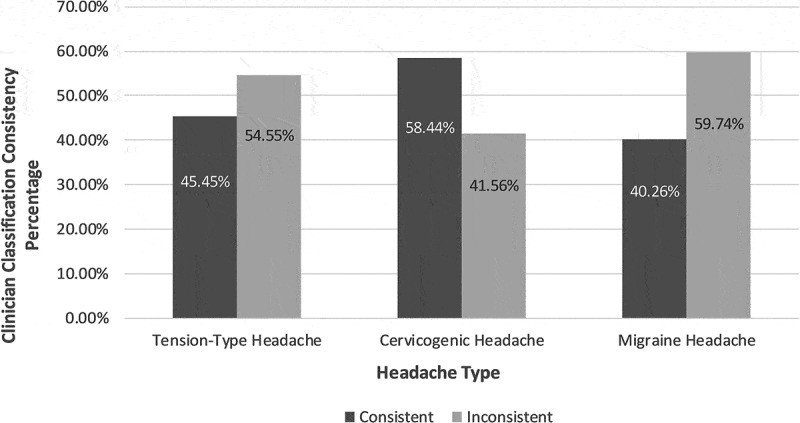
Objective: The purpose of this study was to investigate the decision-making processes of physical therapists relating to evaluation and categorization of patients with headaches, including consistency with criteria proposed by the International Headache Society (IHS).Methods: A national online survey was distributed in cooperation with the Academy of Orthopaedic Physical Therapy of the American Physical Therapy Association. Three hypothetical patient case vignettes featuring headache disorders were used as assessment instruments. Additionally, data on physical therapist education, clinical experience, manual therapy training, self-efficacy, and familiarity & consistency with IHS criteria were collected. Physical therapist identification and valuation of clinical features of headache disorders were also examined in the decision-making processes.Results: Among the 384 respondents, 32.3% classified the tension-type headache case consistent with IHS criteria. The cervicogenic and migraine headache cases were classified at 54.8% and 41.7% consistent with IHS categories, respectively. Experienced clinicians and those with formal manual training categorized patient presentations with greater consistency. Clinician familiarity with IHS classification criteria was low with 73.6% collectively somewhat and not familiar, while 26.4% of physical therapists were self-described as very or moderately familiar.Discussion: Clinicians' headache categorization was significantly affected by symptom misattribution and weighting of individual examination findings. Weighting by practitioners of clinical features varied markedly with greatest emphasis being placed on detailed manual examination procedures, including passive intervertebral movements. Inconsistencies in valuation of clinical features in headache categorization suggest a need for further formal education in physical therapy educational curricula and in post-graduate education, including of IHS criteria and classification.Level of Evidence: 2a.
Keywords: Headache; clinical reasoning; primary care.
Figures
References
-
- Stovner L, Hagen K, Jensen R, et al. The global burden of headache: a documentation of headache prevalence and disability worldwide. Cephalalgia. 2007;27(3):193–210. - PubMed
-
- World Health Organization . Headache disorders. World Health Organization; Published 2016. [Updated 2016 April; cited 2017 August8]. Available from: http://www.who.int/mediacentre/factsheets/fs277/en/.
-
- Global Burden of Disease Study C . Global, regional, and national incidence, prevalence, and years lived with disability for 301 acute and chronic diseases and injuries in 188 countries, 1990-2013: a systematic analysis for the global burden of disease study 2013. Lancet. 2015;386(9995):743–800. - PMC - PubMed
-
- Diamond S, Bigal ME, Silberstein S, et al. Patterns of diagnosis and acute and preventive treatment for migraine in the United States: results from the American migraine prevalence and prevention study. Headache. 2007;47(3):355–363. - PubMed
-
- Silberstein S, Loder E, Diamond S, et al. Probable migraine in the United States: results of the American migraine prevalence and prevention (AMPP) study. Cephalalgia. 2007;27(3):220–229. - PubMed
MeSH terms
LinkOut - more resources
Full Text Sources
Medical
