


Limbic and prefrontal neural volume modulate social anxiety in children at temperamental risk
- PMID: 31373755
- PMCID: PMC6684311
- DOI: 10.1002/da.22941
Limbic and prefrontal neural volume modulate social anxiety in children at temperamental risk
Abstract
Background: Clinical levels of a social anxiety disorder (SAD) often appear during childhood and rise to a peak during late adolescence. The temperament trait behavioral inhibition (BI), evident early in childhood, has been linked to increased risk for SAD. Functional and structural variations in brain regions associated with the identification of, and response to, fear may support the BI-SAD relation. Whereas relevant functional studies are emerging, the few extant structural studies have focused on adult samples with mixed findings.
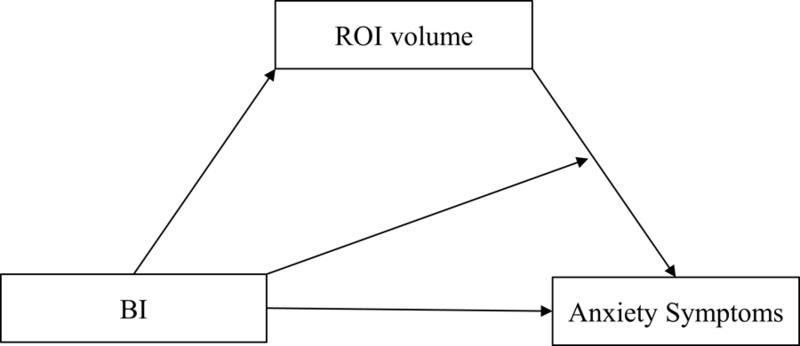
Methods: A moderated-mediation model was used to examine the relations between BI, SAD symptoms, and brain-volume individual differences in a sample of children at risk for anxiety (ages 9-12; N = 130, 52 BI).
Results: Our findings indicate that at higher levels of BI, children with smaller anterior insula volumes showed stronger correlations between BI and SAD. In addition, larger ventrolateral prefrontal cortex (vlPFC) volumes were associated with fewer SAD symptoms.
Conclusions: These findings support previous reports linking SAD levels with variations in volume and reactivity in both limbic (insula) and prefrontal (vlPFC) regions. These findings set the foundation for further examination of networks of neural structures that influence the transition from BI to SAD across development, helping further clarify mechanisms of risk and resilience.
Keywords: SAD/social anxiety disorder/social phobia; anxiety/anxiety disorders; brain imaging/neuroimaging; child/adolescent; phobia/phobic disorders.
© 2019 Wiley Periodicals, Inc.
Conflict of interest statement
No conflicts of interest are related to this work.
Figures

References
Publication types
MeSH terms
Grants and funding
LinkOut - more resources
Full Text Sources
