


The consequence of endotracheal intubation in a 95-years old man for 839 days: A case report
- PMID: 31374047
- PMCID: PMC6708996
- DOI: 10.1097/MD.0000000000016678
The consequence of endotracheal intubation in a 95-years old man for 839 days: A case report
Abstract
Rationale: The benefits of prolonged endotracheal intubation (ETI) in comparison to early tracheotomy is still over the controversy. Little information is available in concern to prolonged ETI more than years. We report the consequence of oral ETI in a 95-year old man for 839 days.
Patient concerns: This patient was transferred to the intensive care unit due to sputum asphyxia and respiratory arrest. Timely ETI was performed. However, as a neurological insult, extubation had a high risk of failure due to the insufficient ability of sputum clearance. In addition, his family members refused further surgical interventions including tracheotomy.
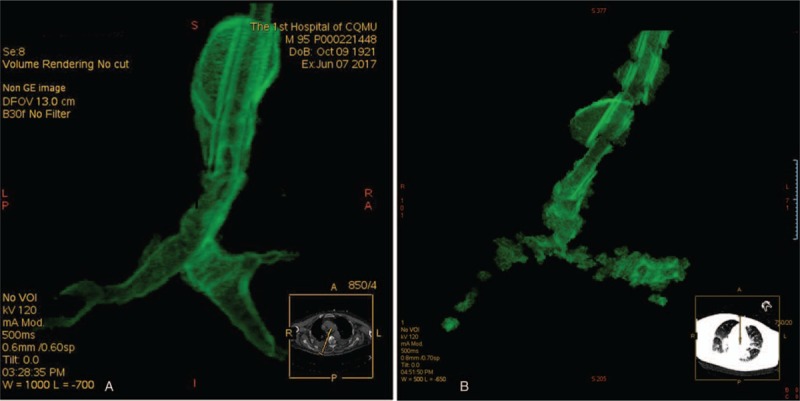
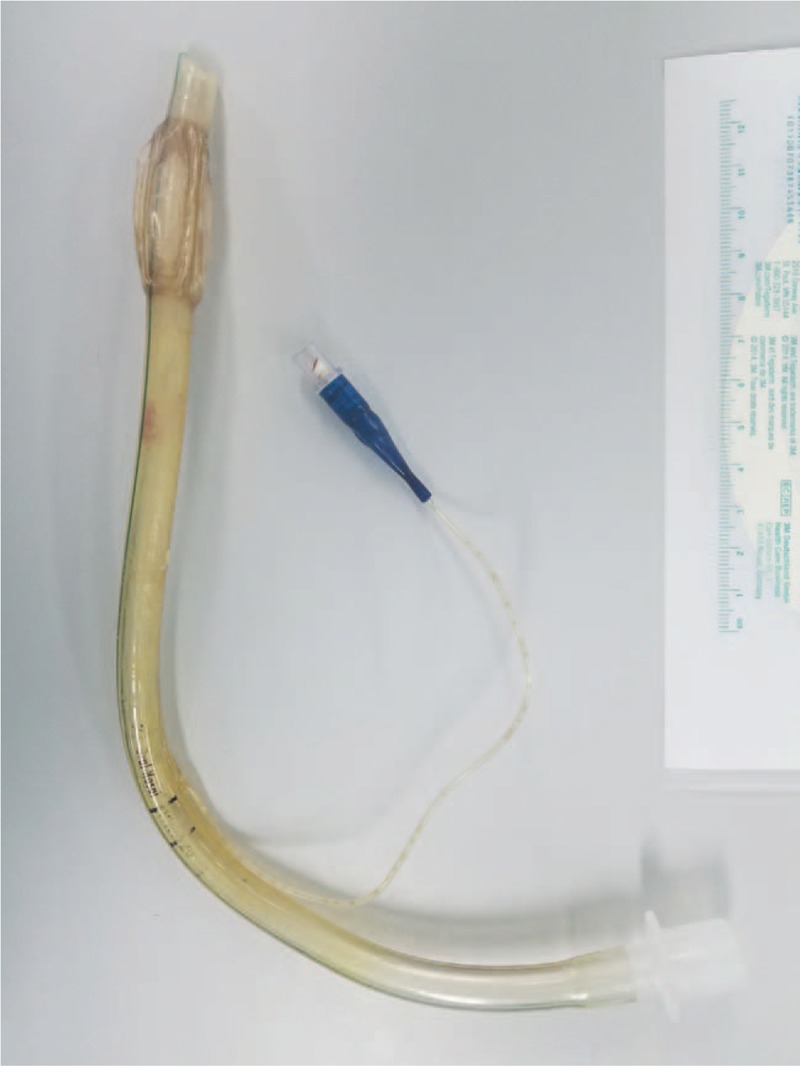
Diagnoses: Prolonged ETI occurred in this patient. On day 240 and 329 after ETI, 3D airway image did not reveal laryngeal stenosis or laryngeal lesions. On day 459 and 662, ET tube (ETT) exchanged was performed and the balloon became stiff and inelasticity.
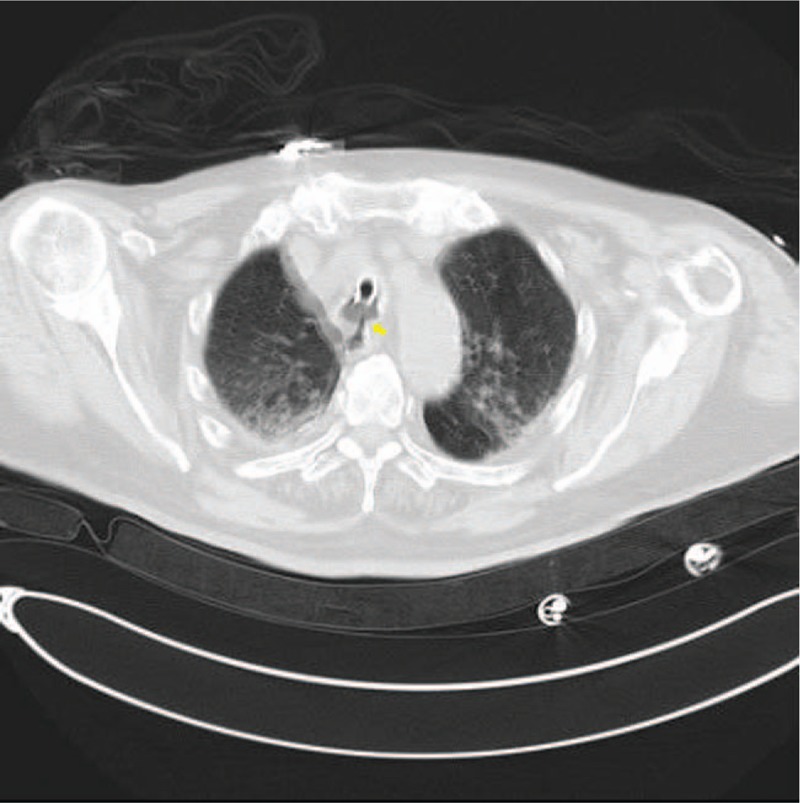
Interventions: Although a possible tracheoesophageal fistula was suspected by imaging findings on day 547, the gastroscopy did not reveal the fistula on the esophagus. Enteral nutrition was delivered through the gastric tube, while the mediastinal infection was not observed during subsequent follow-up of computed tomography.
Outcomes: He received tracheostomy due to acute sputum obstruction within ETT and abrupt oxygen desaturation on day 839.
Lessons: During prolonged ETI, more attention should focus on airway humidification, proper cuff pressure and optimal time for tube exchange in order to avoid severe complications.
Conflict of interest statement
The authors have no conflicts of interest to disclose.
Figures
References
-
- Pandit JJ, Irwin MG. Airway management in critical illness: practice implications of new Difficult Airway Society guidelines. Anaesthesia 2018;73:544–8. - PubMed
-
- Aziz MF. Advancing patient safety in airway management. Anesthesiology 2018;128:434–6. - PubMed
-
- McCredie VA, Alali AS, Scales DC, et al. Effect of early versus late tracheostomy or prolonged intubation in critically Ill patients with acute brain injury: a systematic review and meta-analysis. Neurocrit Care 2017;26:14–25. - PubMed
-
- Nobre de Jesus G, Freitas F, Fernandes SM, et al. Post-intubation tracheal laceration. Intensive Care Med 2019;45:521–2. - PubMed
Publication types
MeSH terms
LinkOut - more resources
Full Text Sources
Medical
