


Study protocol: multicenter double-blind, randomized, placebo-controlled trial of rituximab for the treatment of childhood-onset early-stage uncomplicated frequently relapsing or steroid-dependent nephrotic syndrome (JSKDC10 trial)
- PMID: 31375087
- PMCID: PMC6679488
- DOI: 10.1186/s12882-019-1470-3
Study protocol: multicenter double-blind, randomized, placebo-controlled trial of rituximab for the treatment of childhood-onset early-stage uncomplicated frequently relapsing or steroid-dependent nephrotic syndrome (JSKDC10 trial)
Abstract
Background: Eighty percent of children with idiopathic nephrotic syndrome respond well to steroid therapy, but up to 50% of patients with steroid-sensitive nephrotic syndrome exhibit frequently relapsing (FRNS) or steroid-dependent nephrotic syndrome (SDNS). Several studies identified the chimeric anti-CD20 monoclonal antibody rituximab as an effective treatment for patients with complicated FRNS/SDNS. Recent studies suggested that rituximab could also be a first-line treatment for early-stage uncomplicated FRNS/SDNS, although further studies are required to confirm its efficacy and safety.
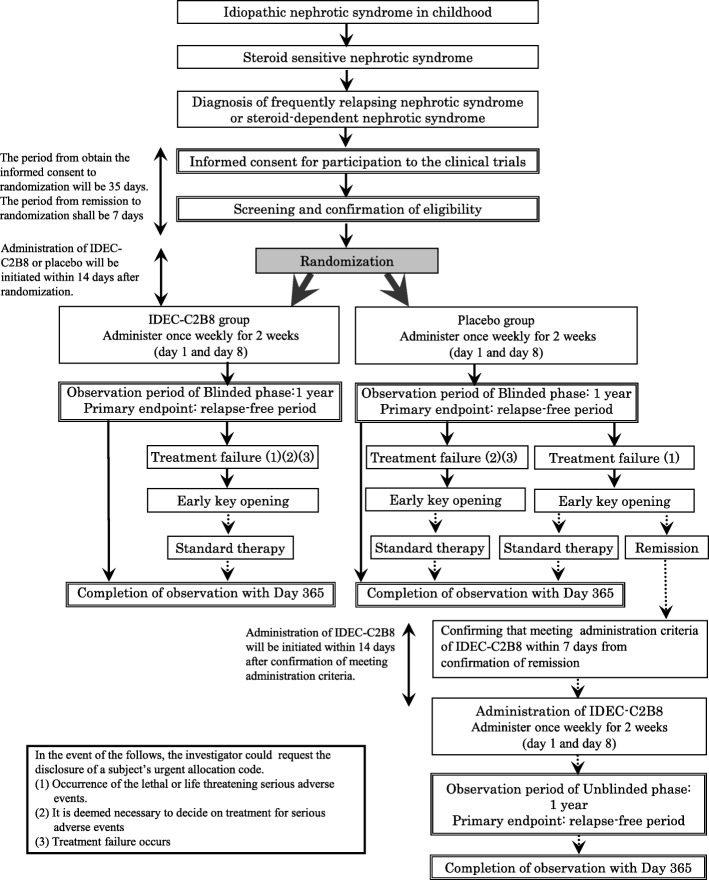
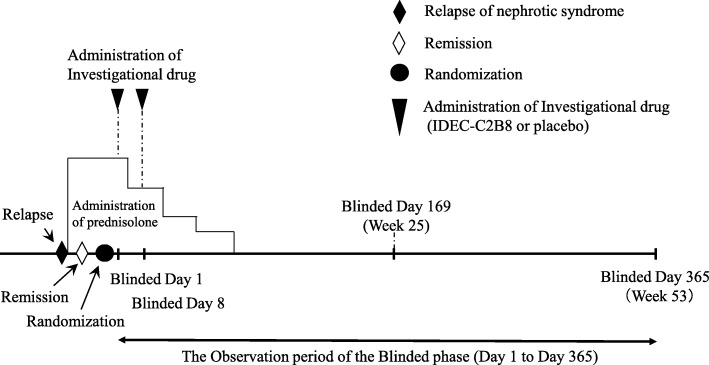
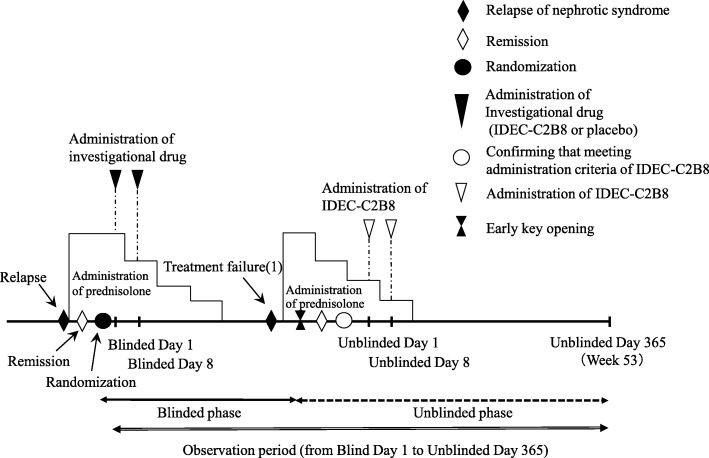
Methods/design: We are conducting a multicenter, double-blind, randomized placebo controlled trial to investigate the efficacy and safety of rituximab for the treatment of childhood-onset early-stage uncomplicated FRNS/SDNS. Patients will be allocated to receive two 375 mg/m2 doses (maximum dose: 500 mg) of either rituximab or placebo. Investigators are permitted to request the disclosure of a subject's allocation code if he or she exhibits treatment failure. Additionally, if placebo-treated subjects display early relapse (a sign of treatment failure), they have the option to receive rituximab in an unblinded phase. The primary endpoint is relapse-free survival during the observation period.
Discussion: The results will provide important data on the use of rituximab for patients with uncomplicated FRNS/SDNS. In the future, rituximab treatment will enable most patients with uncomplicated FRNS/SDNS to discontinue or reduce steroid therapy without relapse, and it is possible that rituximab could represent an immunosuppressive therapy for these diseases.
Trial registration: This trial was prospectively registered to the JMACCT Clinical Trials Registry on September 6, 2018 (Trial ID: JMA-IIA00380 ).
Keywords: Frequently relapsing nephrotic syndrome; Rituximab; Steroid-sensitive nephrotic syndrome.
Conflict of interest statement
Mayumi Sako received a consulting fee from Zenyaku Kogyo Co. Ltd. Kenji Ishikura received a grant from Chugai Pharmaceutical Co., Ltd. and Novartis Pharma K.K., and a lecture fee from Zenyaku Kogyo Co. Ltd. and Novartis Pharma K.K. Koichi Kamei has received lecture fees from Chugai Pharmaceutical Co., Ltd. Koichi Nakanishi received lecture fees from Chugai Pharmaceutical Co., Ltd. and Novartis Pharma K.K. Kandai Nozu received lecture fees from Chugai Pharmaceutical Co., Ltd. Kazumoto Iijima received a grant from Zenyaku Kogyo Co. Ltd. and lecture and/or consulting fees from Chugai Pharmaceutical Co., Ltd., Zenyaku Kogyo Co. Ltd., Takeda Pharmaceutical Co., Ltd., Novartis Pharma K.K. and Kyowa Hakko Kirin Co. Ltd.
Figures
References
-
- Kikunaga Kaori, Ishikura Kenji, Terano Chikako, Sato Mai, Komaki Fumiyo, Hamasaki Yuko, Sasaki Satoshi, Iijima Kazumoto, Yoshikawa Norishige, Nakanishi Koichi, Nakazato Hitoshi, Matsuyama Takeshi, Ando Takashi, Ito Shuichi, Honda Masataka. High incidence of idiopathic nephrotic syndrome in East Asian children: a nationwide survey in Japan (JP-SHINE study) Clinical and Experimental Nephrology. 2016;21(4):651–657. doi: 10.1007/s10157-016-1319-z. - DOI - PubMed
-
- Iijima K, Sako M, Nozu K, Mori R, Tuchida N, Kamei K, et al. Rituximab for childhood-onset, complicated, frequently relapsing nephrotic syndrome or steroid-dependent nephrotic syndrome: a multicentre, double-blind, randomised, placebo-controlled trial. Lancet. 2014;384(9950):1273–1281. doi: 10.1016/S0140-6736(14)60541-9. - DOI - PubMed
Publication types
MeSH terms
Substances
LinkOut - more resources
Full Text Sources
