


Clinical characterization of neonatal and pediatric enteroviral infections: an Italian single center study
- PMID: 31375127
- PMCID: PMC6679433
- DOI: 10.1186/s13052-019-0689-8
Clinical characterization of neonatal and pediatric enteroviral infections: an Italian single center study
Abstract
Background: Enteroviruses (EVs) are an important cause of illness, especially in neonates and young infants. Clinical and laboratory findings at different ages, brain imaging, and outcomes have been inadequately investigated.
Methods: We retrospectively investigated EV infections occurring at an Italian tertiary care center during 2006-2017. Cases were confirmed with a positive polymerase chain reaction on blood or cerebrospinal fluid. Clinical and laboratory findings according to age at presentation were analyzed.
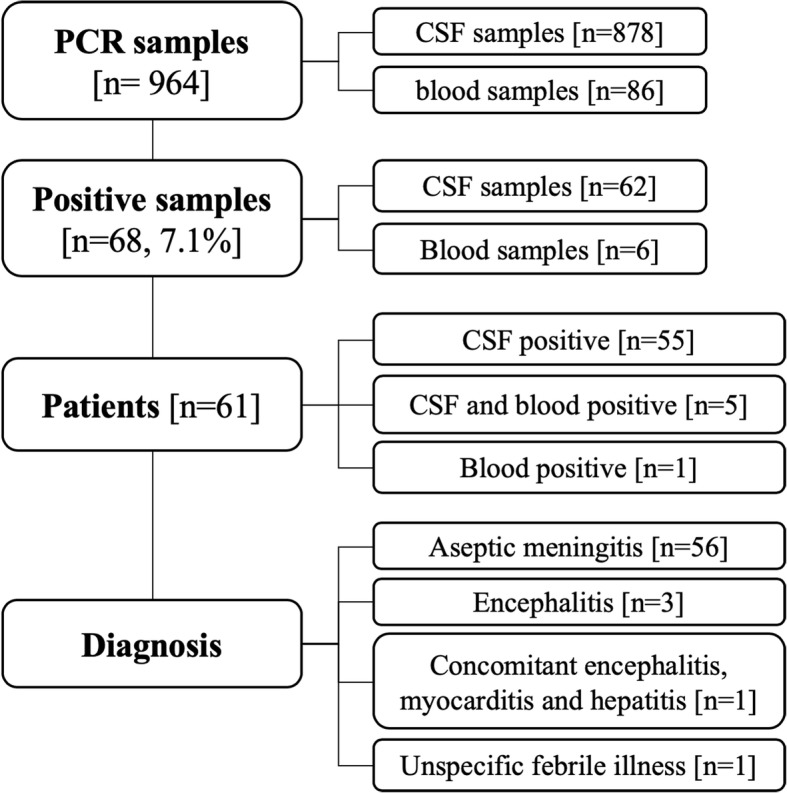
Results: Among 61 cases of EV infection, 56 had meningitis, 4 had encephalitis, and 1 had unspecific febrile illness. Forty-seven cases (77.0%) presented at less than 1 year of age, and most were less than 90 days of age (n = 44). Presentation with fever (p < 0.01), higher median temperature (p < 0.01), and irritability (p < 0.01) were significantly more common among infants aged less than 90 days, who also had significantly higher peak temperatures during the course of the disease (p < 0.01). In contrast, gastrointestinal symptoms were more common in infants and children aged over 90 days (p = 0.02). Only 4 of 61 infections (6.5%) were severe and all affected younger infants (p < 0.01).
Conclusions: We detail epidemiological, clinical, and laboratory findings in a cohort of 61 children. Infants aged less than 90 days have more severe disease; they are more likely to present with fever, higher median temperature, and irritability and less likely to develop gastrointestinal symptoms.
Keywords: Clinical findings; Enterovirus; Infant; Infection; Outcome.
Conflict of interest statement
The authors declare that they have no competing interests.
Figures
References
-
- Pallansch MA, Obserte MS, Whitton JL. Enteroviruses: polioviruses, cox- ackieviruses, echoviruses, and newer enteroviruses. In: Knipe DM, Howley P, editors. Fields virology 2. 6. Philadelphia: Lippincott Williams & Wilkins; 2013.
MeSH terms
LinkOut - more resources
Full Text Sources
