


Nigella sativa stimulates insulin secretion from isolated rat islets and inhibits the digestion and absorption of (CH2O)n in the gut
- PMID: 31375555
- PMCID: PMC6706595
- DOI: 10.1042/BSR20190723
Nigella sativa stimulates insulin secretion from isolated rat islets and inhibits the digestion and absorption of (CH2O)n in the gut
Abstract
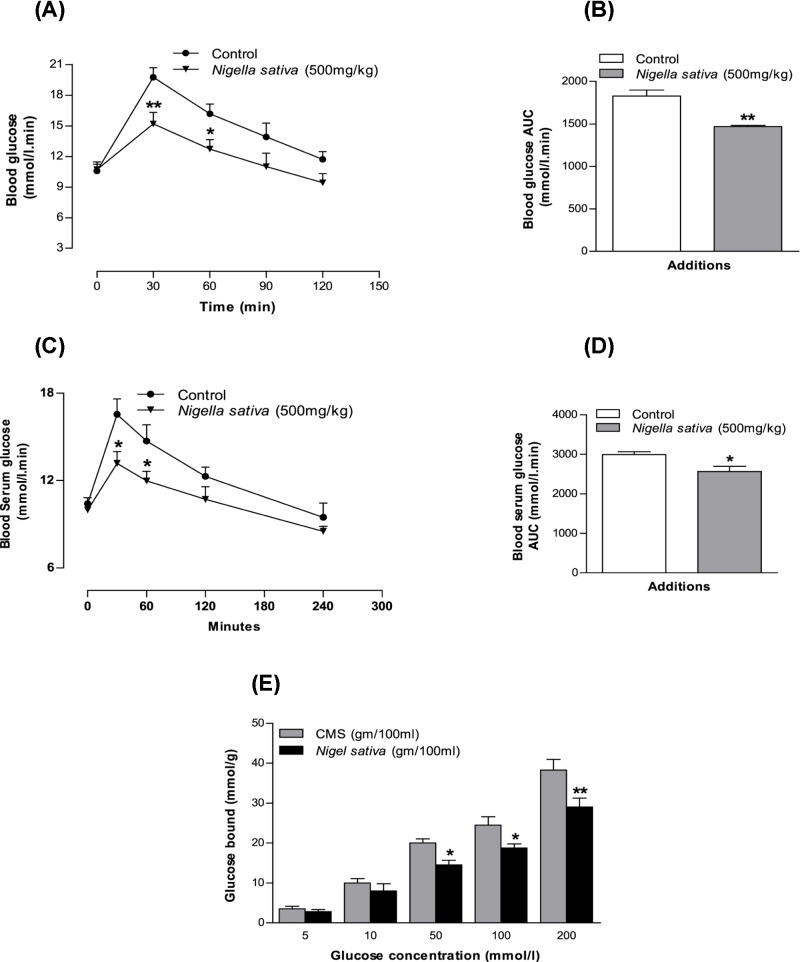
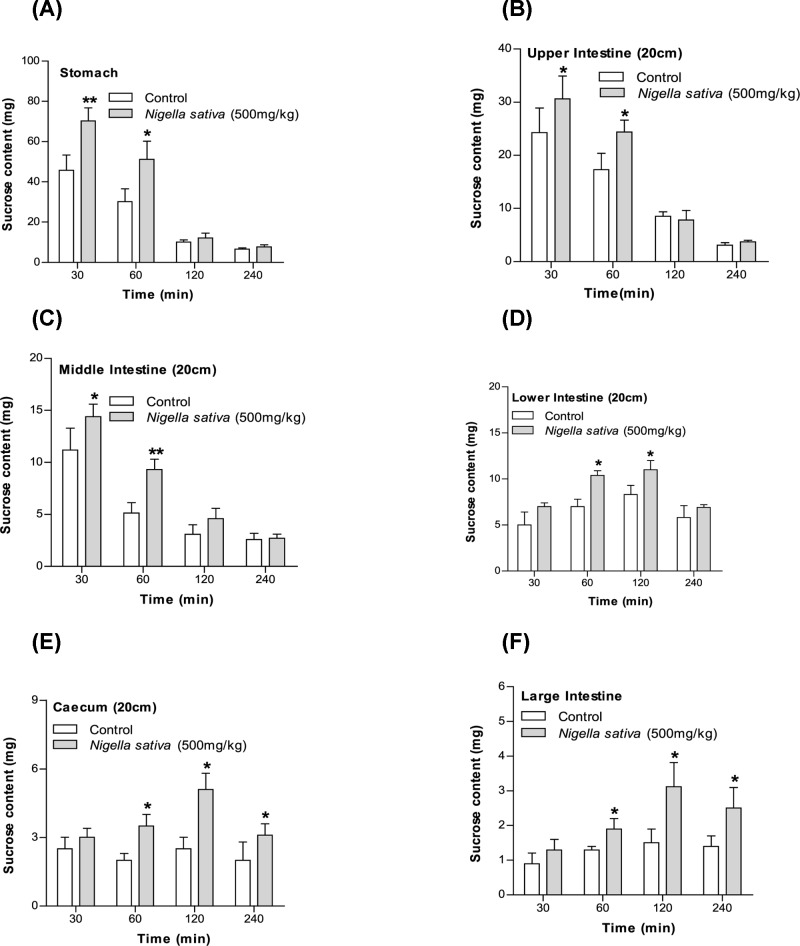
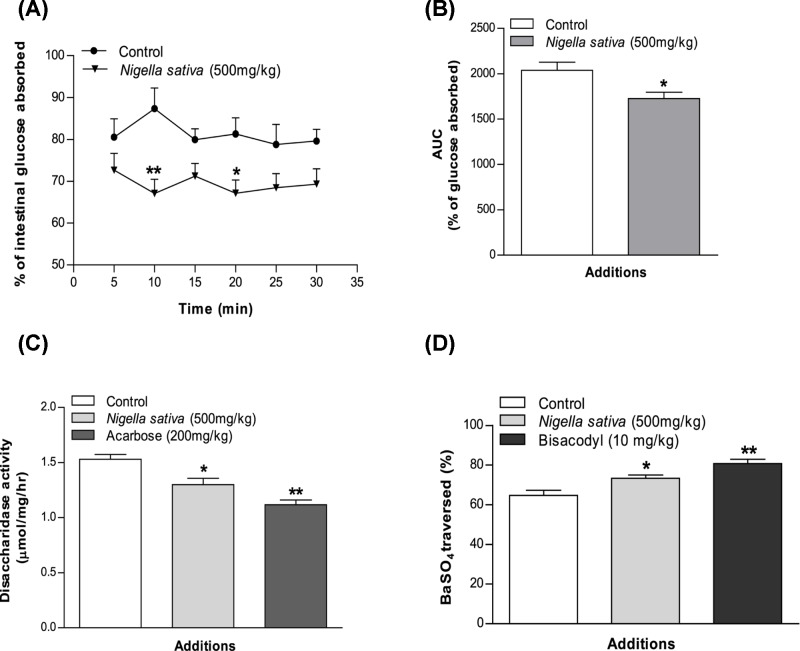
Nigella sativa seeds are traditionally reputed as possessing anti-diabetic properties. As a result, we aim to explore the mechanism of its anti-hyperglycemic activity. The present study uses various experimental designs including gastrointestinal (GI) motility, intestinal disaccharidase activity and inhibition of carbohydrate digestion and absorption in the gut. The animals used as type 2 diabetic models were induced with streptozotocin to make them as such. Oral glucose tolerance test was performed to confirm that the animals were indeed diabetic. The extract reduced postprandial glucose, suggesting it interfered with glucose absorption in the gut. It also improved glucose (2.5g/kg, b/w) tolerance in rats. Furthermore, treatment with N. sativa produced a significant improvement in GI motility, while reduced disaccharidase enzyme activity in fasted rats. The extract produced a similar effect within an acute oral sucrose (2.5g/kg, b/w) load assay. Following sucrose administration, a substantial amount of unabsorbed sucrose was found in six different parts of the GI tract. This indicates that N. sativa has the potentiality to liberate GI content and reduce or delay glucose absorption. A potential hypoglycemic activity of the extract found in insulin release assay, where the extract significantly improved insulin secretion from isolated rat islets. These concluded present findings give rise to the implication that N. sativa seeds are generating postprandial anti-hyperglycemic activity within type 2 diabetic animal models via reducing or delaying carbohydrate digestion and absorption in the gut as well as improving insulin secretion in response to the plasma glucose.
Keywords: Disaccharidase enzyme activity; GI motility; Glucose tolerance; Gut perfusion; Nigella sativa; Sucrose malabsorption.
© 2019 The Author(s).
Conflict of interest statement
All authors declare that ‘Principles of laboratory animal care’ (NIH publication No. 85-23, revised 1985) were followed, as well as the U.K. Animals (Scientific Procedures) Act 1986 for animal experiments. All experiments were examined and approved by the appropriate ethics committee.
The authors declare that there are no competing interests associated with the manuscript.
Figures
References
-
- Sicree R, Shaw J. and Zimmet P (2006) Diabetes and impaired glucose tolerance. Chapter 1: Diabetes Atlas, 2nd edn., pp.15–103, International Diabetes Federation, Brussels, Belgium
-
- Trivedi N.A.et al. (2004) Effect of shilajit on blood glucose and lipid profile in alloxaninduced diabetic rats, Indian J. Pharmacol. 36, 373–376
MeSH terms
Substances
LinkOut - more resources
Full Text Sources
Research Materials
