


Negative affect is associated with increased stress-eating for women with high perceived life stress
- PMID: 31377311
- PMCID: PMC7001866
- DOI: 10.1016/j.physbeh.2019.112639
Negative affect is associated with increased stress-eating for women with high perceived life stress
Abstract
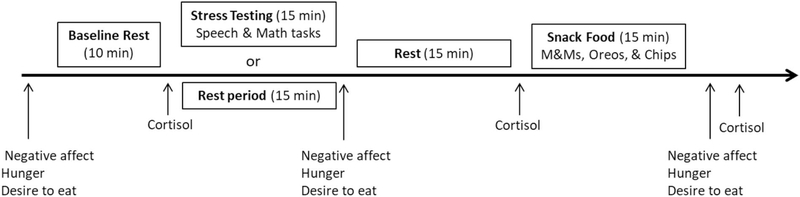
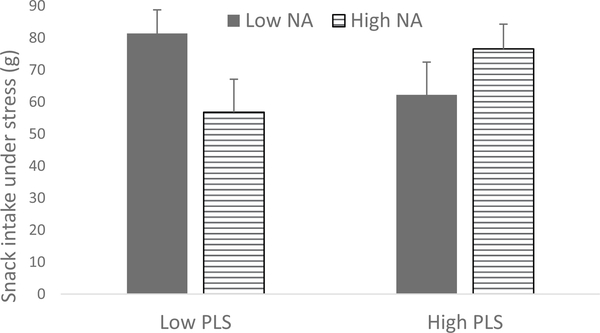
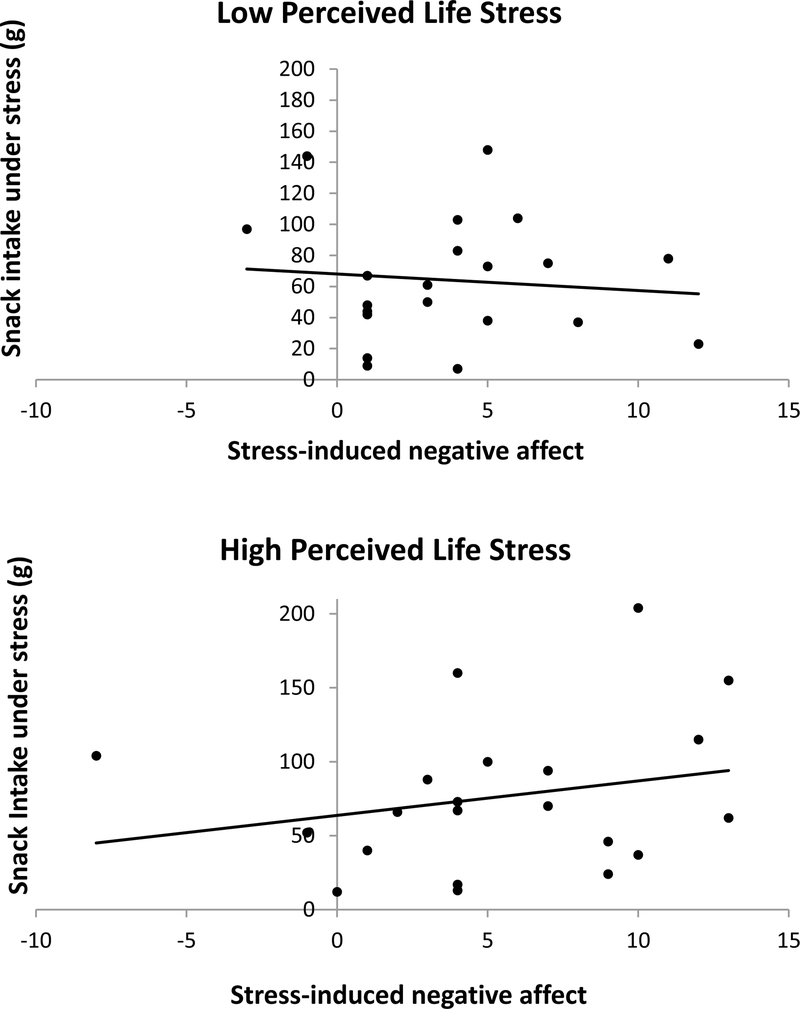
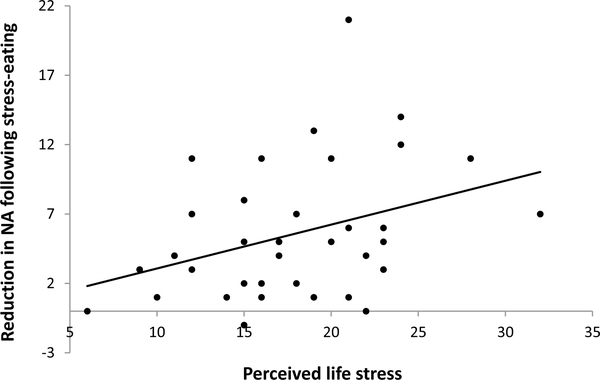
Perceived life stress (PLS) and cognitive restraint are associated with increased comfort food intake under stress and lead to weight gain and obesity, but the mechanisms by which they do so remain unclear. Stress and negative affect (NA) are associated with increased reward-driven comfort food intake as a means to 'feel better', particularly for individuals with higher PLS and cognitive restraint. Thus, we propose that PLS and cognitive restraint increase stress-eating by strengthening the relationship between stress-induced NA and comfort food intake. Upon comfort eating, individuals with higher PLS show greater reductions in the negative consequences of stress (e.g. NA). The rewarding effects of this 'emotional relief' may promote future stress-induced comfort eating, but this has yet to be examined. Thus, we investigate the pathways by which PLS or cognitive restraint increase snack intake under stress by proposing that 1) stress-induced NA is a stronger predictor of increased snack intake for women with greater PLS and cognitive restraint, and 2) greater PLS will be associated with greater reductions in NA upon snacking under stress (i.e. emotional relief). Forty-three healthy women were given snacks (chips, golden oreos, and M&Ms) to eat after a Trier Social Stress Test or rest period on separate days in counterbalanced order. Following linear regression analyses, we determined that stress-induced NA predicted more snack intake for women with higher PLS, and that higher PLS was associated with heightened emotional relief upon snacking under stress. Future studies are needed to directly assess whether greater emotional relief following stress-eating reinforces the learned association between stress-induced NA and intake, and ultimately explains greater stress-eating and obesity in women with higher PLS. This work may lead clinicians to focus on NA in the treatment of obesity-and stress-related illnesses for women with higher PLS.
Copyright © 2019 Elsevier Inc. All rights reserved.
Figures
References
-
- American Psychological Association, Stress in America™ Generation Z, (2018), p. 11.
-
- Beck AT, Beamesderfer A, Assessment of depression: the depression inventory, Mod. Probl. Pharmacopsychiatry 7 (1974) 151–169. - PubMed
MeSH terms
Grants and funding
LinkOut - more resources
Full Text Sources
Medical
