


Critical Review of Plant Cell Wall Matrix Polysaccharide Glycosyltransferase Activities Verified by Heterologous Protein Expression
- PMID: 31379900
- PMCID: PMC6646851
- DOI: 10.3389/fpls.2019.00915
Critical Review of Plant Cell Wall Matrix Polysaccharide Glycosyltransferase Activities Verified by Heterologous Protein Expression
Abstract
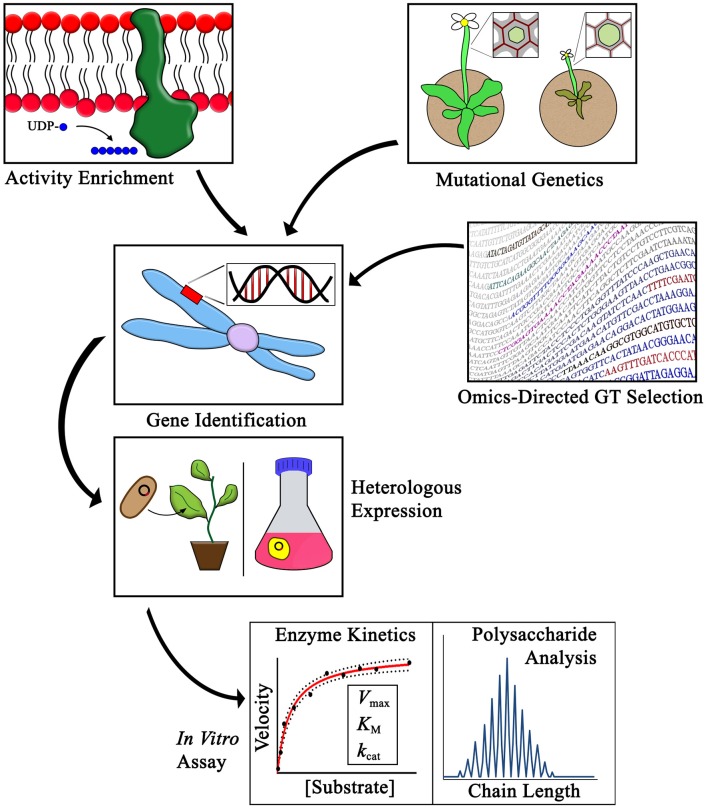
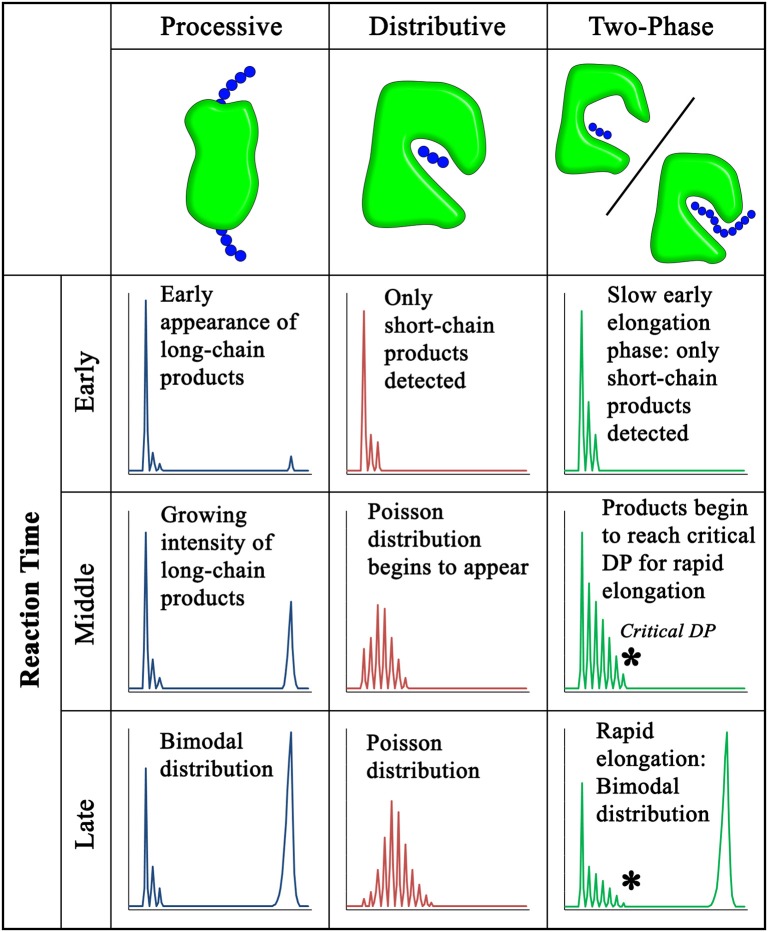
The life cycle and development of plants requires the biosynthesis, deposition, and degradation of cell wall matrix polysaccharides. The structures of the diverse cell wall matrix polysaccharides influence commercially important properties of plant cells, including growth, biomass recalcitrance, organ abscission, and the shelf life of fruits. This review is a comprehensive summary of the matrix polysaccharide glycosyltransferase (GT) activities that have been verified using in vitro assays following heterologous GT protein expression. Plant cell wall (PCW) biosynthetic GTs are primarily integral transmembrane proteins localized to the endoplasmic reticulum and Golgi of the plant secretory system. The low abundance of these enzymes in plant tissues makes them particularly difficult to purify from native plant membranes in quantities sufficient for enzymatic characterization, which is essential to study the functions of the different GTs. Numerous activities in the synthesis of the major cell wall matrix glycans, including pectins, xylans, xyloglucan, mannans, mixed-linkage glucans (MLGs), and arabinogalactan components of AGP proteoglycans have been mapped to specific genes and multi-gene families. Cell wall GTs include those that synthesize the polymer backbones, those that elongate side branches with extended glycosyl chains, and those that add single monosaccharide linkages onto polysaccharide backbones and/or side branches. Three main strategies have been used to identify genes encoding GTs that synthesize cell wall linkages: analysis of membrane fractions enriched for cell wall biosynthetic activities, mutational genetics approaches investigating cell wall compositional phenotypes, and omics-directed identification of putative GTs from sequenced plant genomes. Here we compare the heterologous expression systems used to produce, purify, and study the enzyme activities of PCW GTs, with an emphasis on the eukaryotic systems Nicotiana benthamiana, Pichia pastoris, and human embryonic kidney (HEK293) cells. We discuss the enzymatic properties of GTs including kinetic rates, the chain lengths of polysaccharide products, acceptor oligosaccharide preferences, elongation mechanisms for the synthesis of long-chain polymers, and the formation of GT complexes. Future directions in the study of matrix polysaccharide biosynthesis are proposed.
Keywords: enzyme mechanism; glycosyltransferase; heterologous expression; matrix glycan; plant cell wall; polysaccharide biosynthesis; protein complex.
Figures
References
-
- Akita K., Ishimizu T., Tsukamoto T., Ando T., Hase S. (2002). Successive glycosyltransfer activity and enzymatic characterization of pectic polygalacturonate 4-alpha-galacturonosyltransferase solubilized from pollen tubes of Petunia axillaris using pyridylaminated oligogalacturonates as substrates. Plant Physiol. 130, 374–379. 10.1104/pp.005587 - DOI - PMC - PubMed
-
- Albersheim P., Darvill A., Roberts K., Sederoff R., Staehelin A. (2010). Plant Cell Walls, from Chemistry to Biology. New York, NY: Garland Science; 10.1201/9780203833476 - DOI
-
- Amos R. A. (2019). Heterologous expression of the GAUT1:GAUT7 complex and mechanisms of homogalacturonan biosynthesis (dissertation). University of Georgia, Athens, GA, United States.
Publication types
LinkOut - more resources
Full Text Sources
Miscellaneous
