


Understanding Apoptosis and Apoptotic Pathways Targeted Cancer Therapeutics
- PMID: 31380246
- PMCID: PMC6664112
- DOI: 10.15171/apb.2019.024
Understanding Apoptosis and Apoptotic Pathways Targeted Cancer Therapeutics
Abstract
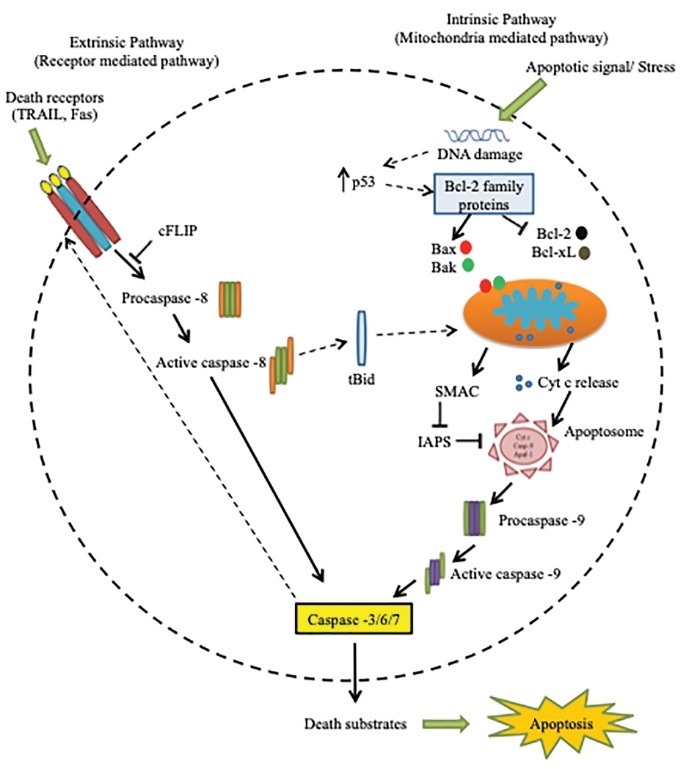
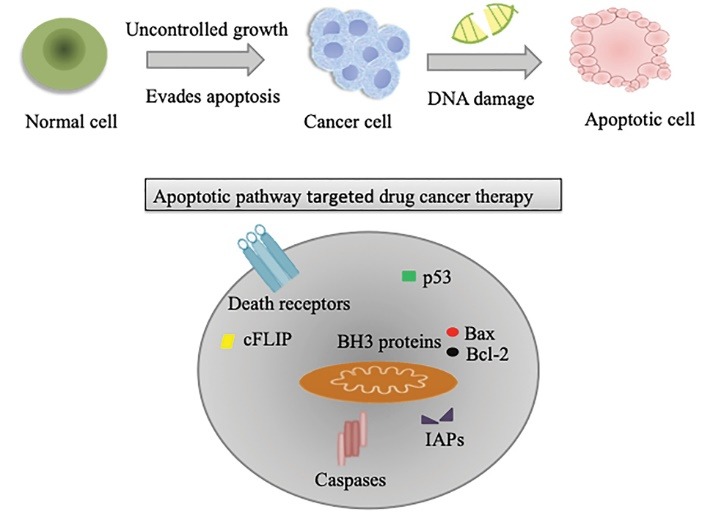
Various physiological processes involve appropriate tissue developmental process and homeostasis - the pathogenesis of several diseases connected with deregulatory apoptosis process. Apoptosis plays a crucial role in maintaining a balance between cell death and division, evasion of apoptosis results in the uncontrolled multiplication of cells leading to different diseases such as cancer. Currently, the development of apoptosis targeting anticancer drugs has gained much interest since cell death induced by apoptosis causes minimal inflammation. The understanding of complexities of apoptosis mechanism and how apoptosis is evolved by tumor cells to oppose cell death has focused research into the new strategies designed to induce apoptosis in cancer cells. This review focused on the underlying mechanism of apoptosis and the dysregulation of apoptosis modulators involved in the extrinsic and intrinsic apoptotic pathway, which include death receptors (DRs) proteins, cellular FLICE inhibitory proteins (c-FLIP), anti-apoptotic Bcl-2 proteins, inhibitors of apoptosis proteins (IAPs), tumor suppressor (p53) in cancer cells along with various current clinical approaches aimed to selectively induce apoptosis in cancer cells.
Keywords: Apoptosis; Apoptosis pathways; Cancer; Caspases; Death receptors; Targeted drugs; c-FLIP.
Figures
References
-
- Hakem R, Harrington L. Cell death. 4th ed. New York: The McGraw-Hill Companies Inc; 2005.
Publication types
LinkOut - more resources
Full Text Sources
Research Materials
Miscellaneous