


Burden and genotype distribution of high-risk Human Papillomavirus infection and cervical cytology abnormalities at selected obstetrics and gynecology clinics of Addis Ababa, Ethiopia
- PMID: 31382907
- PMCID: PMC6683490
- DOI: 10.1186/s12885-019-5953-1
Burden and genotype distribution of high-risk Human Papillomavirus infection and cervical cytology abnormalities at selected obstetrics and gynecology clinics of Addis Ababa, Ethiopia
Abstract
Background: Human papillomavirus is recognized as a major cause of cervical cancer. It is estimated that annually, 7,095 women are diagnosed with cervical cancer and 4,732 die from the disease in Ethiopia. Understanding that the screening practice is very poor and the coverage is very limited, this disease burden is one of the major public health agendas in Ethiopia. This study aimed to assess the burden and genotype distribution of high-risk human papillomavirus (HR HPV) infection and cervical cytology abnormalities at selected obstetrics and gynecology clinics of Addis Ababa, Ethiopia.
Methods: An institutional-based cross-sectional study design was employed from June to October 2015. Cervical samples were collected from 366 participants based on inclusion criteria. HR HPV DNA was analyzed using an Abbott Real-Time PCR system, and cervical cytology screening was performed using the conventional Pap-smear technique. Data were entered in to Epi-data version 13 and analyzed using STATA version 11.
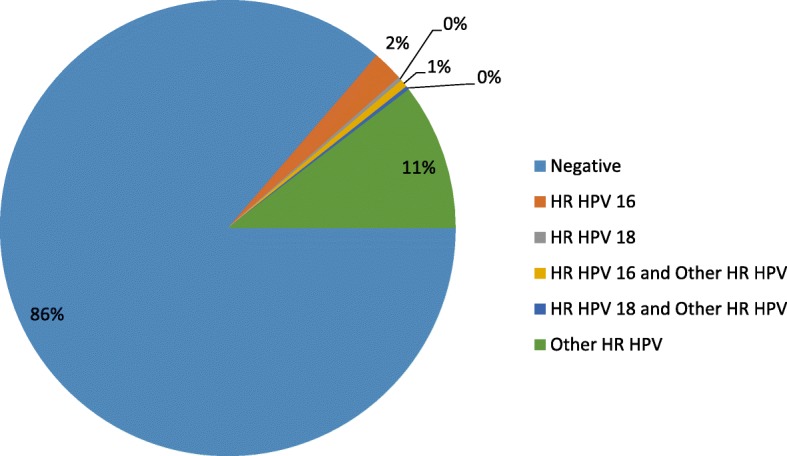
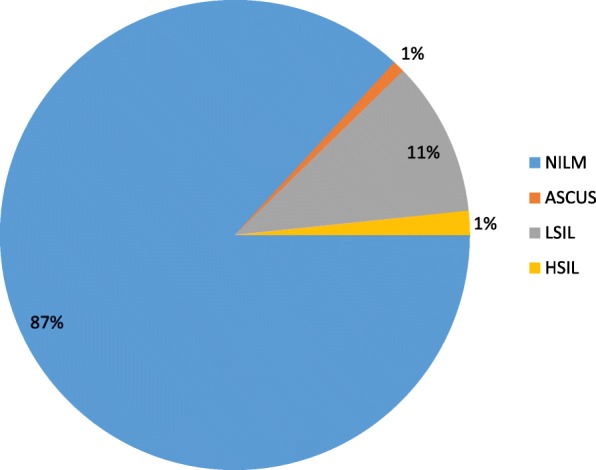
Results: The overall HR HPV burden and abnormal cytology were 13.7 and 13.1%, respectively. The majority of HR HPV types were other than types 16 and 18. Of the total abnormal cytology results, 81.3% were low-grade squamous intraepithelial lesions (LSILs), and 12.5 and 6.3% were atypical squamous cells of undetermined significance (ASCUS) and high-grade squamous intraepithelial lesions (HSILs), respectively. Residence, occupation, and HIV serostatus were significantly associated with HR HPV infection. Among the variables, age, age at first marriage, and education were the only ones associated with cervical cytology abnormalities. The overall agreement between the real-time PCR and Pap cytology screening methods was 78.96% (Kappa value of 0.12, 95% CI (0.00-0.243), P = 0.01).
Conclusions: Non-16/18 HR HPV genotypes represented the largest proportion of HR HPV infections in this study. Women without cervical cytology abnormalities had the highest frequency of HR HPV infection. A large-scale community-based cohort study shall be designed and implemented to further identifying the persistent genotype and assessing the changes in cervical epithelial cell lines.
Keywords: Cervical cytology; Genotype distribution; High-risk Human Papillomavirus; Obstetrics and gynecology; Pap cytology; Real-time PCR.
Conflict of interest statement
The authors declare that they have no competing interests.
Figures
References
-
- Cervical cancer action. Progress in cervical cancer prevention; the CCA report. 2012.
-
- Xavier FB, You-Lin Q, and Xavier C. The epidemiology of human papillomavirus infection and its association with cervical cancer. Int J Gynecol Obstet. Elsevier Ireland Ltd 2006;94:8–21. - PubMed
-
- Center of Disease control and prevention. Epidemiology and prevention of vaccine-preventable diseases. 2015.
-
- Adeola F, Manga M. Utilization of human papillomavirus (HPV) DNA detection for cervical cancer screening in developing countries: a myth or reality. Afr J Micro Research. 2013;7(20):2135–2139. doi: 10.5897/AJMR12.2186. - DOI
MeSH terms
LinkOut - more resources
Full Text Sources
Medical
Research Materials
