


Next-generation sequencing identifies contribution of both class I and II HLA genes on susceptibility of multiple sclerosis in Japanese
- PMID: 31382992
- PMCID: PMC6683481
- DOI: 10.1186/s12974-019-1551-z
Next-generation sequencing identifies contribution of both class I and II HLA genes on susceptibility of multiple sclerosis in Japanese
Abstract
Background: The spectrum of classical and non-classical HLA genes related to the risk of multiple sclerosis (MS) and neuromyelitis optica spectrum disorder (NMOSD) in the Japanese population has not been studied in detail. We conducted a case-control analysis of classical and non-classical HLA genes.
Methods: We used next-generation sequencing (NGS)-based HLA genotyping methods for mapping risk for 45 MS patients, 31 NMOSD patients, and 429 healthy controls. We evaluated the association of the HLA variants with the risk of MS and NMOSD using logistic regression analysis and Fisher's exact test.
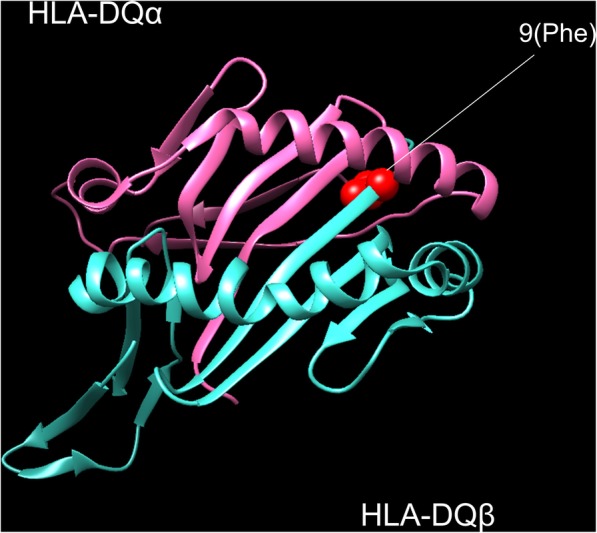
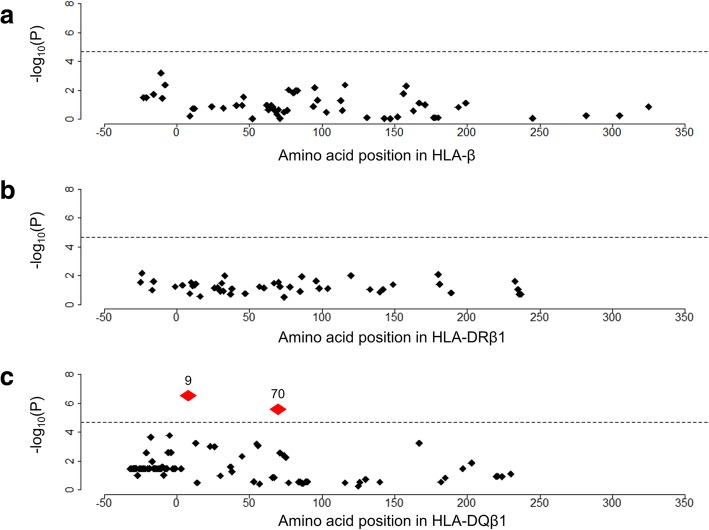
Results: We confirmed that HLA-DRB1*15:01 showed the strongest association with MS (P = 2.1 × 10⁻⁵; odds ratio [OR] = 3.44, 95% confidence interval [95% CI] = 1.95-6.07). Stepwise conditional analysis identified HLA-DRB1*04:05, HLA-B*39:01, and HLA-B*15:01 as being associated with independent MS susceptibility (PConditional < 8.3 × 10⁻⁴). With respect to amino acid polymorphisms in HLA genes, we found that phenylalanine at HLA-DQβ1 position 9 had the strongest effect on MS susceptibility (P = 3.7 × 10⁻⁸, OR = 3.48, 95% CI = 2.23-5.43). MS risk at HLA-DQβ1 Phe9 was independent of HLA-DRB1*15:01 (PConditional = 1.5 × 10⁻⁵, OR = 2.91, 95% CI = 1.79-4.72), while HLA-DRB1*15:01 was just significant when conditioned on HLA-DQβ1 Phe9 (PConditional = 0.037). Regarding a case-control analysis for NMOSD, HLA-DQA1*05:03 had a significant association with NMOSD (P = 1.5 × 10⁻⁴, OR = 6.96, 95% CI = 2.55-19.0).
Conclusions: We identified HLA variants associated with the risk of MS and NMOSD. Our study contributes to the understanding of the genetic architecture of MS and NMOSD in the Japanese population.
Keywords: HLA; Multiple sclerosis; Neuromyelitis optica spectrum disorder; Next-generation sequencing.
Conflict of interest statement
The authors declare that they have no competing interests.
Figures
References
-
- Dendrou CA, Petersen J, Rossjohn J, et al. HLA variation and disease. Nat Rev Immunol. 2018;18(5):325–339. - PubMed
-
- Kanai M, Akiyama M, Takahashi A, et al. Genetic analysis of quantitative traits in the Japanese population links cell types to complex human diseases. Nat Genet. 2018;50(3):390–400. - PubMed
-
- Noble JA. Immunogenetics of type 1 diabetes: a comprehensive review. J Autoimmun. 2015;64:101–112. - PubMed
MeSH terms
Substances
Grants and funding
LinkOut - more resources
Full Text Sources
Other Literature Sources
Medical
Research Materials
